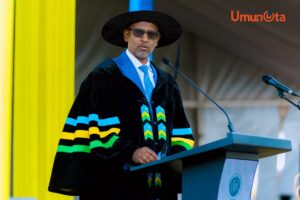
The President of the Senate, Dr. Kalinda François Xavier, has condemned former priest Athanase Seromba for orchestrating one of the most horrific atrocities of the 1994 Genocide against the Tutsi, ordering the demolition of Nyange Parish church on Tutsi who had sought refuge inside.
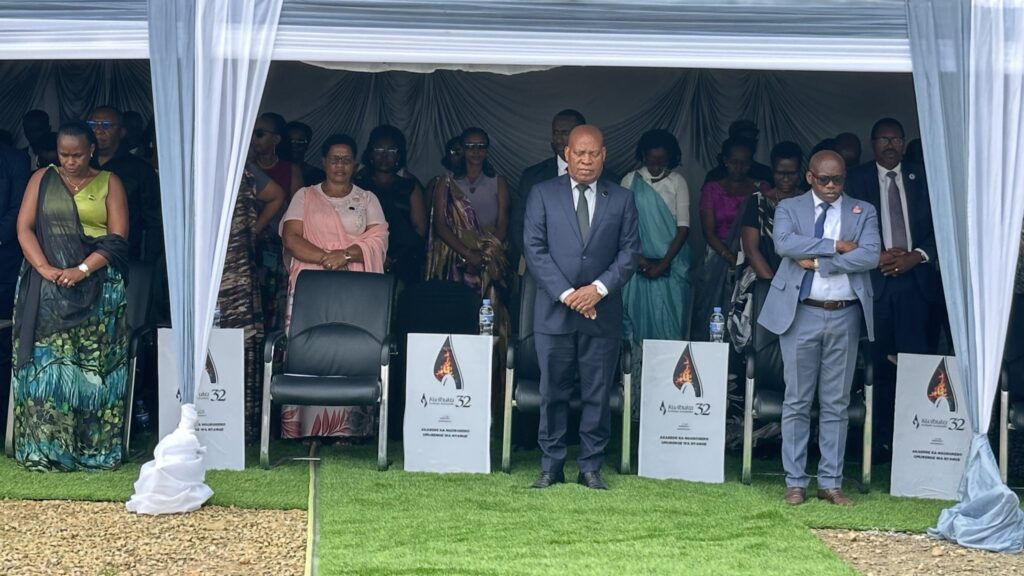
He made the remarks at the Nyange Genocide Memorial in Ngororero District during the 32nd commemoration of the Genocide against the Tutsi, an event that brought together leaders, residents, and stakeholders to honor the victims and reflect on the country’s history.
The commemoration placed a sharp focus on the brutality committed at Nyange, where Seromba, in collaboration with state authorities, ordered a bulldozer to bring down the church, killing those who had gathered there for safety.
Dr. Kalinda described the act as unprecedented and a lasting symbol of extreme cruelty.
“Nyange witnessed a tragedy unlike any other, where a parish priest, entrusted with protecting lives, instead collaborated with authorities to destroy the very church that sheltered his congregants—targeting them solely because they were Tutsi,” he said.
He stressed that remembering Seromba’s actions remains essential, noting that many lives could have been saved had the attack not been carried out. “The cruelty he displayed will never be forgotten,” he added.
Dr. Kalinda underscored the importance of Kwibuka as a moment to restore dignity to victims, preserve the truth about the Genocide, and reinforce national unity in the fight against genocide ideology.
He also traced the history of persecution against Tutsi in Ngororero, dating back to 1959, marked by repeated violence across the former Kibuye Prefecture. He noted that the Genocide began on April 7, 1994, in Nyange and across the former Kivumu Commune, driven by leaders who incited citizens to turn against their Tutsi neighbors.
The Senate President further highlighted that the former Kivumu Commune produced a significant number of individuals later convicted by the International Criminal Tribunal for Rwanda (ICTR), including Seromba, former mayor Grégoire Ndahimana, businessman Gaspard Kanyarukiga, and judicial police inspector Fulgence Kayishema.
Despite its painful past, Nyange has also become a symbol of resilience and unity. Dr. Kalinda praised the courage of Nyange students who, during attacks by infiltrators, refused to be divided along ethnic lines and instead affirmed their identity as Rwandans.
During the commemoration, 12 bodies of victims of the Genocide against the Tutsi—including 10 recently recovered from Murunda Sector in Karongi District—were laid to rest in dignity, reaffirming the country’s continued commitment to remembrance and justice.