Artificial intelligence (AI) is projected to contribute up to 6% of Rwanda’s Gross Domestic Product (GDP) by 2030, according to projections from the Ministry of Information, Communication, Technology and Innovation (MINICT).
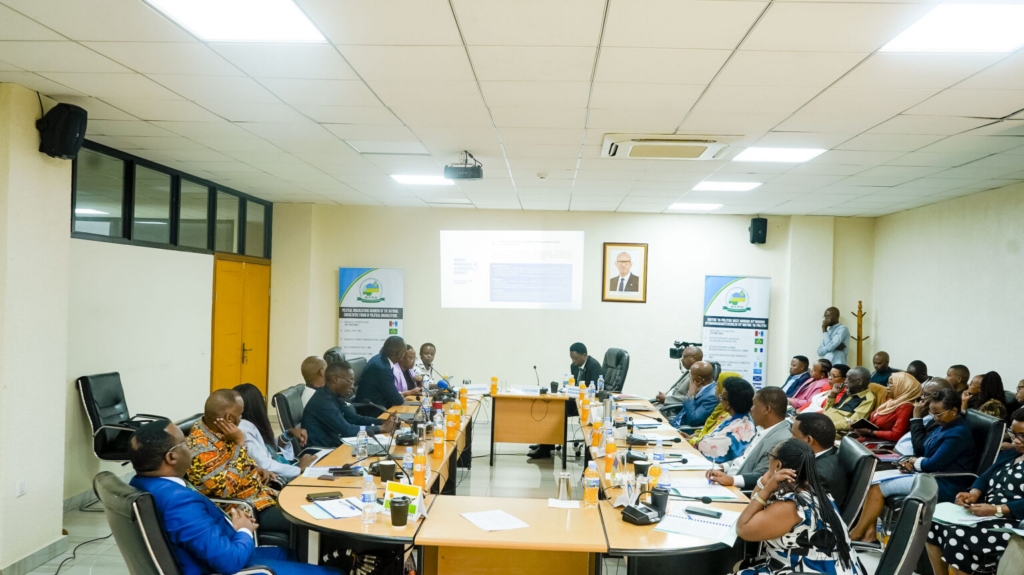
The forecast was shared by the ministry’s Permanent Secretary, Eraste Rurangwa, during discussions with members of the National Consultative Forum of Political Organisations held on Thursday, June 18, 2026.
Rurangwa said government research estimates that AI could add about $589 million (approximately RWF 862 billion) to the economy by 2030, driven by its growing application across key sectors.
He noted that AI is already being deployed in agriculture, healthcare and education, adding that increased investment in skills development and infrastructure will be critical to achieving the projected impact.
He emphasized that the expected gains cannot be realized without sustained investment in human capital and digital systems.
“We cannot reach this value without investing adequately in building capacity to achieve these goals,” he said.
MINICT’s Director General for Technology and Innovation, Esther Kunda, said AI is already delivering practical benefits across sectors, particularly in agriculture.
She cited the “Tunga Agricultural Chatbot” under the Ministry of Agriculture and Animal Resources (MINAGRI), which helps farmers access information and receive responses to their queries.
She explained that the system provides direct assistance to farmers, with human support only required when more complex responses are needed.
According to projections, AI is expected to boost agricultural productivity by up to 25%, reduce water and fertilizer use by around 20%, and increase farmers’ incomes by about 50% by 2030.
Members of the Forum of Political Organisations welcomed the potential of AI but urged caution, stressing that the technology should complement human labour rather than replace it.
Rwanda has established a dedicated national institution to coordinate the implementation of its artificial intelligence strategy.
Key priorities include accelerating AI adoption across public and private sectors, developing local expertise, ensuring ethical use, strengthening data protection, and improving oversight to guarantee safe and responsible deployment of AI technologies.