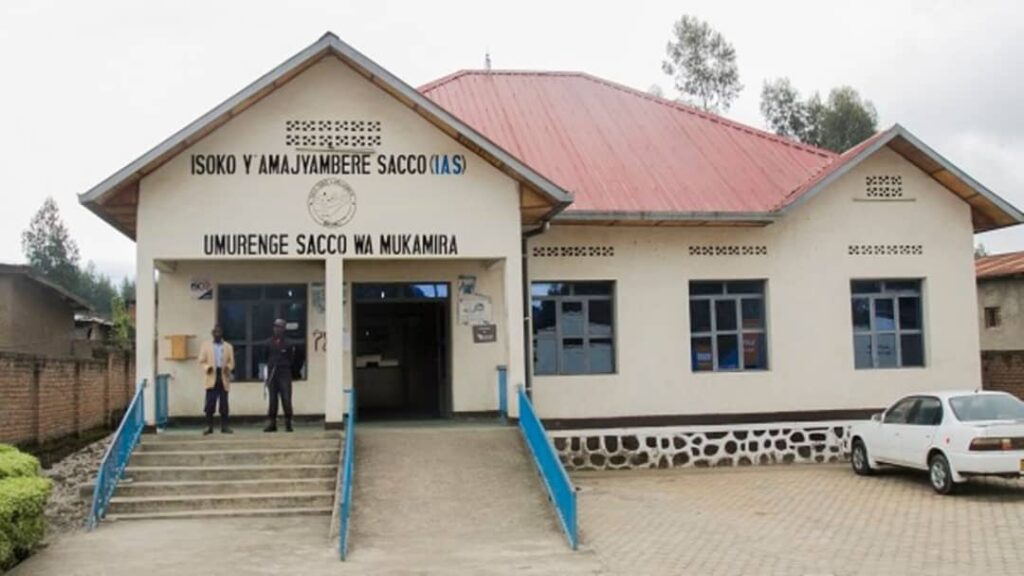
The National Bank of Rwanda (BNR) says the consolidation of Umurenge SACCOs at district level is already producing measurable results, including reduced loan interest rates and improved access to credit for members.
According to a recent BNR report, the 2025/2026 SACCO consolidation programme has contributed to a decline in non-performing loans within microfinance institutions, alongside a rise in credit uptake among clients.
BNR Director of Financial Stability Bernard Nsengiyumva said the merger of SACCOs has strengthened loan assessment systems and improved operational efficiency across the sector, leading to better financial performance.
He noted that pooling resources has made credit evaluation more effective and contributed to lower borrowing costs for members.
Currently, all 416 Umurenge SACCOs nationwide have been consolidated into 30 district-level SACCOs. This restructuring has significantly reduced lending rates, with ordinary loans falling from 24% to 14%, while business and housing loans are now set at 18%.
The report further shows that non-performing loans in microfinance institutions dropped from 4.3% in March 2025 to 2.2% in March 2026.
In contrast, commercial banks recorded a slight increase in non-performing loans, rising from 2.7% to 3.2% over the same period.
Under the ongoing reforms, the maximum loan limit for SACCO members is expected to increase from RWF 15 million to RWF 50 million.
The Umurenge SACCO system, established in 2008, was designed to promote savings culture and provide affordable credit to support grassroots economic development.
The Ministry of Finance and Economic Planning says further consolidation into a single national SACCO structure is expected to strengthen financial capacity and improve service delivery to clients.