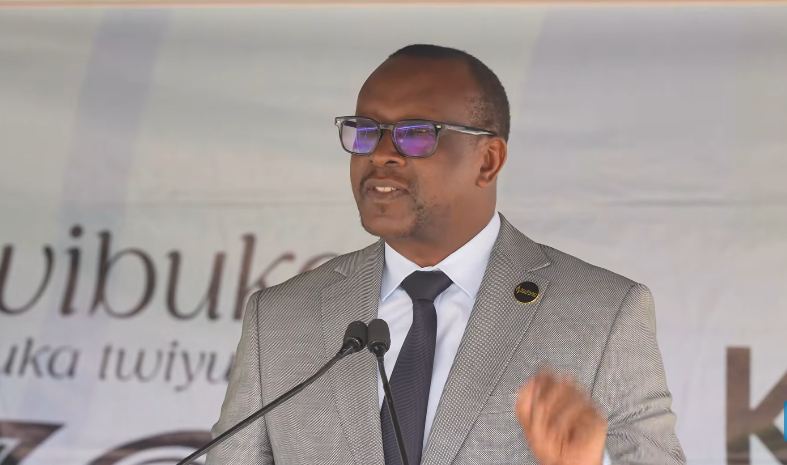
Minister of National Unity and Civic Engagement, Dr. Jean Damascène Bizimana, has said that historical writings, political ideology and cultural expressions played a role in shaping divisions that contributed to the 1994 Genocide against the Tutsi.
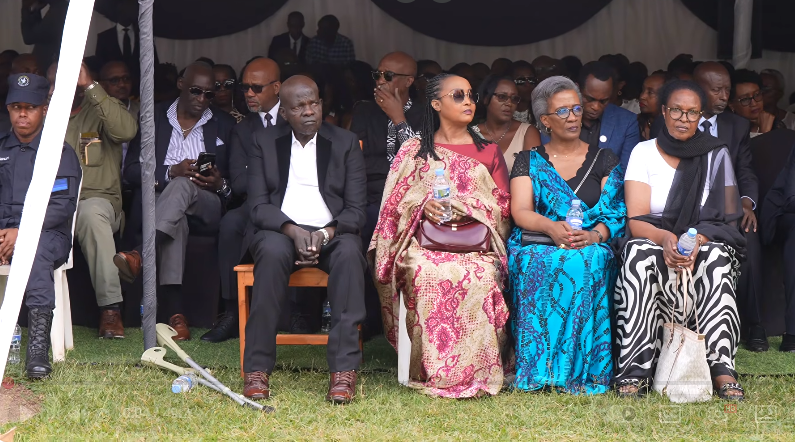
He made the remarks during a commemoration event held in Busasamana Sector, Nyanza District, marking the 32nd anniversary of the genocide.
Dr. Bizimana pointed to what he described as ideological narratives that framed relations between Hutu and Tutsi in antagonistic terms, arguing that such messaging contributed to long-term social and political polarization in Rwanda.
He cited the PARMEHUTU political movement of the First Republic under President Grégoire Kayibanda, saying its ideology institutionalized ethnic division and exclusion.
He argued that the influence of such political ideology and its supporters helped create conditions that eventually led to the genocide against the Tutsi.
The minister also highlighted what he described as the role of cultural and religious messaging in reinforcing divisive ideas, including songs and public expressions from the period.
He referred to a song attributed to a Seventh-day Adventist choir from Gitwe in Ruhango District, which he said compared President Grégoire Kayibanda to the biblical figure Moses.
According to him, the song portrayed Kayibanda as a leader “sent by God” to liberate Hutu from oppression, drawing a parallel with Moses leading the Israelites out of Egypt.
Dr. Bizimana said he was recalling the lyrics to illustrate how political narratives were sometimes reinforced through cultural and religious platforms during that era.
He added that when such narratives are repeatedly promoted under political influence, they can normalize exclusionary thinking and deepen societal divisions over time.
The minister emphasized the importance of accurate historical education, saying it is essential for preventing the re-emergence of genocide ideology.
He called for continued efforts to promote unity, reconciliation, and critical engagement with Rwanda’s past, particularly among younger generations, in order to safeguard against future atrocities.