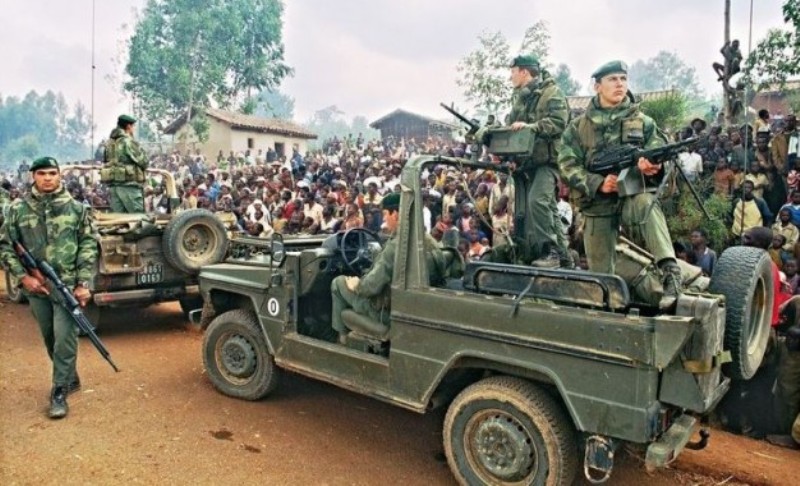
June 24, 1994, the 79th day of the Genocide against the Tutsi, stands out as a day when thousands of Rwandans publicly rejected the presence of French troops in Rwanda, accusing them of failing to protect Tutsi facing extermination.
As the genocide raged on, Tutsi who had survived the massacres remained in hiding and continued to be hunted across the country. At the same time, the Rwandan Patriotic Front (RPF-Inkotanyi) was advancing on several fronts, liberating territories and rescuing Tutsi from areas under attack.
On that day, more than 30,000 people gathered in Ndera, about 20 kilometers east of Kigali, in an area controlled by the RPF. The demonstrators demanded the immediate withdrawal of French troops deployed in western Rwanda and neighboring parts of what is now the Democratic Republic of Congo.
The protest was accompanied by a strongly worded petition signed by 18 representatives of the demonstrators and addressed to then-French President François Mitterrand. The petition denounced France’s decision to send troops to Rwanda at a time when mass killings of Tutsi were continuing across the country.
French forces operating in Rwanda between 1990 and 1994 have long faced accusations of failing to intervene to stop massacres in areas under their control. They have also been accused of having prior knowledge of attacks against Tutsi in Bisesero but not acting to prevent them.
Critics further alleged that France provided military training, equipment and other forms of support to Hutu extremists and the government that orchestrated the Genocide against the Tutsi.
The protest came just one day after French troops arrived in Nyarushishi under Operation Turquoise, a military intervention launched on June 23, 1994.
Although Operation Turquoise was officially presented as a humanitarian mission intended to protect civilians who had sought refuge at Nyarushishi camp, testimonies from survivors and former Interahamwe members later raised serious questions about its effectiveness. Witnesses reported that killings of Tutsi continued in some areas, while some French soldiers were accused of sexually abusing refugee women and girls they had been sent to protect.
The demonstration in Ndera reflected the growing distrust many Rwandans had toward the French military presence at a critical moment in the country’s history, as the genocide continued and the RPF pushed forward to end the killings.