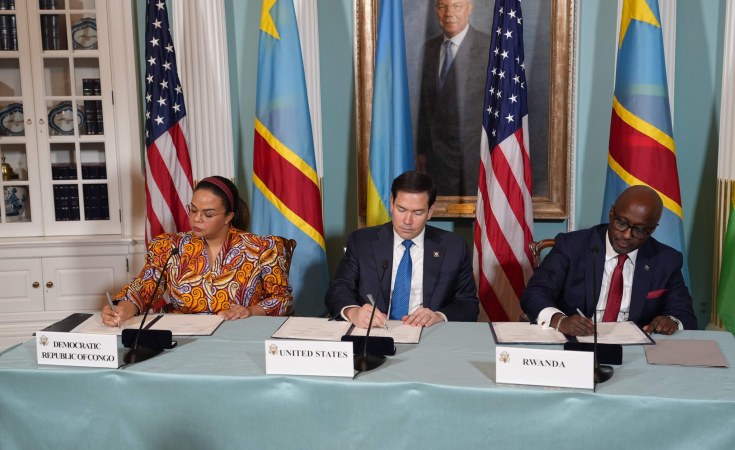
Rwanda’s Minister of Foreign Affairs and International Cooperation, Olivier Nduhungirehe, has said that the implementation of the Washington peace agreement should not be placed on Rwanda alone, insisting that the Democratic Republic of Congo (DRC) must also meet its commitments, particularly the neutralisation of the FDLR armed group.
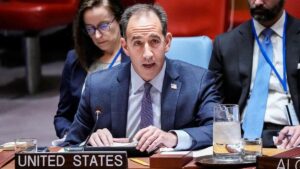
Speaking in an interview with Radio France Internationale (RFI), Nduhungirehe responded to recent remarks by the United States Special Envoy for Africa and the Middle East, Massad Boulos, who noted that the DRC had not yet fulfilled its obligation to neutralise the FDLR, while Rwanda had not lifted its defensive measures amid ongoing accusations of supporting AFC/M23.
He stressed that the agreement places binding responsibilities on both sides.
“The Washington agreement was signed by two parties, and each side has obligations it must fulfil. It is not Rwanda alone that should implement it,” he said.
The minister further noted that, according to assessments acknowledged by the United States itself, the Congolese government has yet to fully implement its core commitment to dismantle the FDLR.
Rwanda questions U.S. sanctions on mining firms
Nduhungirehe also criticised recent U.S. sanctions targeting Rwandan mining and mineral processing companies, including Gasabo Gold Refinery, which Washington accuses of being linked to the illicit trade of minerals sourced from AFC/M23-controlled areas in eastern DRC.
He described the sanctions as evidence of imbalance in the mediation process led by the United States.
“The United States itself recognises that the DRC has not fulfilled its obligation to neutralise the FDLR. But when it comes to sanctions, only Rwanda is targeted. That shows a clear imbalance in this mediation,” he said.
He added that Kigali has repeatedly shared information with Washington alleging non-compliance by the DRC, but said those submissions have not been given equal consideration.
Calls for equal accountability
Nduhungirehe argued that any enforcement measures should be applied impartially if both parties are found to be in breach of their commitments.
“If they acknowledge that the DRC has not implemented its obligations, why are sanctions imposed only on Rwanda? That is a question that should be asked of those making these decisions,” he said.
He warned that what he described as a selective approach risks undermining the Washington peace process and broader efforts to achieve lasting stability in eastern DRC and the Great Lakes region.
Ongoing tensions over mutual accusations
The DRC government, the United States and United Nations experts continue to accuse Rwanda of supporting the AFC/M23 rebel group, including through military assistance and deployment of troops.
Rwanda has consistently denied the allegations, maintaining that its security measures are defensive and aimed at countering threats posed by the FDLR operating in eastern DRC.
As the Washington and Doha peace processes continue, disagreements over implementation persist, slowing progress toward a comprehensive and durable settlement.