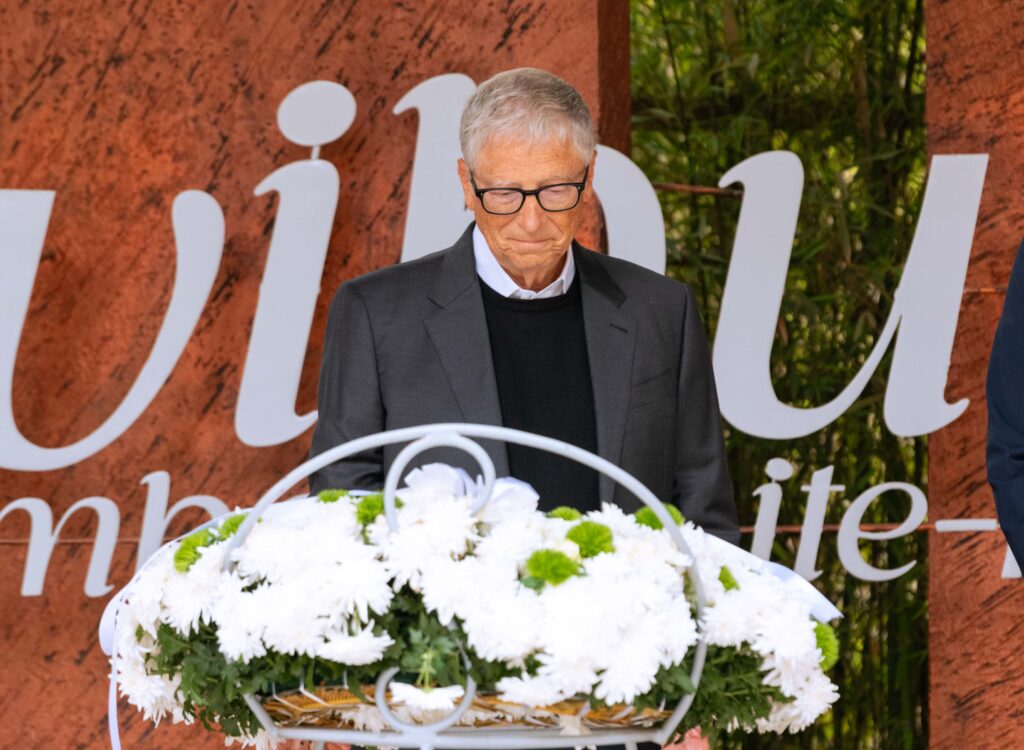
American philanthropist Bill Gates visited the Kigali Genocide Memorial in Gisozi on Monday, where he paid tribute to victims of the 1994 Genocide against the Tutsi and praised Rwanda’s remarkable recovery more than three decades after the tragedy.
Gates, who is in Rwanda on a working visit, toured the memorial and was briefed on the events that led to the genocide, its devastating impact on the country, and Rwanda’s journey of unity, reconciliation and reconstruction.
He also learned about the genocide’s lasting effects on survivors and the nation, as well as the progress Rwanda has made over the past 32 years in rebuilding its institutions, economy and society.
After touring the memorial, Gates signed the visitors’ book, describing Rwanda’s recovery as extraordinary and underscoring the importance of preserving the memory of those who lost their lives.
“It is truly remarkable to see how Rwanda has rebuilt after the 1994 Genocide against the Tutsi and continues to build a strong nation. This memorial plays a vital role in ensuring that the victims are remembered and that this history is preserved,” he wrote.
Gates arrived in Rwanda on July 19 for a visit focused on assessing the country’s progress in healthcare, agriculture and the use of digital technology to improve public service delivery.
During his stay, he is expected to hold talks with senior government officials and visit projects supported by the Gates Foundation, particularly those aimed at strengthening healthcare systems, increasing agricultural productivity and expanding the use of technology in delivering public services.
Ahead of the visit, Gates said Rwanda has made significant progress in healthcare over the past 25 years, demonstrating that meaningful results can be achieved when governments invest not only in medical innovation but also in ensuring those innovations reach the people who need them most.
The Gates Foundation has worked with Rwanda for more than two decades, supporting programmes that improve public health, boost agricultural productivity and advance sustainable development.