Rwanda has received its first international benchmark of student learning after taking part in the Programme for International Student Assessment (PISA), with results showing significant gaps in mathematics, science and reading comprehension in English.
The PISA 2025 results, released in Kigali on September 8, 2026, show that while Rwandan students spend considerable time using digital technology for learning, many continue to struggle to apply their knowledge to real-world problems.
PISA, organised by the Organisation for Economic Co-operation and Development (OECD), assessed more than 760,000 15-year-old students across 91 countries and economies. Students were assessed regardless of the grade they were in or the subjects they studied.
Rwanda participated in the assessment for the first time, with 6,622 students from 213 public and private schools taking part. The participating schools included institutions from both urban and rural areas.
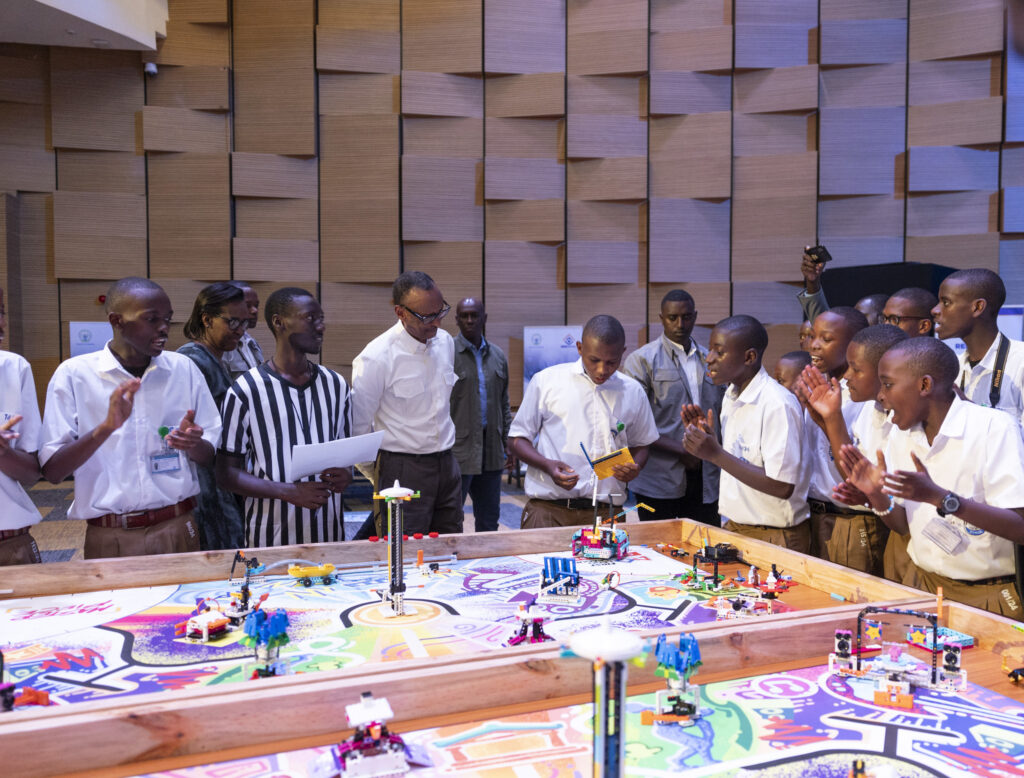
One of the notable findings was the amount of time Rwandan students spend using digital devices for learning. According to the report, students said they spent an average of 3.2 hours a day using digital devices for educational activities, placing Rwanda among the countries with relatively high levels of technology use in learning.
However, the extensive use of technology was not matched by strong academic performance.
Rwanda scores well below OECD average
PISA 2025 focused on students’ ability to apply knowledge in mathematics, science and reading. In Rwanda, the reading assessment was conducted in English.
Rwandan students recorded average scores of 317 points in science, 312 in mathematics and 301 in reading.
These figures were considerably below the OECD averages of 482 points in science, 463 in mathematics and 461 in reading.
PISA is designed to measure more than students’ ability to recall information. It examines whether 15-year-olds can use what they have learned to understand and solve problems they encounter in everyday life.
Students are therefore expected not only to know the correct answer, but also to reason, analyse information and apply their knowledge to find solutions.
Majority of students below basic proficiency
The results show that a large majority of Rwandan students had not reached the basic proficiency level across the three areas assessed.
Overall, 86.5% of the students assessed in Rwanda were below the basic proficiency level in mathematics, science and reading.
Even more strikingly, no Rwandan student was recorded in the highest proficiency category.
The findings raise questions about the quality of learning outcomes in Rwanda. Although the country has made progress in expanding access to education and increasing the use of digital technology in schools, the results suggest that greater attention is needed to ensure these investments translate into stronger knowledge, critical thinking and problem-solving skills.
Disadvantaged students show academic resilience
The assessment also produced an encouraging finding regarding students from disadvantaged socio-economic backgrounds.
Rwanda recorded a relatively small performance gap between students from disadvantaged families and those from more advantaged backgrounds compared with many other participating countries.
The OECD uses the term “academically resilient students” to describe students who face socio-economic disadvantages but still perform strongly in school.
Across the OECD, such students accounted for an average of 11.9%. In Rwanda, the proportion was almost twice that figure, placing the country among only four where at least 22% of students were classified as academically resilient, alongside Cambodia, Kenya and Uzbekistan.
The finding suggests that many Rwandan students are able to overcome socio-economic challenges and achieve strong results despite difficult circumstances.
Boys outperform girls across all three areas
The PISA results also revealed a gender gap in Rwanda, with boys recording higher average scores than girls in all three assessed areas.
In science, boys scored an average of 332 points, compared with 306 for girls. In mathematics, boys scored 325, while girls scored 302.
The gap was smaller in reading, but boys still came out ahead, scoring an average of 304 compared with 298 for girls.
The finding is notable because girls generally outperform boys in reading across many PISA-participating countries.
The OECD report places Rwanda and Kenya among the countries with some of the largest gender gaps in science, with boys performing significantly better than girls.
English remains a major challenge
Reading comprehension in English was the weakest of the three assessed areas for Rwandan students.
The result highlights the challenges students continue to face in learning and using English, which plays an important role in Rwanda’s education system.
A gender difference was also recorded among students who reached the highest proficiency levels in reading. Girls accounted for 3.9% of students in this category, compared with just 0.4% of boys.
In response, the Ministry of Education said it is implementing programmes to strengthen teachers’ English-language skills, with the aim of improving their ability to teach the language and help students develop stronger proficiency.
Ministry says results will guide education reforms
Speaking at the launch of the PISA 2025 results in Kigali on September 8, Education Minister Joseph Nsengimana acknowledged that Rwanda’s performance fell short of the level the country wants to achieve.
He said, however, that the results would provide valuable evidence for identifying weaknesses and improving the education system.
“We are not where we want to be when we look at Rwanda’s performance. These results are what we are going to study in order to understand them properly. We need to examine how the students responded and how the participating schools performed so that we can identify what needs to be done,” Nsengimana said.
He added that Rwanda joined PISA partly to ensure that decisions in the education sector are increasingly based on reliable data and evidence, rather than assumptions or domestic assessments alone.
For Rwanda, the first PISA results provide both a challenge and a baseline against which future progress can be measured. The findings point to an urgent need to strengthen foundational learning, particularly in mathematics, science and English, while building on the resilience demonstrated by students from disadvantaged backgrounds.