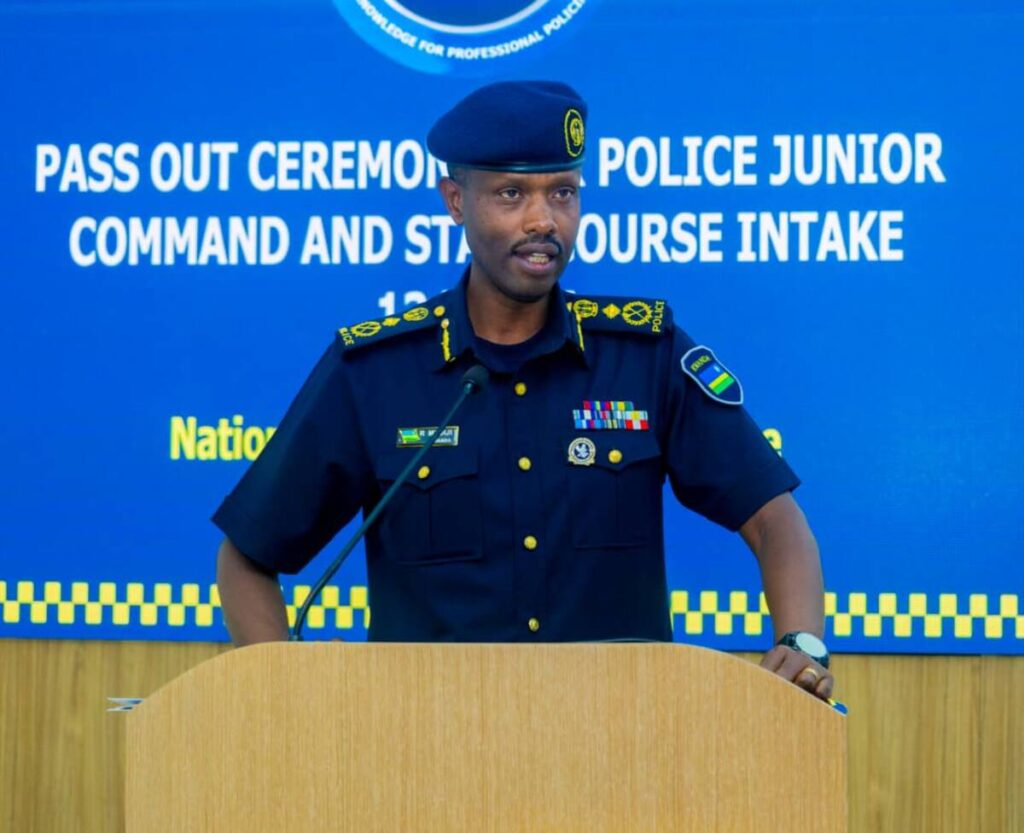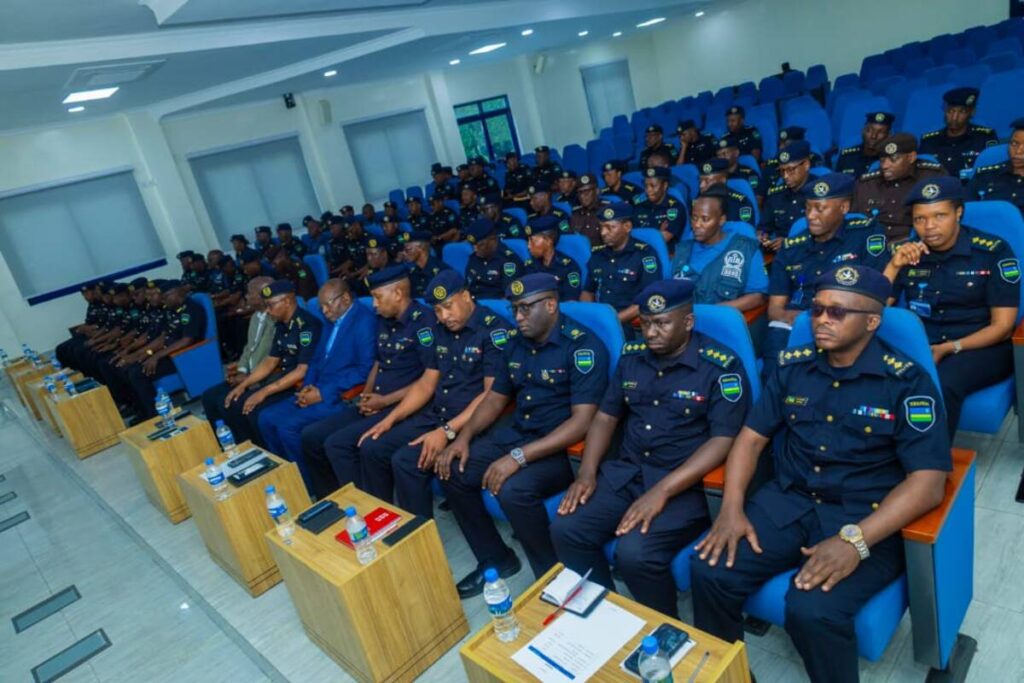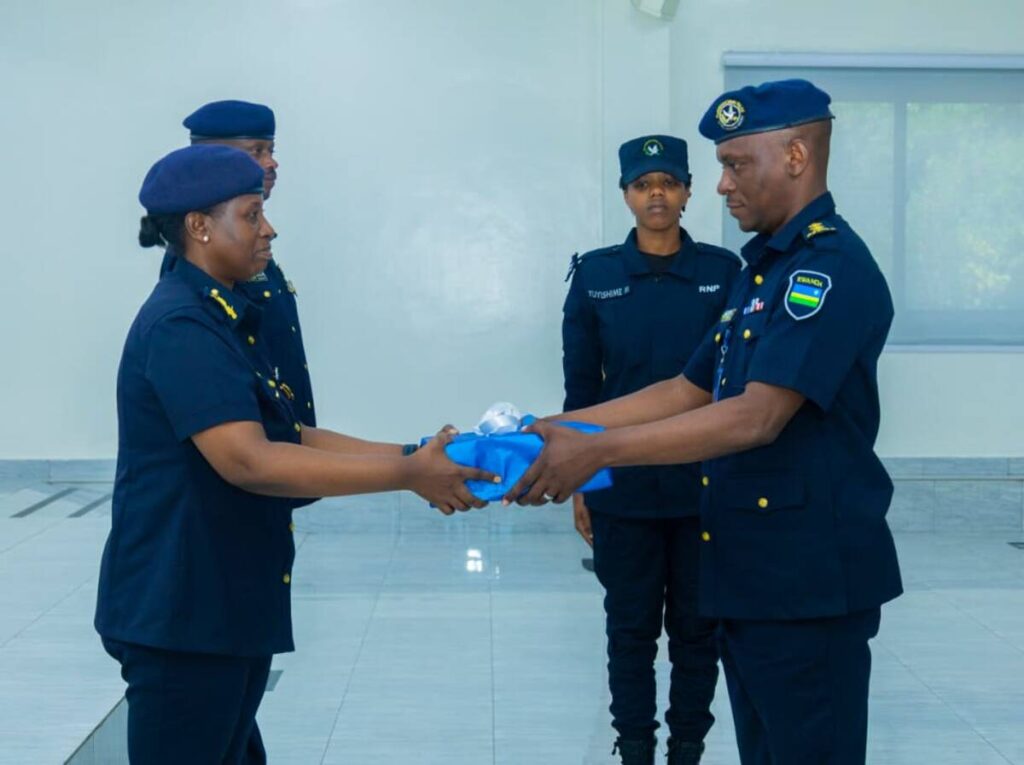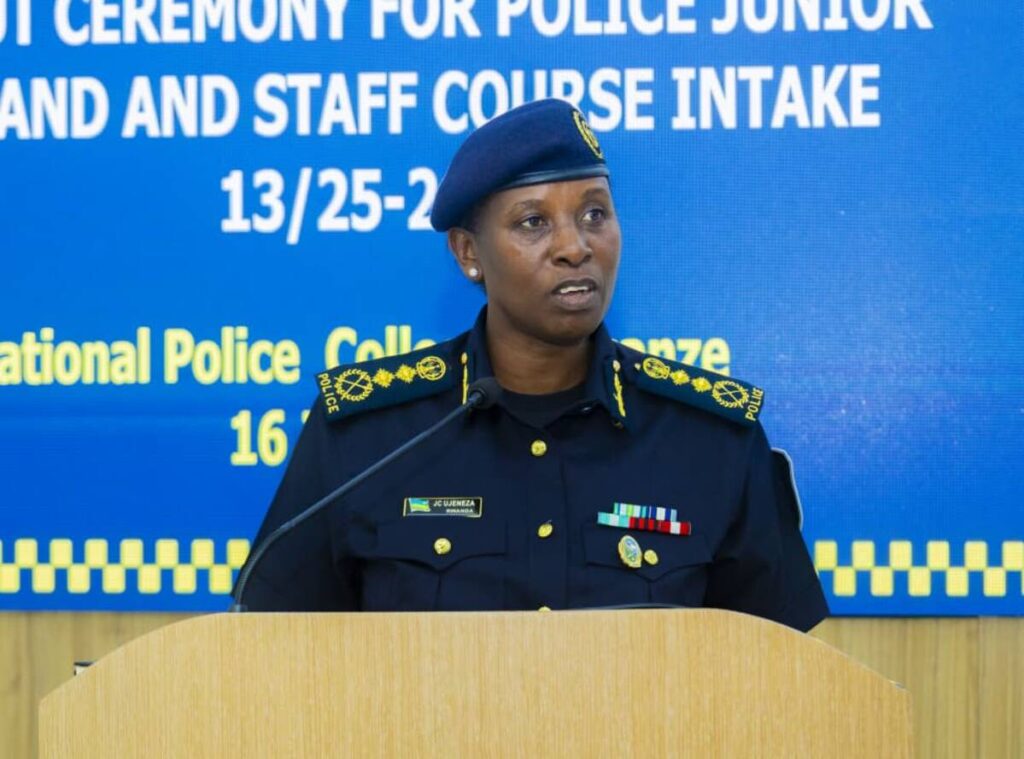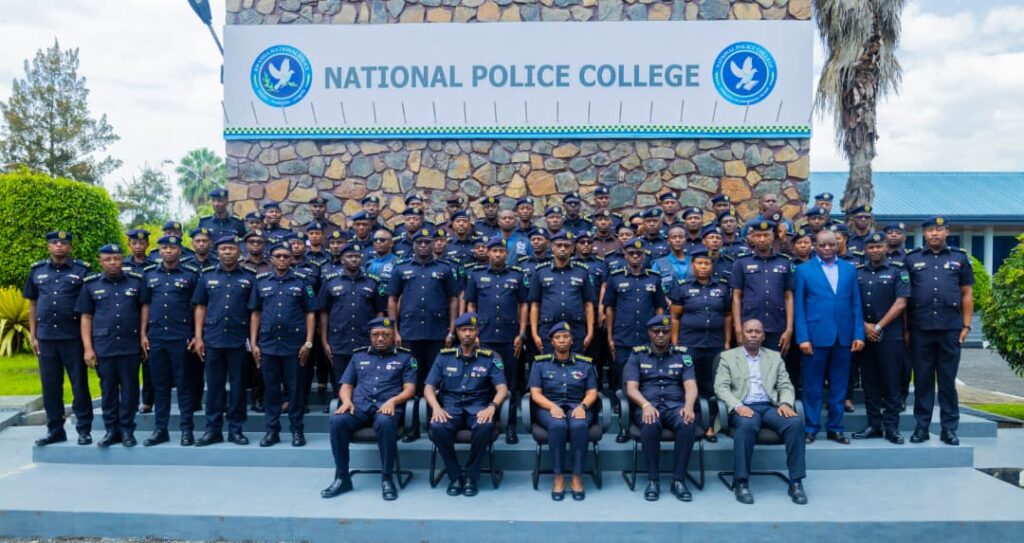
Forty-seven junior officers from Rwanda’s law enforcement and security agencies have graduated from a five-month leadership and conflict management training at the National Police College (NPC) in Musanze District. The officers were urged to apply their skills to enhance security and operational efficiency across the country.
The graduation, part of the 13th Police Junior Command and Staff Course (PJCSC), included 36 officers from the Rwanda National Police, five from the Rwanda Correctional Service (RCS), five from the Rwanda Investigation Bureau (RIB), and one from the National Intelligence and Security Service (NISS).
Deputy Inspector General of Police (DIGP) Jeanne Chantal Ujeneza, who oversees administration and personnel, emphasized that modern security challenges require more than experience. Officers must combine strategic thinking, planning, coordination, and ethical leadership to address both conventional and technology-driven threats.
“Leadership is not defined by rank alone,” DIGP Ujeneza said.
“It is demonstrated through integrity, accountability, the ability to make decisions that protect citizens, and commitment to national interests. You are entrusted with authority, use it professionally and responsibly.” He added.
Commissioner of Police (CP) Rafiki Mujiji, head of the National Police College, highlighted that the course focused on professional conduct, ethics, teamwork, and practical exercises linking classroom knowledge to real-world operations.
Graduates were encouraged to apply their skills effectively in their respective agencies, going beyond simply following orders. They were reminded to provide timely advice, lead with strategic vision, uphold ethical standards, and leverage modern tools to improve service delivery and operational performance.
The training reflects Rwanda’s commitment to strengthening leadership, professionalism, and operational capacity across its security and law enforcement institutions.