The Alliance Fleuve Congo (AFC/M23) has accused President Félix Tshisekedi’s administration of shifting responsibility for the Democratic Republic of Congo’s security crisis onto foreign countries in an effort to conceal internal governance failures.
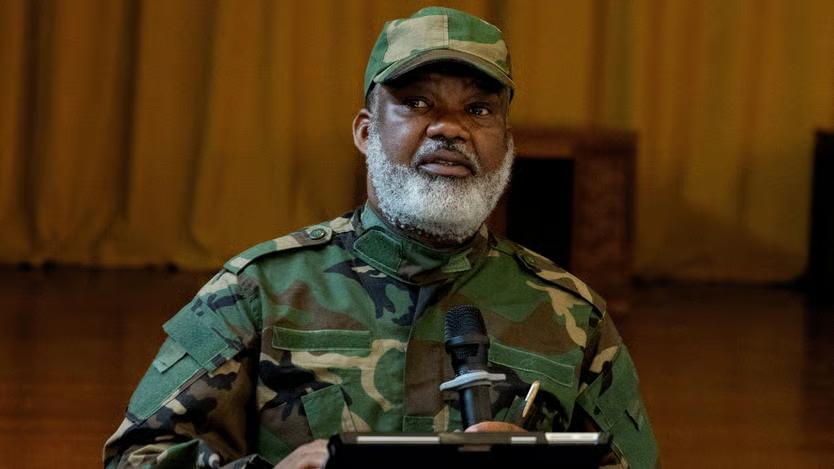
In an end-of-year statement, AFC/M23 political coordinator Corneille Nangaa accused the Congolese government of externalizing domestic problems rather than addressing their root causes.
According to Nangaa, Congo’s challenges are internal and require Congolese-led solutions. He argued that attributing insecurity to foreign actors amounts to addressing symptoms while ignoring the underlying causes, describing the approach as a tactic by authorities in Kinshasa to mask ineffective governance.
He further maintained that lobbying foreign capitals or seeking external scapegoats would not deliver lasting solutions to the country’s chronic problems, which include persistent insecurity, civilian killings, citizenship-based conflicts, corruption, poverty, hate speech, ethnic discrimination, embezzlement of public funds, and rising urban crime.
Nangaa stated that AFC/M23’s actions are aimed at achieving a sustainable political solution grounded in transparency, truth, accountability, and the restoration of justice rather than retaliation.
He urged Congolese citizens to pursue national reconciliation and unity through peaceful coexistence, rejection of discrimination, and adherence to the rule of law. He added that the period of political deception and unfulfilled promises has ended, asserting that Congolese people remain determined to defend their rights, justice, peace, and the reconstruction of the state ahead of 2026.
Nangaa also addressed the status of peace talks between the Congolese government and AFC/M23, facilitated by Qatar in Doha, noting that progress remains limited. He attributed the stalemate to the Tshisekedi administration’s refusal to resume either direct or virtual negotiations with the group.