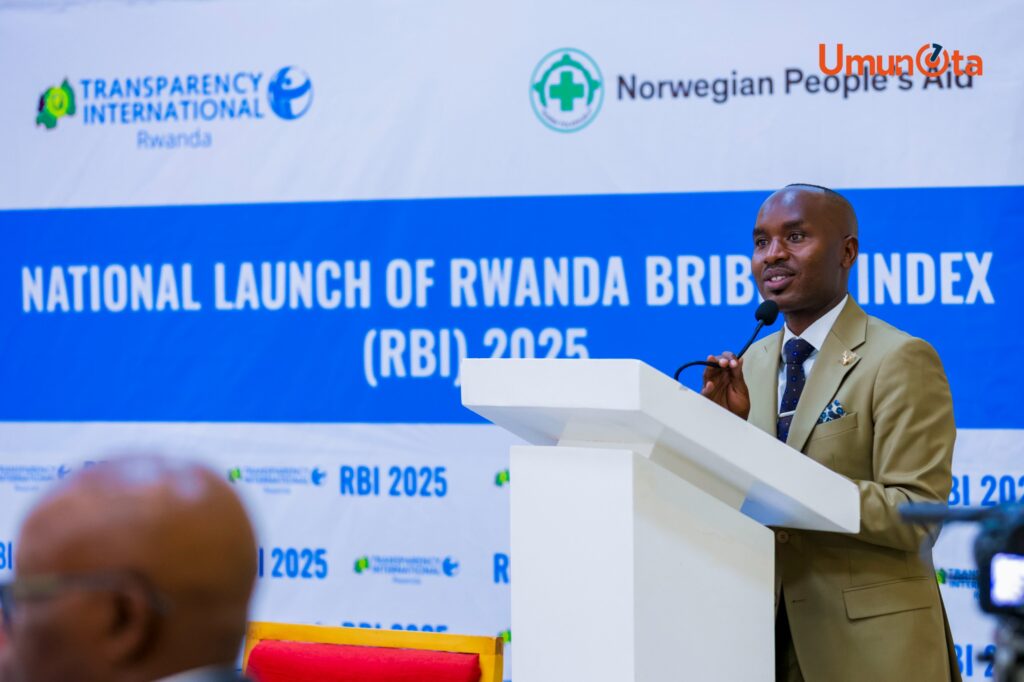
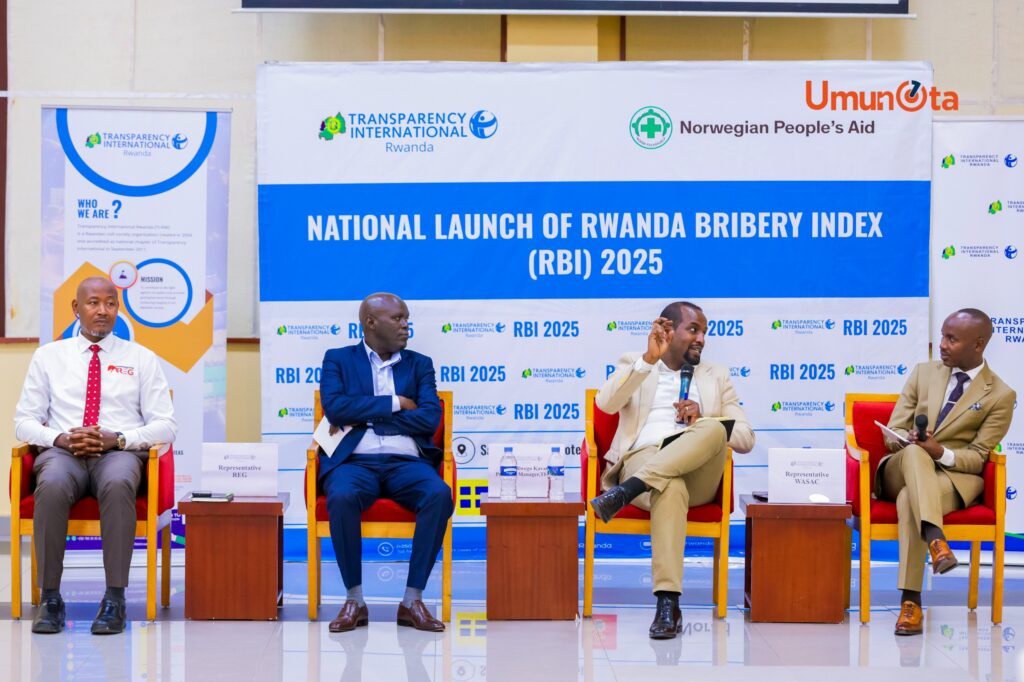
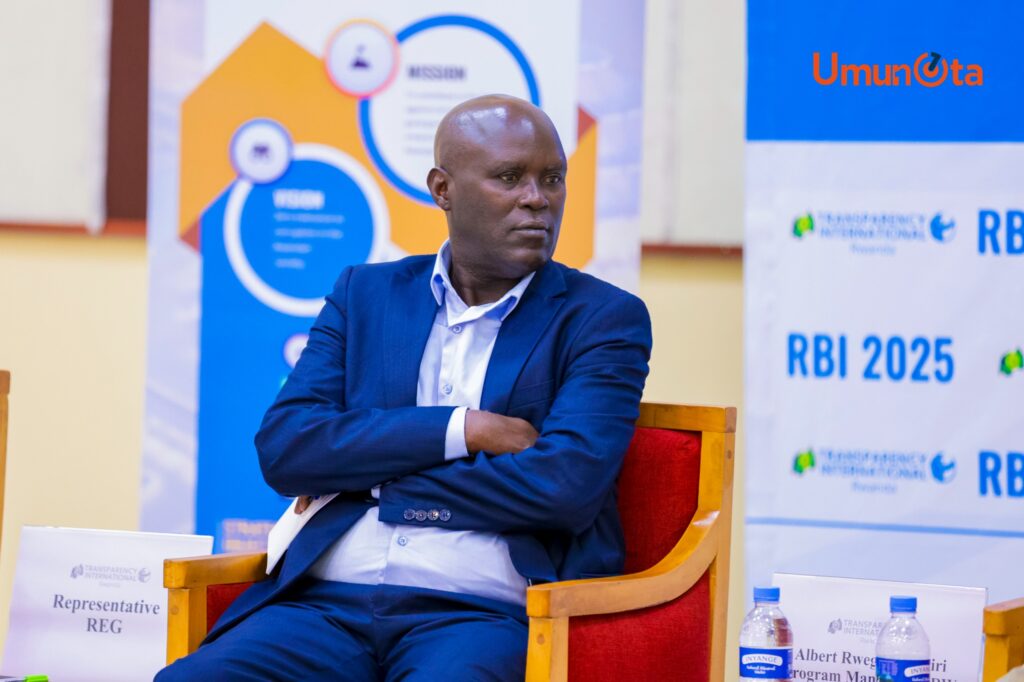
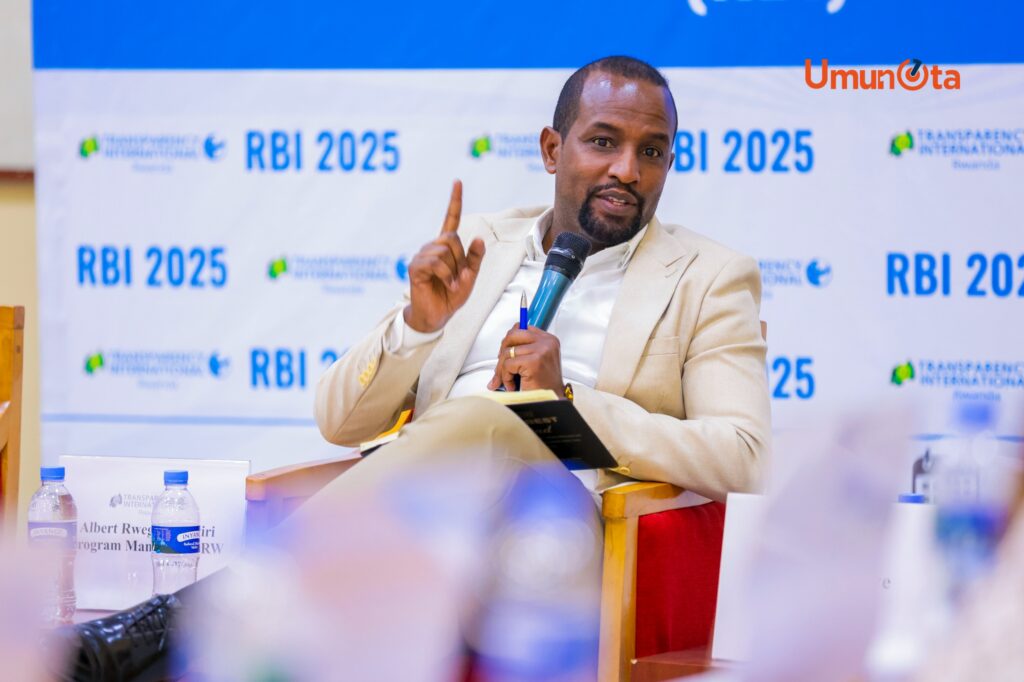
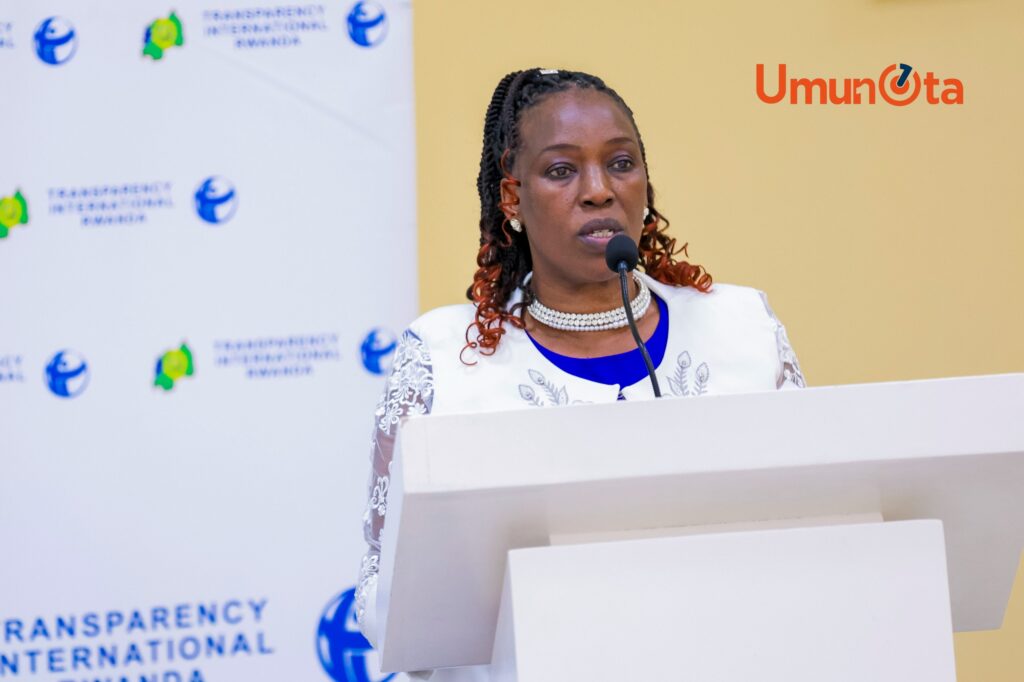
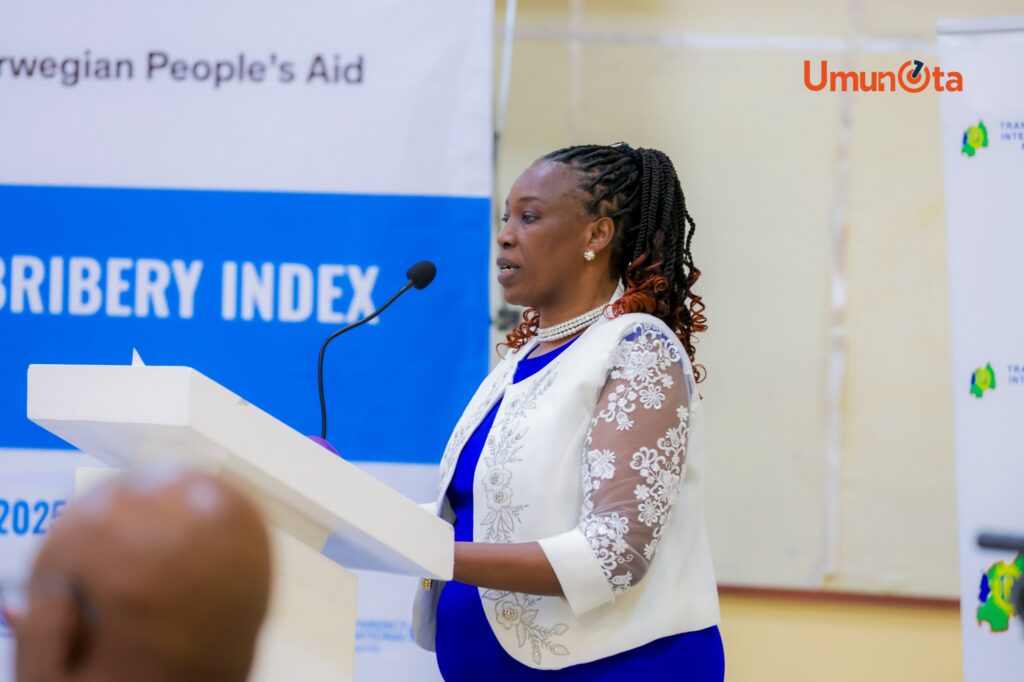
The latest Rwanda Bribery Index, an annual survey conducted by Transparency International Rwanda, shows that bribery in Rwanda has declined to 14.6%, down from 18.5%.
The findings were released on Wednesday, December 3, 2025.
According to the report, the private sector ranks as the most affected, accounting for 8% of reported bribery cases. Local government institutions follow with 4.3%, while the Rwanda Energy Group (REG) ranks third at 3.7%.
The judiciary is fourth with 3.5%, followed by WASAC at 2.8%.
Transparency International Rwanda notes that from 2022 to 2025, corruption has been steadily declining at an encouraging rate.
The organization explains that most people who give bribes do so because they want to speed up delayed services, while others believe they cannot receive services unless they pay a bribe.
When asked about their perception of corruption levels in the country, 66.23% of respondents said corruption had decreased over the past year, while only 9.49% felt it had increased.
Additionally, 66.27% of citizens are confident that corruption will continue to decline in 2026.
The services most associated with bribery in 2025 include building permits (22.9%), driver’s licenses (16.6%), land documents (13.6%), and expedited access to electricity or water services (6–8%).
The study also shows that citizens often pay bribes to speed up services, because they believe it is the only way to get assistance with authorities.
Over the past five years (2021–2025), public confidence in government efforts to fight corruption has remained strong, with 77% of respondents acknowledging that the government is putting in significant effort to combat the issue.
TI Rwanda also reports that only 9.5% of people who witnessed or experienced corruption actually reported it, while 90.5% did not. Among those who did not report, 24% said corruption cases did not concern them, 16% gave no reason, 10% feared intimidation if they reported, and 8% did not know where to report such cases.
The survey further indicates that 4.29% of businesspeople were asked for a bribe, and 1.14% admitted to paying one. Meanwhile, 10.7% paid bribes for business-related reasons.