News

Mozambique's President and Commander-in-Chief of the Mozambique Defence Armed Forces (FADM), Daniel Francisco Chapo, visited Rwandan security forces deployed on a peace support mission in the country.
Rwanda Defence Force Spokesperson and Director General for International Military Cooperation, Brig. Gen. Patrick Karuretwa, has called on participants of the 16th Indangamirwa cohort to uphold patriotism, strong national values, and responsible citizenship as key drivers of Rwanda’s development.
The Rwanda Private Sector Federation (PSF) has donated 10 cows to Liberation war veterans with disabilities in Ngororero District, in a gesture of appreciation for their contribution to Rwanda's liberation and the country's continued peace and stability.
Two Rwanda Defence Force (RDF) officers have graduated from a senior military training programme in Uganda, underscoring the growing defence cooperation between Kigali and Kampala.
Rwanda’s education system has undergone one of the most significant transformations in the country’s post-Liberation history, expanding from a heavily damaged system after the 1994 Genocide against the Tutsi to near-universal access at primary level and major gains across all education stages.
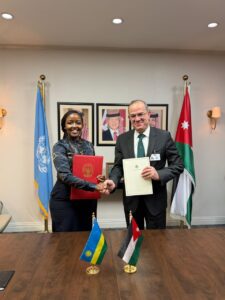
Rwanda and Russia have signed an agreement outlining the next steps toward the development of a Small Modular Reactor (SMR), a compact nuclear facility intended to generate electricity and support the country’s growing energy demand.
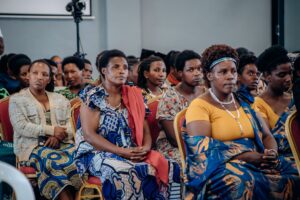
Only 5% of women in Rwanda own houses registered in their names, while 35% co-own property with their husbands, according to the 2025 Rwanda Demographic and Health Survey (RDHS).
The AFC/M23 rebel movement has condemned sanctions imposed by the United States on Rwandan mineral companies and their executives, describing the measures as biased and unhelpful to ongoing peace efforts in eastern Democratic Republic of Congo (DRC).
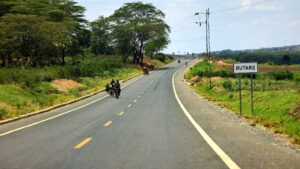
Residents of Mirama I and Mirama II villages in Nyagatare Sector say the completion of a new tarmac road and a modern market marks a turning point for their community, with improved transport, safer trading spaces and expanded economic opportunities.
HIV prevalence in Rwanda has declined to 2.2% among people aged 15–49, down from 2.7% in 2019–2020, according to the Rwanda Demographic and Health Survey (RDHS) 2025.