Akagera National Park welcomed 15,790 visitors in the third quarter of 2026, generating more than Rwf2.2 billion in tourism revenue, while businesses run by communities around the park earned more than Rwf614 million in profits and income.
The figures are contained in the park’s July–September 2026 performance report, which highlights tourism growth, wildlife conservation, fire management and initiatives aimed at improving the livelihoods of communities surrounding the park.
During the quarter, Akagera hosted the annual African Parks leadership meeting, bringing together partners and donors, and participated in events including the Wildlife Ranger Challenge, Akagera Trail Marathon and the Kwita Izina gorilla naming ceremony.
Tourism revenue exceeds $1.5 million
The park received 15,790 visitors during the quarter, including 13,911 paying visitors.
According to the report, Akagera generated $1.529 million in commercial revenue. In September, average visitor spending reached $162, a 22 per cent increase compared with September 2025.
The figure was the highest average visitor spending recorded in September since 2010, according to the report.
The revenue supports the park’s operations while demonstrating tourism’s contribution to Rwanda’s wider economy.
Community businesses generate more than Rwf614 million
Businesses operated by communities around Akagera generated more than $416,000, equivalent to approximately Rwf614.5 million, during the third quarter of 2026.
The report shows that fishing, beekeeping, community enterprises, independent tourist guiding and construction cooperatives collectively generated $158,322.
A further $258,571 reached local communities through purchases of goods and services from businesses and service providers operating around the park.
Fishing cooperatives generated $38,649, while the Akagera construction cooperative and casual labourers earned a combined $67,887.
Elephant research identifies 121 individuals
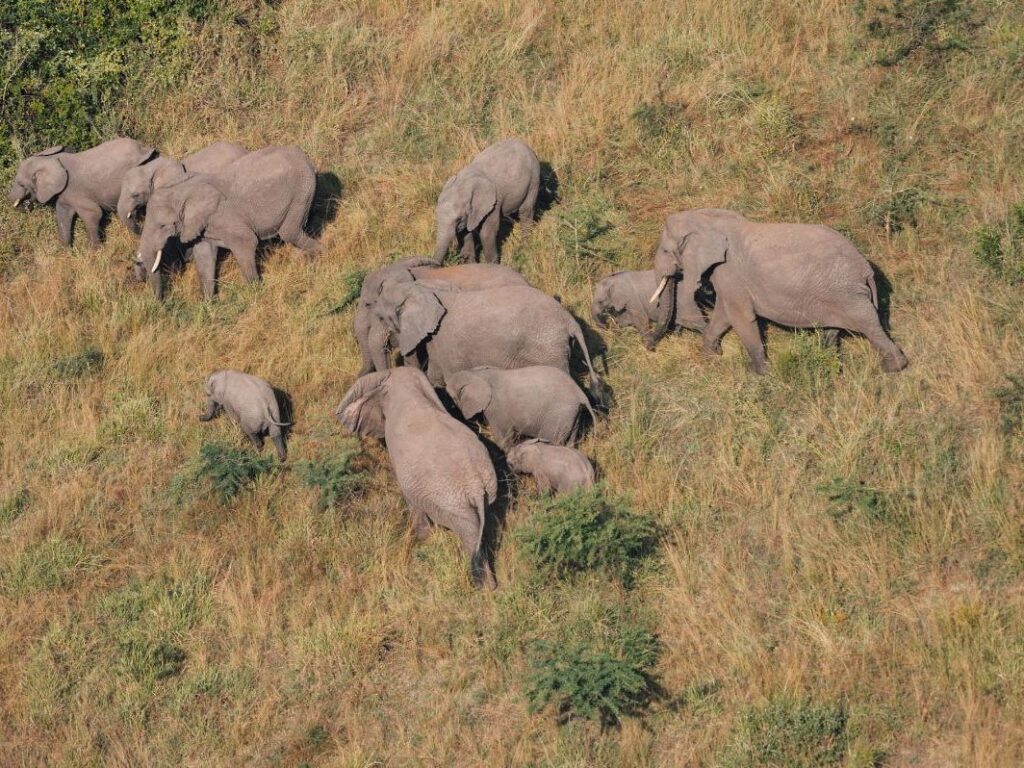
Akagera continued monitoring its elephant population to strengthen conservation efforts and track changes in numbers.
During the quarter, researchers identified 55 known elephants belonging to two closely related family groups.
Three newly identified elephants were added to the park’s identification database, bringing the total number of individually identified elephants to 121. This represents 85.2 per cent of the elephants known to live in the park.
Rhinoceros monitoring intensified
Rhinoceros monitoring teams continued daily patrols on foot and by air to assess the animals’ condition and protect them from threats.
During the quarter, teams recorded 2,517 sightings of white rhinos and 413 sightings of black rhinos.
After obtaining the necessary permits, rhino monitoring staff began three weeks of training in the use of drones to track the animals.
In addition, two park rangers and three rhino monitors attended black rhino monitoring training at Liwonde National Park in Malawi to strengthen their conservation skills and capacity.
Tourism revenue-sharing projects assessed
Akagera National Park, the Rwanda Development Board (RDB) and district representatives continued monitoring projects funded through the tourism revenue-sharing programme.
In July 2026, they visited 49 projects in Kayonza, Gatsibo and Nyagatare districts implemented during the 2024/2025 and 2025/2026 financial years.
Of the projects inspected, 19 had been completed, 11 were more than 95 per cent complete, seven had reached 70 per cent completion, and 12 had not yet started.
A further assessment of 15 projects was conducted in September. Nine had been completed or were nearing completion, while six were still at an early stage or had not started.
The inspections aim to assess progress, ensure funds are used appropriately and address challenges that could delay implementation.
The tourism revenue-sharing programme is intended to link wildlife conservation with economic development for communities living around the park.
Controlled burning used to manage fire risks
During the dry season, Akagera management conducted controlled burns in selected areas to reduce accumulated grass and other vegetation that could fuel severe wildfires, helping protect wildlife habitats.
The report indicates that by August 2026, fires had affected 16,631 hectares of the park. Nearly one-third of the affected area was attributed to planned burns conducted by park management, while the remainder was affected by unplanned fires.
Unplanned fires were linked to accidents involving communities living near the park or deliberate burning, potentially associated with illegal wildlife hunting.
Established in 1934, Akagera National Park covers 1,122 square kilometres and is home to more than 11,300 animals, including 60 lions, 142 elephants, 4,000 buffaloes, 115 giraffes, between 80 and 100 leopards, and 145 rhinos.
Other wildlife includes 2,000 zebras, 1,500 impalas, between 120 and 150 hyenas, between 1,500 and 1,800 hippos, 1,000 topis and more than 1,000 waterbucks. The park also hosts 179 butterfly species.
Akagera has approximately 500 bird species, making it Rwanda’s leading national park in terms of bird diversity. Nyungwe National Park has about 300 species, while Gishwati-Mukura and Volcanoes national parks have fewer.