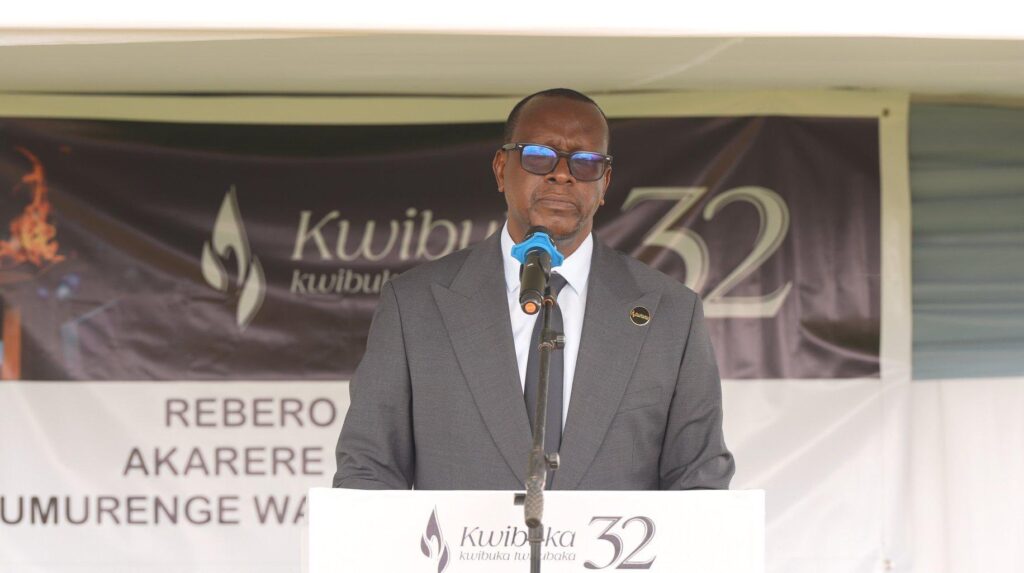
The Minister of National Unity and Civic Engagement, Jean Damascène Bizimana, has warned against the use of the term “attempted genocide,” emphasizing that genocide is a deliberate, long-term process that cannot be described as an attempt.
He made the remarks on April 14, 2026, during the 32nd commemoration of the 1994 Genocide against the Tutsi in Bugesera District, where more than 3,000 victims killed at Rebero Hill in Mayange Sector were honored.
Speaking at the event, Dr Bizimana stressed that the term is misleading and undermines the nature of genocide as a planned and executed crime.
“There is no such thing as ‘attempted genocide.’ Genocide is genocide. It is rooted in a deliberate plan to exterminate people based on their identity—not the number of those killed. Once that plan is implemented, it constitutes genocide,” he said.
He noted that the Genocide against the Tutsi was the culmination of a long-standing ideology of division and hatred, which intensified in the early 1990s before reaching its peak in 1994.
Dr Bizimana attributed the tragedy to discriminatory policies under past regimes that institutionalized ethnic divisions and fueled violence.
“Today, Rwanda is no longer defined by ethnicity or regional divisions. It is built on unity and the shared well-being of all citizens,” he said.
He urged parents to raise children with values of patriotism, integrity, and unity, while ensuring they understand the history of the Genocide against the Tutsi to prevent its recurrence.
The Minister also called on young people to reject genocide ideology and resist any attempts to instill hatred, encouraging them instead to promote unity and contribute to national development.
He concluded by urging Rwandans to draw lessons from history while shaping a future grounded in unity, resilience, and collective responsibility to ensure such atrocities never happen again.