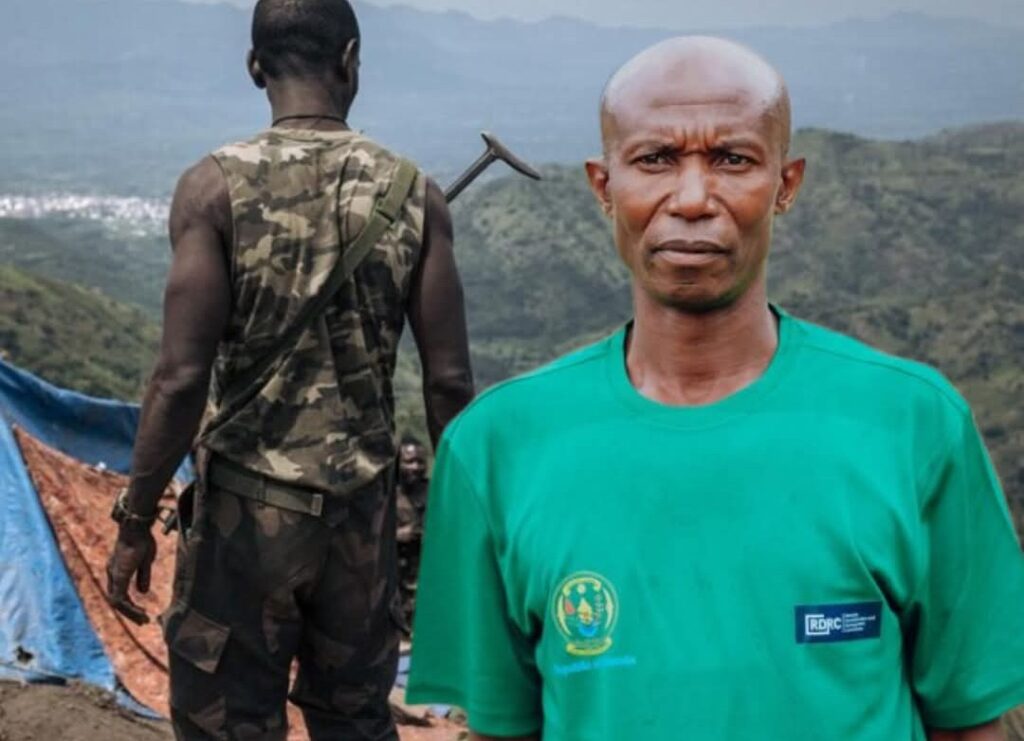
Lt. Col. (Rtd) Emilien Mpakaniye, a former member of the FDLR, has warned that the armed group remains a serious security concern in eastern Democratic Republic of Congo (DRC), arguing that its long presence in the region and alleged links with elements of the Congolese security establishment continue to complicate efforts to dismantle it.
Mpakaniye said the FDLR should not be regarded as a weakened or outdated organisation, arguing that its ideology continues to be passed on, particularly among young people growing up in areas where the group has operated.
“Those who say FDLR is no longer a threat are wrong because FDLR has put down deep roots,” he said.
Mpakaniye, who spent years within the group before leaving and undergoing reintegration, said one factor sustaining the FDLR is what he described as a “false prophecy” promoted by some of its leaders.
He said fighters have been told that even if only one member of the FDLR remains, that person could eventually return to Rwanda and take power.
According to Mpakaniye, such narratives continue to be passed on to children and communities in areas where the group has influence, helping preserve its ideology across generations.
He also alleged that some religious figures and other individuals in the DRC have promoted narratives presented as divine prophecies supporting the group’s political ambitions.
Alleged links with Congolese forces
Mpakaniye further alleged that elements within the Congolese army, Wazalendo armed groups and other actors have maintained links with the FDLR.
“In the Congolese army and among the Wazalendo, they are the ones protecting it; they have links with FDLR,” he said.
The allegations could not independently be verified.
His comments come amid renewed scrutiny of the FDLR’s continued presence in eastern DRC and ongoing regional efforts to address armed groups operating in the area.
Mpakaniye argued that the group’s longevity and continued ideological influence make it difficult to eliminate through military pressure alone.
He said efforts to address the FDLR threat should therefore also focus on dismantling the networks and narratives that allow the organisation to maintain influence.
The former officer maintained that a sustainable solution requires addressing both the armed group itself and the wider political, security and ideological environment that he believes has enabled it to survive for decades in eastern DRC.