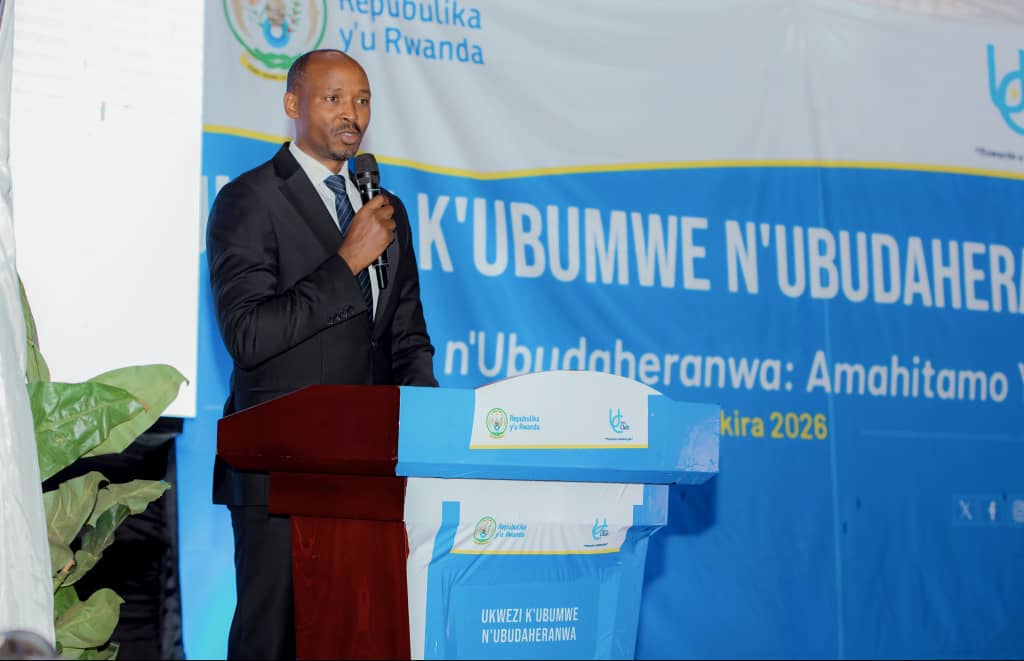
More than 600 people attending the Unity and Resilience Forum, which brought together residents of Karongi, Nyamasheke and Rusizi districts, have been urged to preserve national unity and fight genocide ideology, particularly among young people.
The call was made on October 13, 2026, during discussions held in Karongi District that focused on Rwanda’s history, the 32-year journey of rebuilding national unity and resilience following the 1994 Genocide against the Tutsi, and collective efforts to address the challenges that remain.
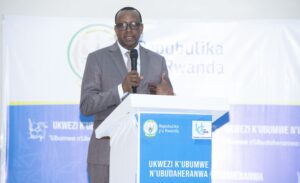
Minister of Health Dr Sabin Nsanzimana emphasised that building national unity is an ongoing responsibility that requires the participation of everyone, including both leaders and citizens.
He commended President Paul Kagame and First Lady Jeannette Kagame, founder of Unity Club Intwararumuri, for their role in efforts to rebuild national unity and strengthen social cohesion among Rwandans.
In his address, Dr Nsanzimana reflected on the historical breakdown of national unity and how it contributed to the events that led to the 1994 Genocide against the Tutsi.
He encouraged participants to exchange ideas freely and work together towards building a Rwanda characterised by unity, peace and resilience.
He stressed that everyone should return to their communities with a deeper understanding of the country’s history, the progress made in rebuilding it and their responsibility to safeguard those achievements, particularly by educating younger generations.
He also noted that combating and eradicating genocide ideology, which remains a concern in some districts of the Western Province, requires the commitment and cooperation of all citizens.
“We must build Rwanda in a way that prevents it from falling back into the same pit it once fell into. We were once united, and we must preserve that unity and make it the foundation for eradicating genocide ideology and preventing it from taking root among young people,” he said.
He added that Rwandans should understand that a country is built not only through infrastructure but, more importantly, through its people and the relationships they maintain.
“A country is its people, not its buildings or mountains. We must recognise that we are the country,” he said.
The discussions were organised by Unity Club Intwararumuri in partnership with the Ministry of National Unity and Civic Engagement (MINUBUMWE) and the Western Province.
They were held as part of activities marking the month dedicated to unity and resilience under the theme, “Unity and resilience: Our choice.”
The forum brought together participants from Karongi, Nyamasheke and Rusizi districts to discuss Rwanda’s history, achievements in rebuilding national unity and the measures needed to strengthen it further.
Messages delivered during the discussions emphasised that preserving national unity requires accurate teaching of history, preventing genocide ideology and ensuring that everyone contributes to building a peaceful country founded on strong social cohesion.
More than 600 people attending the Unity and Resilience Forum, which brought together Karongi, Nyamasheke and Rusizi districts, were urged to preserve national unity and fight genocide ideology, particularly among young people.