The Alliance Fleuve Congo (AFC/M23) has announced that it will not repeat what it describes as the mistake of allowing forces of the Democratic Republic of the Congo (DRC) to reoccupy areas it has withdrawn from, as previously requested by officials of the United States.
On December 17, 2025, AFC/M23 pulled its fighters out of the city of Uvira, which it had controlled for eight days following clashes with Congolese government forces (FARDC), FDLR fighters, Burundian troops, and the Wazalendo militia.
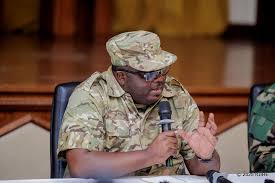
Bertrand Bisimwa, president of the M23 movement and deputy coordinator of the AFC alliance, told the media that the capture of Uvira was a humanitarian operation aimed at protecting civilians who had long been subjected to abuse.
He claimed that in Uvira there had been a policy of persecuting civilians based on ethnicity and physical appearance, with civilians allegedly being abducted, killed, and forcibly displaced by armed groups supported by the state.
Bisimwa further alleged that Wazalendo forces, working alongside government troops and Burundian soldiers, took Banyamulenge civilians hostage and imposed a blockade on Minembwe, cutting residents off from markets.
According to him, for two months nothing was allowed to enter or leave Minembwe, and drones were allegedly used to kill civilians, a situation he described as intolerable.
He said the withdrawal from Uvira was requested by U.S. officials in order to revive the Doha peace talks, but stressed that it was necessary to first brief them on the situation on the ground.
Bisimwa cited Walikale as an example, where AFC/M23 had voluntarily withdrawn, only for government forces to move in and allegedly kill remaining civilians, including through the use of drones.
He stated that AFC/M23 had informed the United States that it would not repeat such a withdrawal without guarantees, insisting that any future pullback must be accompanied by the deployment of neutral forces to protect civilians.
He also suggested that troops from the East African Community (EAC) could be redeployed to secure Uvira and support the continuation of dialogue, even if the Congolese government opposed such a move.
He argued that EAC forces are geographically close and that member states are directly affected by the conflict because they host refugees, adding that such forces could help protect Uvira and keep negotiations alive.
M23’s decision to withdraw from Uvira followed international pressure and a request from the mediator in the talks between the group and the Congolese government, a role currently played by the United States.