The Ministry of Agriculture and Animal Resources (MINAGRI) has urged farmers and livestock keepers to embrace professional and modern farming practices to boost productivity and increase incomes.
The call was made by the Minister of State in charge of Agriculture and Animal Resources, Dr Solange Uwituze, as she addressed farmers who had completed a training programme designed to equip them with skills to train others in best agricultural practices.
She emphasized that the trainees have a responsibility to help farmers adopt modern, efficient farming methods aimed at increasing yields and profitability.
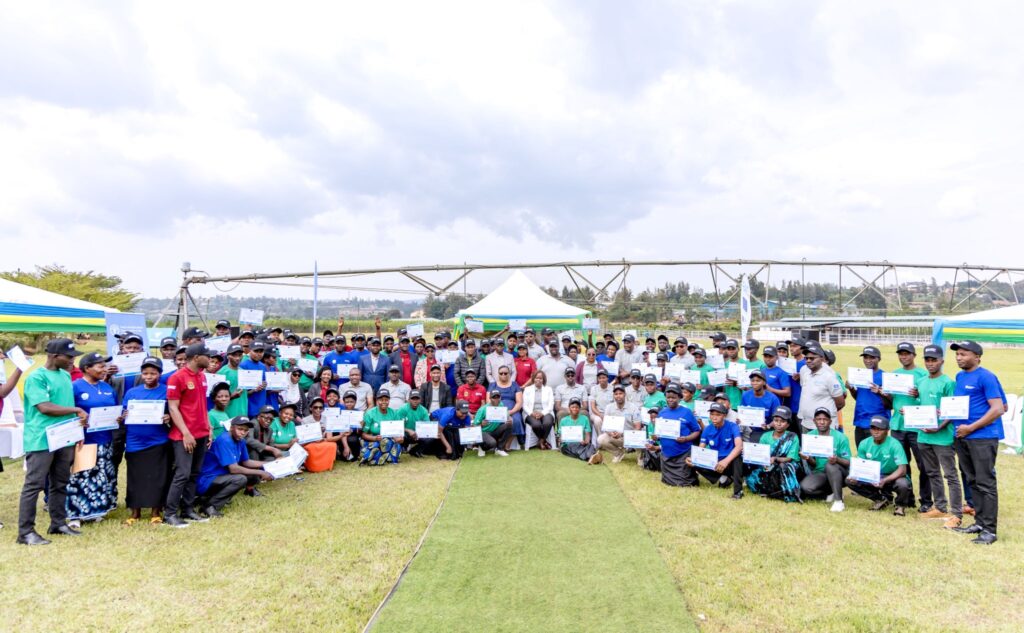
Dr Uwituze was speaking on Tuesday, December 30, during the closing ceremony of a training programme organized by the Rwanda Agriculture and Animal Resources Development Board (RAB).
The programme targeted facilitators of the Farmer Field School approach, equipping them with knowledge to support farmers and livestock keepers in improving their day-to-day practices.
The training was organized in partnership with the Food and Agriculture Organization of the United Nations (FAO) in Rwanda and benefited more than 90 farmers from six districts: Burera, Rutsiro, Gatsibo, Nyagatare, Bugesera and Ruhango.
Known as the Farmer Field School, the training was delivered under the DeSIRA-CDI project, which is implemented with funding from the European Union (EU).
The trained facilitators are expected to work closely with farmers at village level, supporting them to apply improved and sustainable agricultural practices through practical, hands-on learning and collective action.
At the closing ceremony, Dr Uwituze commended all partners involved in the project, noting that the training will play a significant role in increasing agricultural productivity and improving farmers’ livelihoods.
She encouraged the graduates to put the skills and knowledge they acquired into practice by helping farmers understand and adopt modern farming and livestock-rearing techniques that enhance productivity, ensure food security and improve household incomes.
“The knowledge you have gained from this training must reach farmers in a practical way,” she said. “Help them increase production, strengthen food security and transform their livelihoods, thereby contributing to the country’s overall economic development.”
FAO representatives in Rwanda described the training as an important step towards promoting sustainable agriculture based on hands-on learning, enabling farmers to learn from and teach one another.
The facilitators who completed the programme said they gained valuable skills in crop and livestock management, sustainable pest and disease control, and the efficient use of natural resources.
They pledged to work closely with farmers to ensure that the knowledge acquired translates into tangible improvements in agricultural production and farmers’ living conditions.