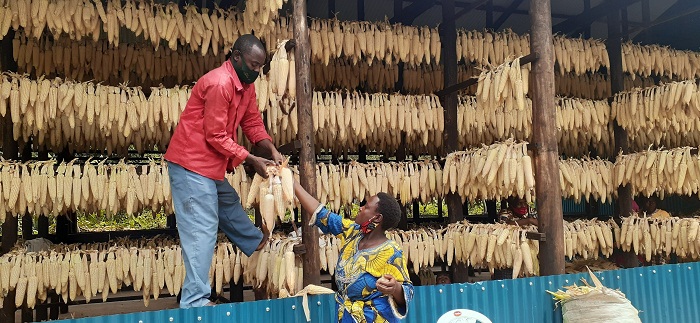
The Ministry of Agriculture and Animal Resources (MINAGRI) has urged farmers to improve post-harvest handling practices, warning that significant crop losses before storage and marketing continue to undermine food availability and contribute to pressure on market prices.
Agriculture Minister Dr. Telesphore Ndabamenye said reducing post-harvest losses remains a critical intervention in stabilizing food supply chains and easing price fluctuations, noting that a substantial share of harvested produce is still lost due to poor handling and limited storage capacity.
He stressed that such losses directly reduce the volume of food reaching both households and markets, ultimately affecting affordability and availability.
“When there is crop loss during harvest, it becomes a major setback because part of the produce never reaches households or storage facilities, and even what reaches the market is reduced, which contributes to higher prices,” he said.
Dr. Ndabamenye highlighted ongoing government investments in post-harvest infrastructure, including modern storage facilities being developed across the country. These include a major facility in Kigali City and additional warehouses under construction in districts such as Rubavu, Rulindo, Bugesera, and Nyagatare.
However, he emphasized that infrastructure alone is not sufficient, calling on farmers to take greater responsibility in reducing losses during harvesting, transport, and storage.
He also encouraged farmers to better balance produce allocation between markets and household consumption, noting that improved planning could help reduce waste and strengthen food security throughout the year.
National agricultural data shows that a large share of key crops is already directed to markets, with about 80% of vegetables sold, a majority of rice production marketed, and significant portions of maize and potatoes also reaching commercial channels. However, consumption patterns vary, with some crops such as beans and maize still largely retained for household use.
Despite these trends, official estimates indicate that up to 30% of agricultural produce is lost at farm level due to inadequate post-harvest practices, including poor storage, handling, and processing.
MINAGRI says reducing these losses is essential not only for improving food availability but also for stabilizing prices and increasing farmers’ incomes in a context of climate variability and fluctuating production cycles.