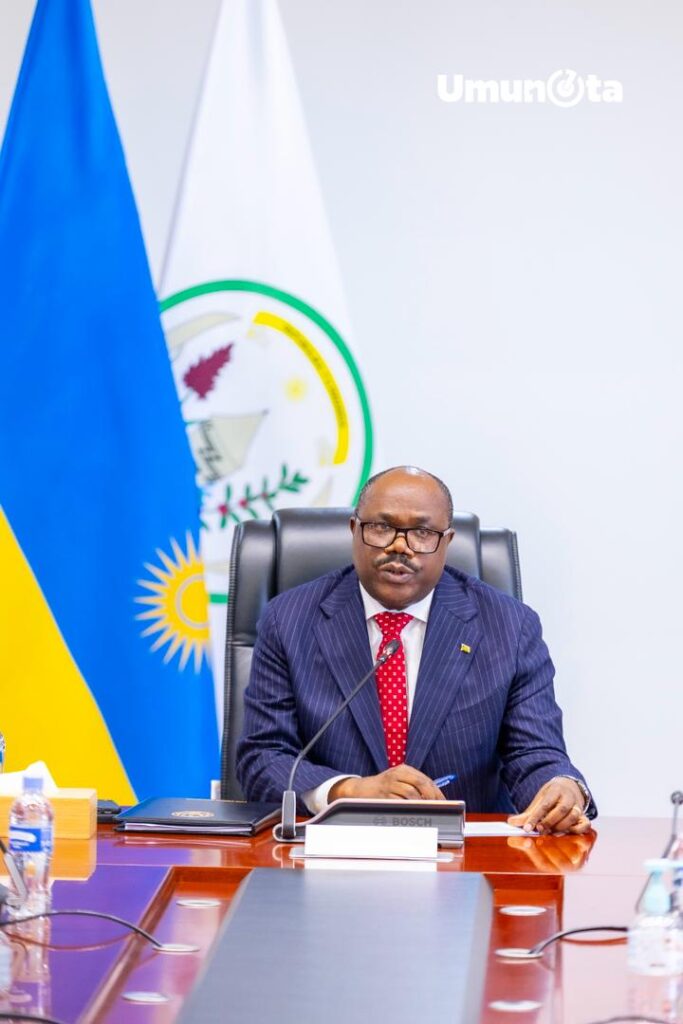
Rwanda’s Prime Minister, Dr. Justin Nsengiyumva, has cautioned that any decision to raise the country’s minimum wage must carefully balance the interests of workers with the financial capacity of employers, warning that poorly planned increases could lead to job losses and higher consumer prices.
Speaking to journalists, Dr. Nsengiyumva said the government is actively reviewing the issue amid growing public concern over the rising cost of living. However, he stressed that wage reforms require a comprehensive assessment of their impact on businesses, employment, and the wider economy.
“We should not focus only on the employee and ignore the employer,” the Prime Minister said. “If an employer is required to pay higher wages, we must also consider where those additional resources will come from.”
He noted that businesses may respond to increased labor costs by raising the prices of goods and services, potentially fueling inflation and diminishing the intended benefits of a wage increase.
“If salaries go up but the prices of goods and services rise as well, then the problem has not been effectively solved. We have to look at the entire economic picture,” he said.
Dr. Nsengiyumva also warned that some employers, particularly owners of small and medium-sized enterprises, could be forced to reduce their workforce if wage costs increase significantly.
He illustrated the challenge with a hypothetical example of an employer paying 10 workers Rwf50,000 each. If a revised minimum wage required salaries to rise to Rwf80,000, the employer might no longer be able to retain all staff members.
“An employer who previously hired 10 workers may decide to keep only seven because that is what they can afford. As a country, we must ask ourselves whether we have gained anything if three people end up unemployed,” he said.
The Prime Minister emphasized that the government is continuing its analysis, taking into account workers’ living conditions, employers’ financial capacity, and overall economic performance. He said any future decision would aim to improve livelihoods while preserving economic stability and job creation.
“This issue requires careful consideration so that we can make sustainable decisions that benefit citizens while safeguarding economic growth,” he said.
Rwanda’s current minimum wage was set in 1974 at Rwf100 per day for employees working for others and has remained unchanged for decades.
Calls for its revision have intensified in recent years as many workers argue that wages no longer reflect the rising cost of living. The debate has become increasingly prominent as policymakers seek ways to improve household incomes while sustaining business growth and employment.
According to the latest figures from the National Institute of Statistics of Rwanda (NISR), the unemployment rate stood at 11 percent in the first quarter of 2026, a slight improvement from 11.1 percent recorded during the same period in 2025.