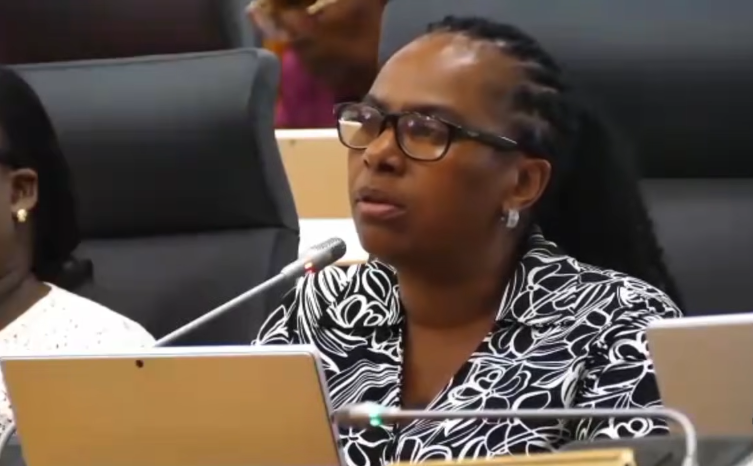
Member of Parliament Christine Mukabunani has raised concerns over the growing influence of social media discussions on public perceptions of justice, questioning whether online pressure is contributing to some arrests and legal actions.
Mukabunani made the remarks while presenting questions on government programmes before Parliament, saying there is a trend where allegations or complaints shared widely on social media are sometimes followed by arrests of individuals mentioned in the discussions.
She said the situation has created concerns among some citizens who fear that being publicly accused or criticized online could quickly lead to legal consequences.
“There is a growing issue of social media pressure today, where someone is mentioned online or a person raises a complaint on social media, and the next day people hear that someone has been arrested,” Mukabunani said.
She questioned whether justice institutions might be responding to online pressure rather than following established legal procedures.
“Sometimes we may not know the details of a case, but you see social media pushing the issue to a point where people begin to feel that once they are discussed online, they will immediately be arrested,” she added.
Mukabunani cited recent public discussions involving a female DJ who claimed she had spent years seeking justice after reporting alleged online harassment. After her public appeal on social media, authorities later took action related to investigations into the case, prompting debate over the role of online platforms in justice matters.
Responding to the concerns, Minister of Justice Dr. Emmanuel Ugirashebuja said Rwanda’s justice system does not operate based on pressure from social media.
He explained that social media can sometimes help bring attention to cases, especially when victims use online platforms to raise complaints, but investigations and judicial decisions are based on evidence and legal procedures.
“Sometimes social media talks about a person because they are the victim of a crime. RIB may see the information, investigate and find that the person accused should be followed up or detained. People may then think it happened because of social media pressure,” Ugirashebuja said.
He said each case must be examined individually to determine whether authorities acted because of evidence or because of public pressure.
The minister emphasized that justice involves several independent stages, including investigations, prosecution, court proceedings and appeals, making it impossible for social media campaigns alone to determine outcomes.
He added that social media would only become a serious concern if it influenced decisions across the entire justice chain, rather than simply bringing cases to the attention of relevant institutions.