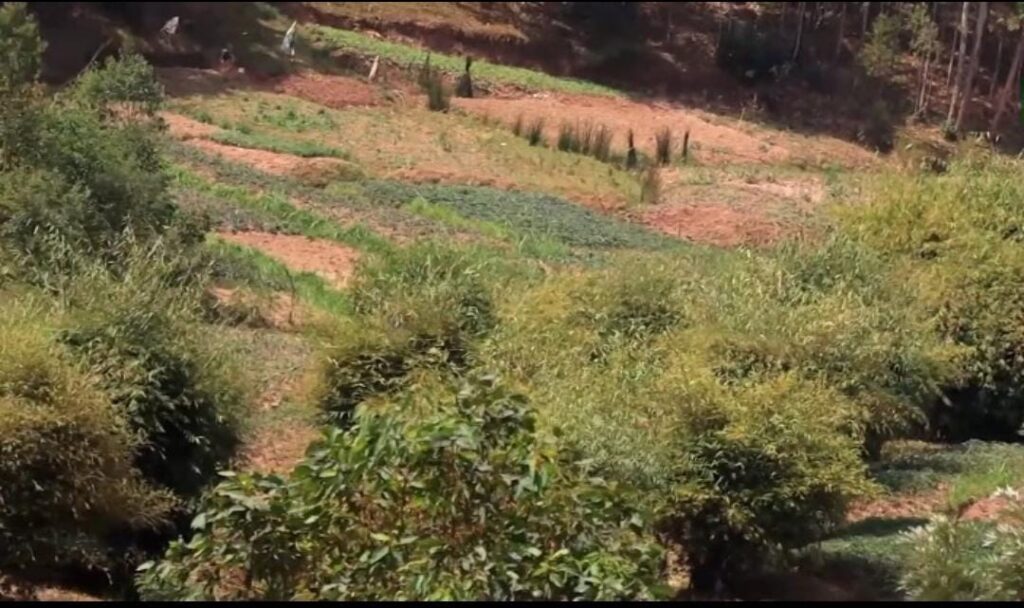
Muhanga District Mayor Kayitare Jacqueline has pledged to assess a bamboo planting project in Kabingo valley after residents raised concerns that it is affecting agricultural production and threatening their livelihoods.
Farmers from Muhanga Sector say bamboo planted along the boundaries of the valley has spread into their fields, reducing the productivity of crops they previously relied on, including vegetables and sweet potatoes.
The residents argue that the valley was traditionally an important farming area and question the decision to plant bamboo there, saying the area does not have a major river that would require such conservation measures.
“We used to cultivate this valley, but bamboo was planted on farmers’ plots even though there is no major river here that needed protection. Now you can see the consequences,” one resident said.
Farmers claim that bamboo’s extensive root system has affected soil conditions, making it difficult for other crops to grow.
“Bamboo spreads through its roots and dries out the land. Before it was planted, we supplied sweet potatoes to Muhanga market from this area, but that has stopped. Even the crop vines have dried up,” another farmer said.
Some residents said bamboo has taken over parts of their farmland, while those still cultivating near the plants are experiencing reduced harvests.
They have called on authorities to reconsider where such environmental projects are implemented, suggesting that bamboo planting should instead focus on areas with larger waterways, including the Karayi wetland, where streams such as Nyagako, Gatare and Nyarubuye pass through.
The farmers said conservation initiatives should take into account the impact on local communities, particularly in areas where residents depend on agriculture for food and income.
Responding to the concerns, Muhanga District Mayor Kayitare Jacqueline said the district would investigate the matter and determine what action should be taken.
“We cannot do something that could cause hunger among residents. These bamboo projects are intended to address environmental challenges in specific areas. We will look into the reasons people feel affected and find a solution because everything we do should be in the interest of citizens,” she said.
Bamboo planting along wetlands and riverbanks is part of Rwanda’s environmental conservation efforts aimed at protecting water sources, reducing soil erosion and stabilising vulnerable land.
However, residents of Kabingo valley maintain that the area should primarily support agricultural activities and are calling for a review of the project’s implementation.