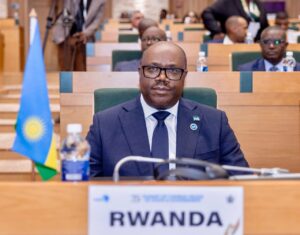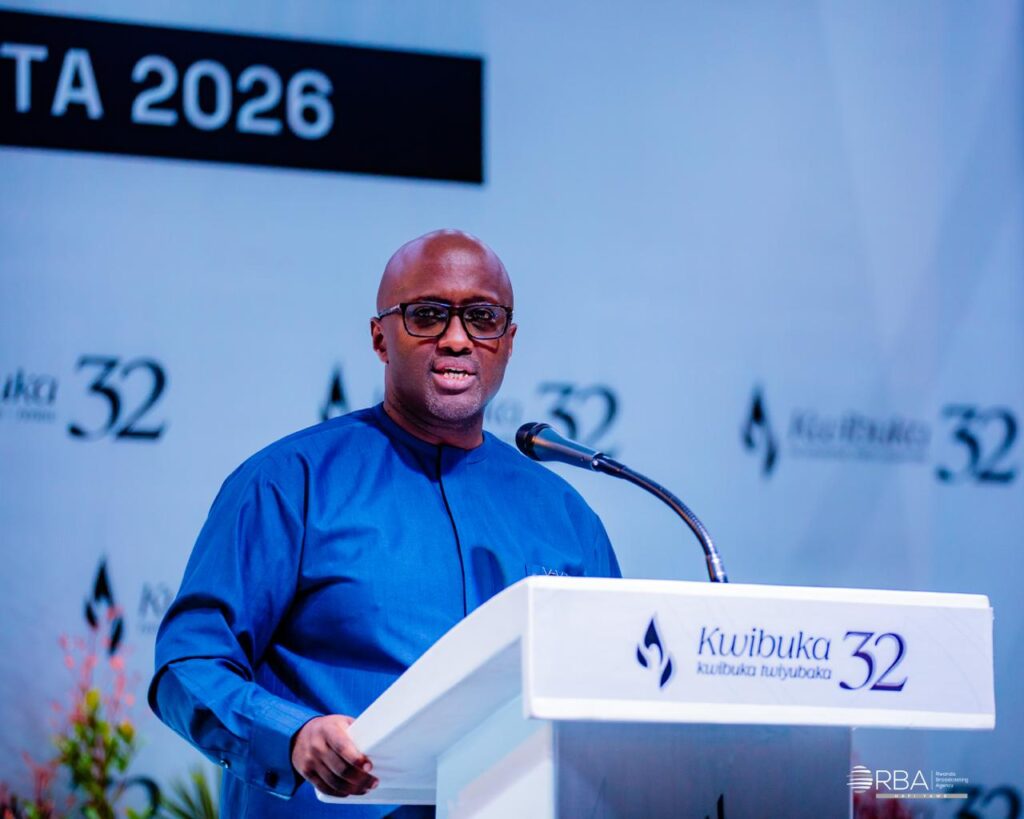
Rwanda’s Minister of Foreign Affairs and International Cooperation, Amb. Olivier Nduhungirehe, has hailed the International Criminal Tribunal for Rwanda (ICTR) for its pivotal role in prosecuting key perpetrators of the 1994 Genocide against the Tutsi and establishing global recognition of the crime.
Speaking during the 32nd commemoration of the Genocide against the Tutsi held at Nyanza ya Kicukiro on Saturday, Nduhungirehe said the tribunal handled more than 80 cases, many involving individuals who played central roles in planning and executing the genocide.
“We commend the ICTR for trying over 80 cases, particularly those linked to the architects of the genocide. Despite some acquittals, the tribunal was instrumental in affirming that genocide was committed in Rwanda in 1994,” he said.
He highlighted the landmark judgment in the case of Jean-Paul Akayesu, former burgomaster of Taba Commune, delivered on September 2, 1998, as the first to legally recognize the Genocide against the Tutsi.
Nduhungirehe noted that while the ICTR established the legal truth, it took years of diplomatic effort for political institutions, including the United Nations and individual countries, to formally adopt the recognition of the Genocide against the Tutsi.
“It was not easy for political bodies within the United Nations and for countries themselves to acknowledge the Genocide against the Tutsi,” he said.
He recalled that in 2014, while Rwanda was serving on the UN Security Council, efforts to pass a resolution on genocide commemoration and combating genocide ideology faced resistance over the use of the term “Genocide against the Tutsi,” particularly from the United States.
“It took persistent engagement and advocacy to ensure that Rwanda’s history was accurately recognized,” he added.
The United Nations General Assembly eventually adopted the terminology in 2018, and in 2020 officially designated April 7 as the International Day of Reflection on the Genocide against the Tutsi in Rwanda—26 years after the events.
Nduhungirehe also commended countries that have prosecuted or extradited genocide suspects found within their borders, but noted that progress remains uneven.
He pointed out that the United Kingdom is among the countries yet to take significant action in this regard, while many African countries have also made limited progress in prosecuting or extraditing suspects to Rwanda.