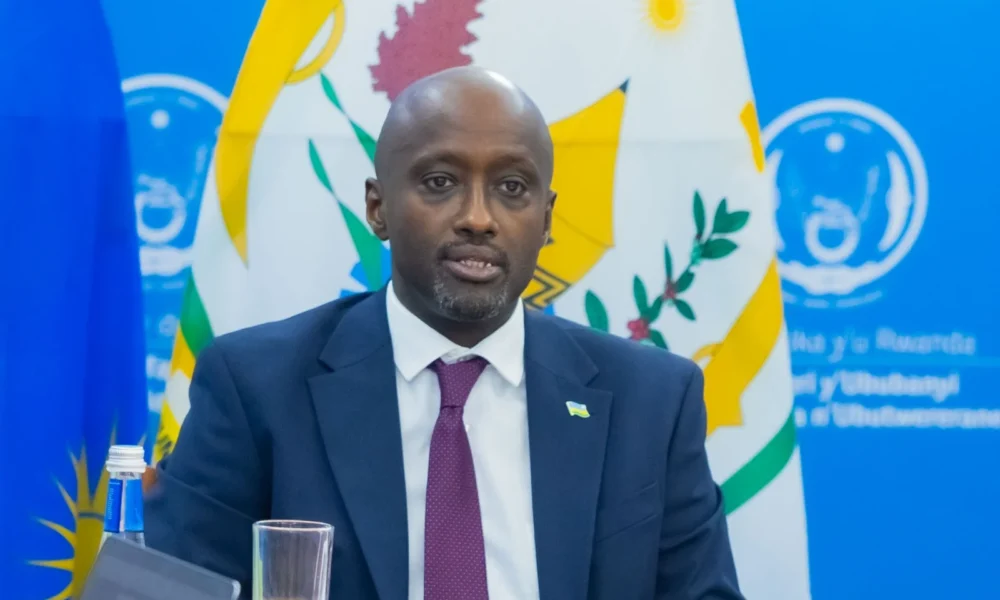
Rwanda’s Minister of Foreign Affairs and International Cooperation, Ambassador Olivier Nduhungirehe, has condemned what he described as a deliberate attempt by Agathe Kanziga Habyarimana to trivialise and deny the 1994 Genocide against the Tutsi.
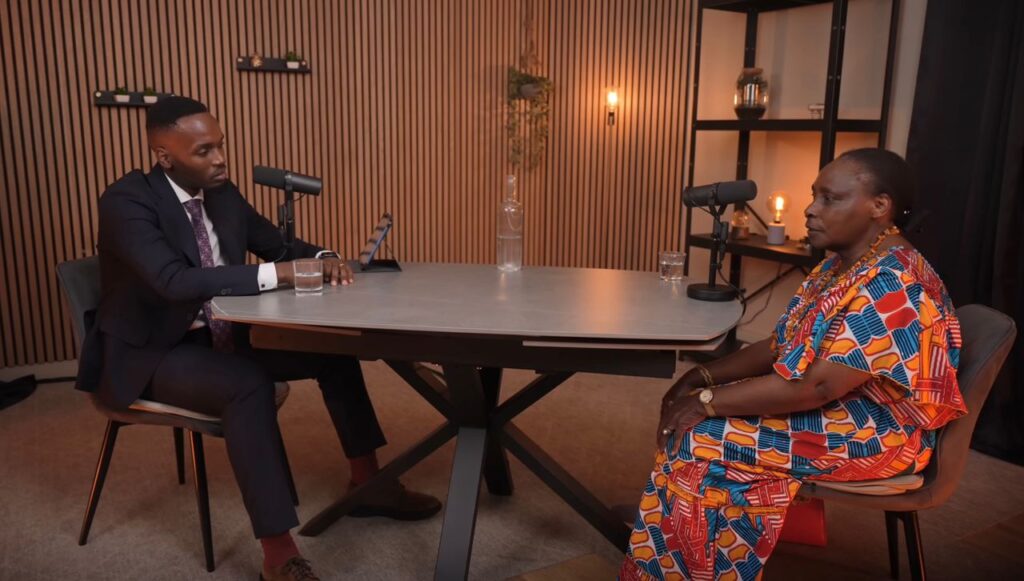
The condemnation follows the circulation of an interview released on YouTube on January 31, 2026, in which Kanziga, who resides in France speaks with Willy Kabera in a conversation recorded last year.
In the interview, she reflects on her personal life, schooling, the colonial period, and the political trajectory of her late husband, former President Juvénal Habyarimana.
Reacting to the interview, Ambassador Nduhungirehe said Kanziga’s remarks were “entirely false” and part of a wider pattern of genocide denial and historical revisionism. He warned that as Rwanda prepares to mark the 32nd commemoration of the Genocide against the Tutsi, acts of denial and trivialisation are increasingly emanating from Paris.
According to the Foreign Minister, the interview was framed as a personal historical account, despite Kanziga being widely accused of having played a role in the crimes of the former regime.
He criticised the fact that throughout the entire discussion, she made no reference to the mass killings of Tutsi between 1959 and 1964—atrocities that occurred while Habyarimana, then her fiancé, later became her husband.
Nduhungirehe further noted that Kanziga omitted any mention of the 1973 violence against Tutsi students in schools, including the February massacres, at a time when Habyarimana was Minister of Defence.
He recalled that these crimes were linked to the activities of the “Akazu,” an inner circle founded by Habyarimana alongside his brothers and close associates to dominate state institutions, loot public resources, and eliminate political opponents and Tutsi.
“She did not utter a single word about the assassination of political figures in the 1980s,” Nduhungirehe said, citing victims such as Member of Parliament Félicule Nyiramutarambirwa, journalist Silvio Sindambiwe, and former minister François Muganza, who were killed for denouncing corruption and institutionalised ethnic and regional discrimination under the Habyarimana regime.
The Minister also faulted Kanziga for ignoring the massacres organised by the MRND party in the early 1990s across different parts of the country, as well as the killings of opposition politicians on April 7, 1994, carried out by members of the Presidential Guard, most of whom were stationed at Kanombe.
Nduhungirehe rejected Kanziga’s portrayal of relations between President Juvénal Habyarimana and his predecessor, Grégoire Kayibanda, as cordial. Historical records show that Kayibanda, Rwanda’s first President, died on December 15, 1976, in Kavumu, Muhanga District, where he was held under house arrest after being overthrown in July 1973.
However, in the interview, Kanziga claimed that Kayibanda and Habyarimana maintained good relations, even alleging that Kayibanda baptised one of Habyarimana’s children. She further asserted that Habyarimana sent people to regularly check on Kayibanda after his removal from office.
Nduhungirehe dismissed these claims as “blatant falsehoods,” stating that Kayibanda and his wife were detained and deliberately starved to death.
“It is a complete fabrication to suggest that President Habyarimana cared for Kayibanda, when in reality he imprisoned him and subjected him to starvation,” the Minister said.
He further expressed regret that Kanziga failed to acknowledge the massacres targeting Tutsi communities in the early 1990s in Murambi, Bugesera, Mukingo, Kibilira, Kibuye and other parts of the country, atrocities planned and executed under the MRND regime.
Nduhungirehe also criticised Kanziga for referring to the 1994 Genocide against the Tutsi merely as a “war,” saying such language reflects a profound lack of empathy for the more than one million victims.
“These remarks show no compassion for over one million victims of the Genocide against the Tutsi, who were murdered by the Interahamwe militia, an organisation created by her husband to preserve his regime,” he said.
The Foreign Minister concluded by describing it as deeply troubling that nearly 32 years after the Genocide against the Tutsi was recognised by the international community, propaganda and denial narratives continue to be promoted by a highly controversial political figure living in France.