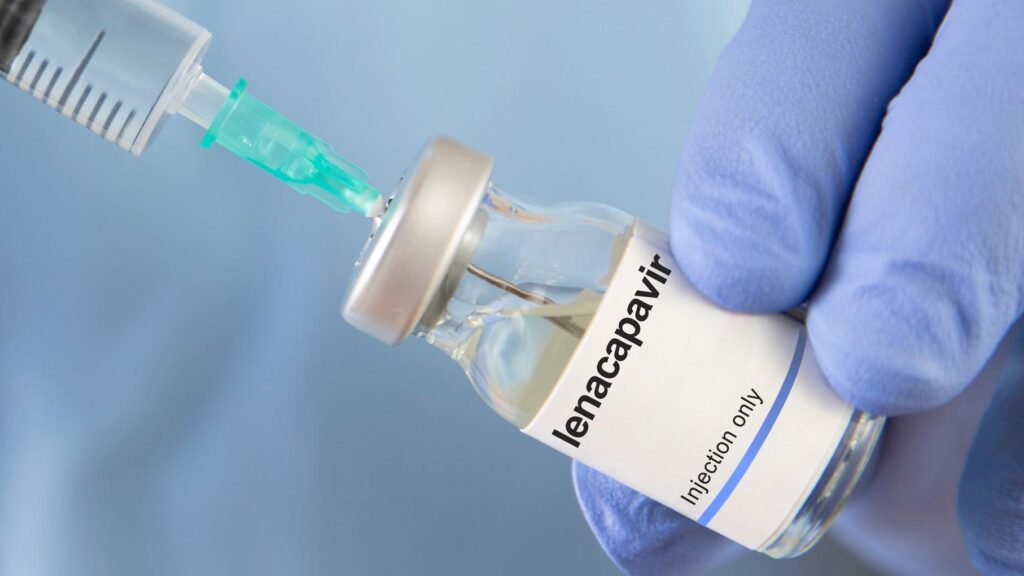
Lenacapavir is a new drug designed to prevent people from contracting HIV. It is administered through just two injections a year. Although Rwanda is preparing to introduce it, the drug will not be available to everyone, as it is intended for people who are HIV-negative but face a high risk of infection.
The drug will expand HIV prevention options in Rwanda, where people have traditionally relied on daily pre-exposure prophylaxis (PrEP) pills and another injectable drug known as Cabotegravir.
Lenacapavir is scheduled to be officially launched on Sunday, November 29, 2026, at BK Arena as part of activities marking World AIDS Day. From December 1, 2026, it will be provided free of charge at 14 selected health facilities across the country.
How Lenacapavir works
Lenacapavir reduces the risk of HIV infection by preventing the virus from entering the body’s cells and multiplying.
It is not a permanent vaccine but rather a form of pre-exposure prophylaxis (PrEP), a preventive treatment taken by people who are HIV-negative but at risk of contracting the virus.
Unlike conventional PrEP pills, which must be taken every day, Lenacapavir is administered through injections twice a year, at six-month intervals.
However, anyone wishing to start using the drug must first undergo an HIV test to confirm that they are not infected. There are also specific medical guidelines to follow, including taking initial medication when starting the treatment.
Clinical trials conducted before its approval demonstrated that Lenacapavir was highly effective in preventing new HIV infections, with protection approaching 100%. The World Health Organization (WHO) recommended it as an important additional HIV prevention option in July 2025.
Who will receive the drug in Rwanda?
Lenacapavir will not be distributed to everyone. Instead, priority will be given to HIV-negative people who face a high risk of contracting the virus.
The Ministry of Health has identified people who have sex with multiple partners, particularly those who do not consistently use condoms, among the groups eligible for the drug.
The category also includes sex workers who receive money, goods or services in exchange for sexual activity, especially those who do not consistently use condoms.
Other eligible groups include people who inject drugs and individuals who have sexual relations with partners living with HIV whose viral load remains detectable, whose viral load status is unknown, or who do not consistently adhere to their HIV treatment.
Anyone seeking Lenacapavir will first be assessed by a trained healthcare professional to confirm that they are HIV-negative and meet the eligibility criteria.
This means that simply wanting to prevent HIV infection does not automatically qualify someone for the drug. Healthcare professionals will determine eligibility based on each person’s level of risk.
Advantages over other prevention drugs
One of Lenacapavir’s biggest advantages is that it reduces the frequency of visits to healthcare facilities for HIV prevention medication.
While conventional PrEP requires daily pills and Cabotegravir injections are administered every two months, Lenacapavir requires an injection only once every six months.
This could be particularly beneficial for people who struggle to take medication daily, those who cannot frequently visit health facilities or those concerned about the stigma associated with regularly being seen accessing HIV prevention services.
However, Lenacapavir does not replace all other HIV prevention methods. Condom use remains important because the drug does not protect against other sexually transmitted infections or unintended pregnancy.
Use in other countries
Lenacapavir is among the new drugs that have demonstrated significant potential to transform global HIV prevention efforts.
In June 2025, the United States Food and Drug Administration (FDA) approved the drug for HIV prevention. The WHO subsequently included it among its recommended HIV prevention options.
Countries including the United States, South Africa, Kenya, Uganda, Zambia, Zimbabwe, Botswana, Mozambique and Malawi have approved the drug or initiated plans for its rollout.
In 2026, Rwanda was also included among the countries selected for an international programme aimed at expanding access to Lenacapavir, particularly for people who need it most in low-resource settings.
High cost in some markets
The cost of Lenacapavir remains one of the major factors influencing how widely it can be made available.
In the United States, the drug is marketed under the brand name Yeztugo, with an annual price of $28,218 per person before health insurance coverage.
However, efforts have been made to make it more affordable for lower-income countries. In November 2026, the US FDA granted tentative approval to India’s Dr. Reddy’s Laboratories to manufacture a generic version of Lenacapavir, which will be sold without a brand name.
The generic version is expected to cost approximately $40 per person annually and is intended to reach 120 low-income and lower-middle-income countries.
However, this is the projected price of the generic version, not a price announced by Rwanda’s Ministry of Health. In Rwanda, the drug is expected to be provided free of charge to people who meet the eligibility requirements.
Rwanda makes progress in the fight against HIV
The introduction of Lenacapavir comes as Rwanda has already surpassed the international 95-95-95 targets set by UNAIDS.
Figures from the Ministry of Health show that 96% of people living with HIV in Rwanda know their status. Of those who know they are HIV-positive, 98% are receiving antiretroviral treatment, while nearly 98% of those on treatment have achieved viral suppression, meaning the amount of HIV in their blood is very low.
Although Rwanda has achieved these targets ahead of schedule, preventing new infections remains essential as the country works towards its goal of reducing new HIV infections by 2030.
Lenacapavir is expected to become another important tool in this effort, particularly by providing people at high risk of infection with a more convenient way to protect themselves against HIV.
In summary, Lenacapavir is not a vaccine for everyone, nor is it a cure for AIDS or a replacement for condoms. It is a new HIV prevention option intended for people who are HIV-negative but face a high risk of infection. In Rwanda, it will be provided free of charge to those who qualify.