Rwanda’s Prime Minister, Dr Justin Nsengiyumva, has urged African leaders to intensify efforts to strengthen governance and health systems, warning that no country can claim sustainable development while women continue to die during childbirth.
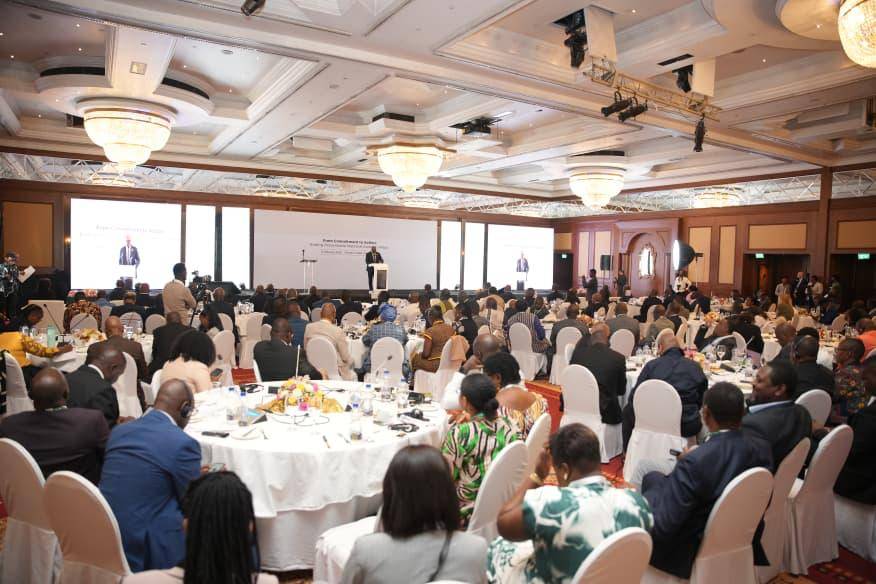
He made the remarks on Saturday, February 14, 2026, during the 39th ordinary session of the African Union, where heads of state and government met to discuss accelerating the reduction of maternal mortality across the continent.
Addressing the high-level meeting, Dr Nsengiyumva stressed that maternal survival is one of the clearest indicators of a country’s development and the effectiveness of its public institutions.
“No country can claim to have achieved sustainable development while women are still dying giving life. A mother’s survival after childbirth is a clear measure of the strength of a health system, the quality of public services, and the value a nation places on its citizens,” he said.
He emphasized that in Rwanda, maternal health remains a top national priority.
The Prime Minister noted that Rwanda moved away from relying solely on surveys conducted every five years to measure maternal mortality and now operates a real-time maternal death surveillance system based on continuous data collection.
“In the past, maternal mortality was measured through surveys conducted every five years. While useful, they did not allow for rapid decision-making,” he explained.
“Today, Rwanda relies on daily national data collected through digital systems. This allows authorities to be notified of a maternal death within 24 hours, enabling immediate review and corrective action at the health facility, district and national levels.”
He attributed this progress to sustained investment in a technology-driven health system, spanning from community health workers to health posts, health centres and referral hospitals.
Dr Nsengiyumva said postpartum haemorrhage remains the leading cause of maternal deaths in Rwanda. Among newborns, the main challenges include preterm births and congenital complications.
To address these risks, Rwanda has expanded access to ultrasound services at health facilities closer to communities, allowing early detection of pregnancy-related complications and reducing the likelihood of emergencies during delivery.
He underscored that maternal health is central to national development, economic growth and social wellbeing. Achieving lasting progress, he added, requires strong political will, quality healthcare services at all levels, good governance and accountability.
Rwanda has set a target to reduce maternal mortality to 70 deaths per 100,000 live births by 2030, down from 203 per 100,000 recorded in 2020.
In 2024, the government distributed more than 200 ambulances to hospitals nationwide to strengthen emergency health services, particularly maternal care. Maternity wards have also been constructed and renovated to improve access to safe delivery services.
The Prime Minister reiterated that protecting mothers’ lives is not only a health priority but a fundamental pillar of sustainable development across Africa.