In an effort to fill the growing gap between traditional farming methods and modern, technology-based agriculture, Nyampinga Laetitia has launched a youth-focused training initiative aimed at transforming how young people engage in the agricultural sector.
Nyampinga, a Master’s student in Business Administration at the African Leadership University (ALU), officially launched the AfriTech-AgriXperience Bootcamp on Monday, December 15.
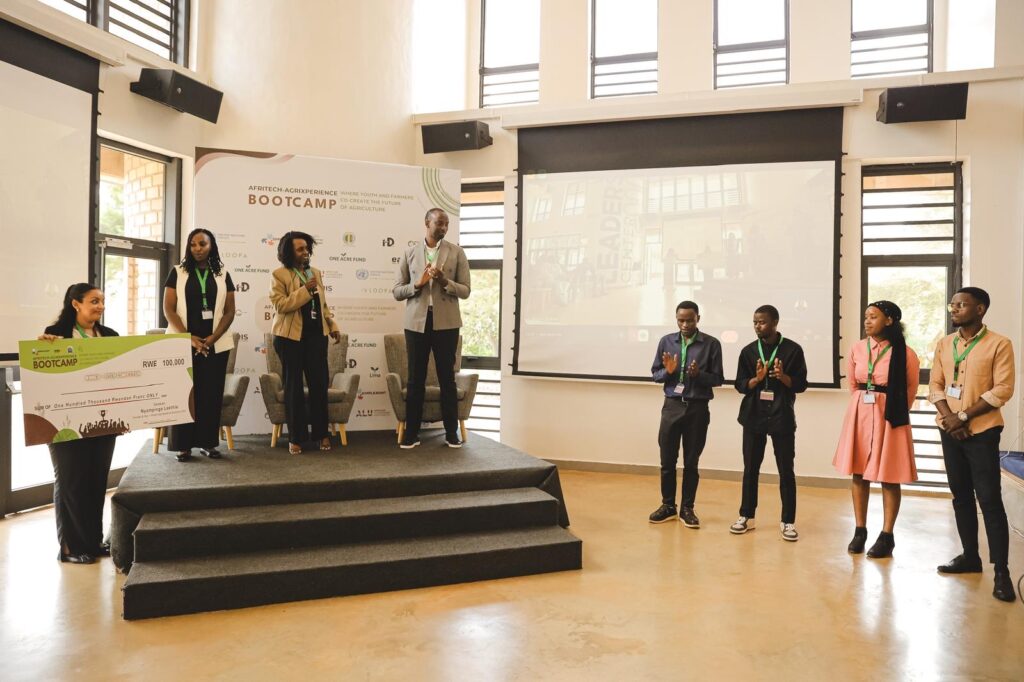
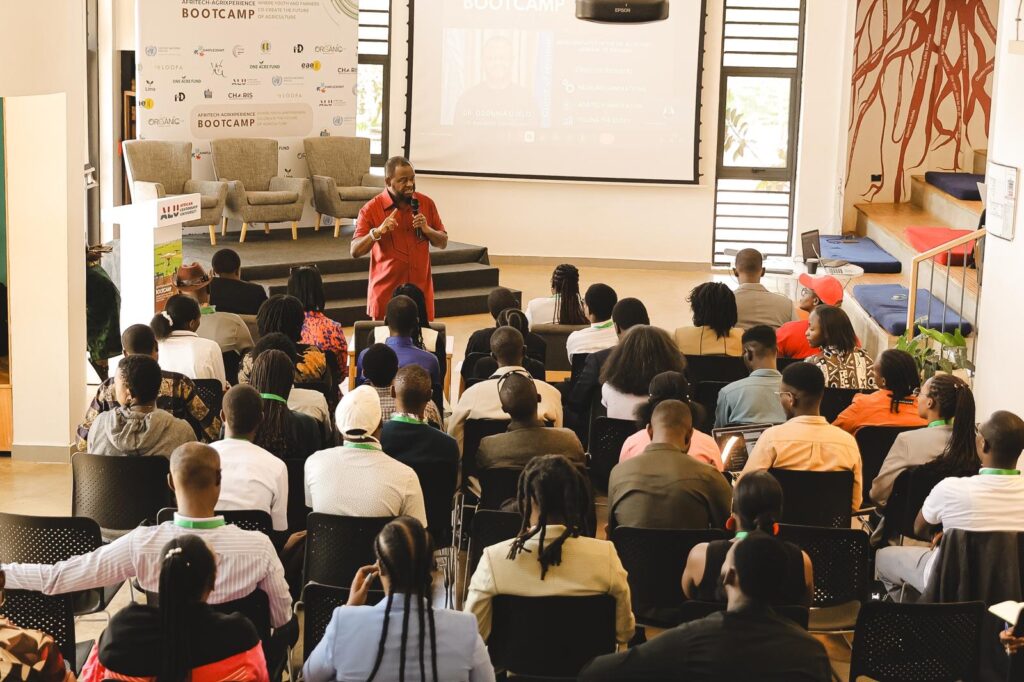
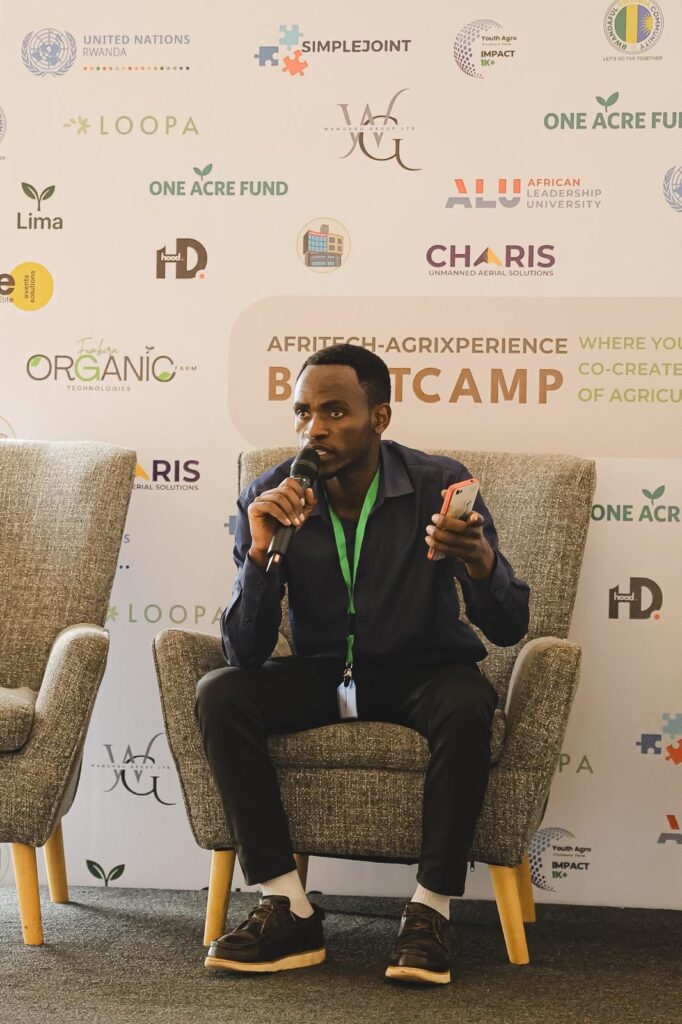
The two-day program was hosted at ALU and brought together young farmers, agribusiness entrepreneurs, Agri-Tech innovators, and partners from organizations supporting agricultural development.
The bootcamp is designed to equip participants with practical skills and knowledge in modern agricultural practices, with a strong focus on technology as a tool for increasing productivity, innovation, and profitability in the sector.
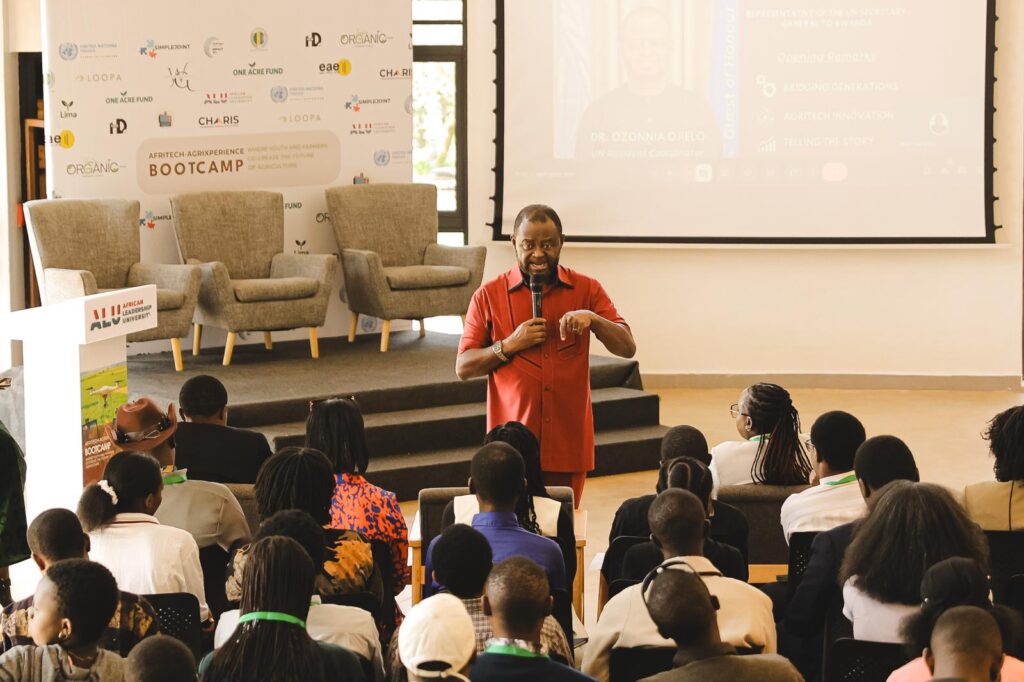
Speaking at the event, the United Nations Resident Coordinator in Rwanda, Ozonnia Ojielo, said Africa’s future lies in its youthful population, noting that 75%, of the continent’s population is made up of young people with ambitions to succeed. However, he observed that many young people struggle to find the right pathways to turn those ambitions into reality.
Ojielo highlighted food insecurity as one of Africa’s most pressing challenges and stressed that empowering youth to engage in technology-driven agriculture is key to addressing the problem. He also dismissed the notion that agriculture is a profession for the poor, describing it instead as a sector full of untapped economic opportunities.
Nyampinga said the AfriTech-AgriXperience Bootcamp is part of her academic work and was inspired by her desire to combine classroom knowledge with real-world solutions to challenges faced by farmers, particularly in the adoption of agricultural technology.
“I’m bridging the gap between the traditional agriculture to the modern agriculture through technology but now im trying to bring the farmers, to make sure the farmers are not left behind, because all the time is the farmers left behind, all the youth doesn’t have what to do with agriculture cause they think agriculture is for for those who are not in the middle class.”
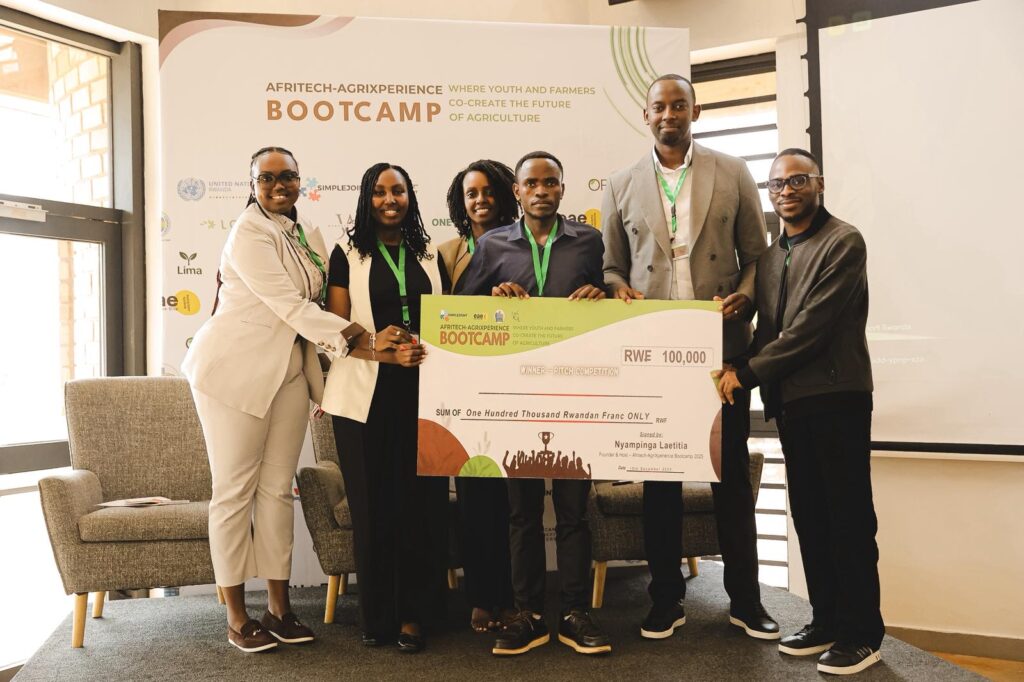
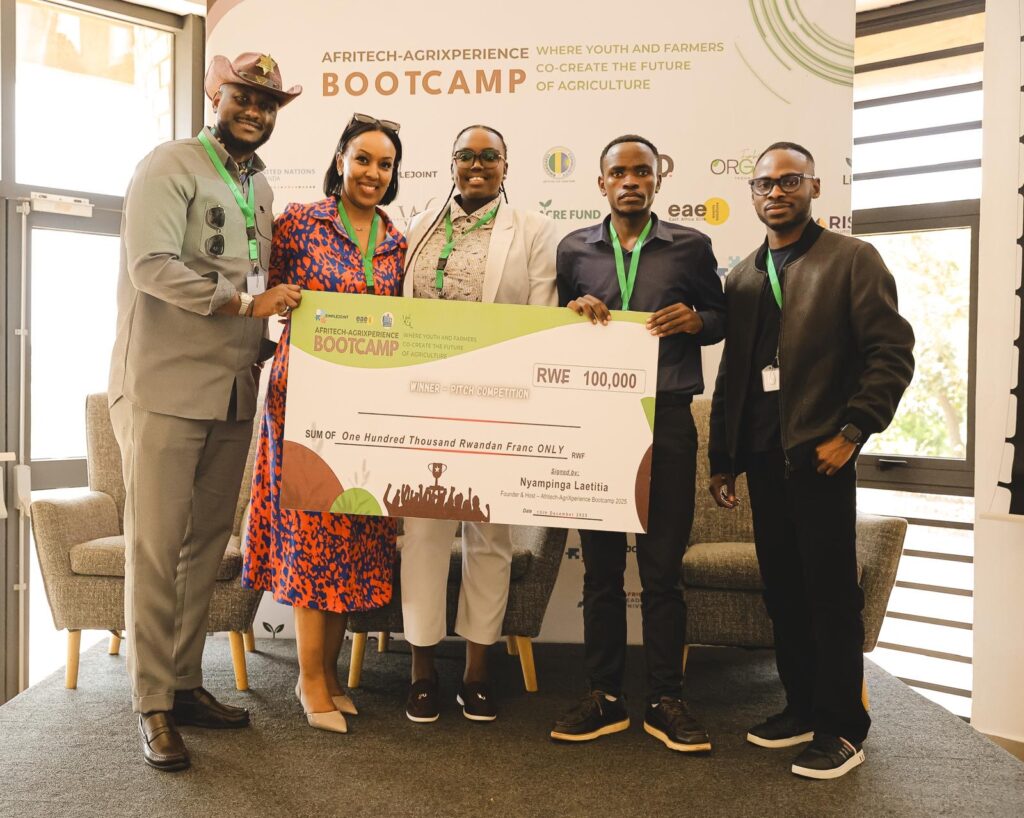
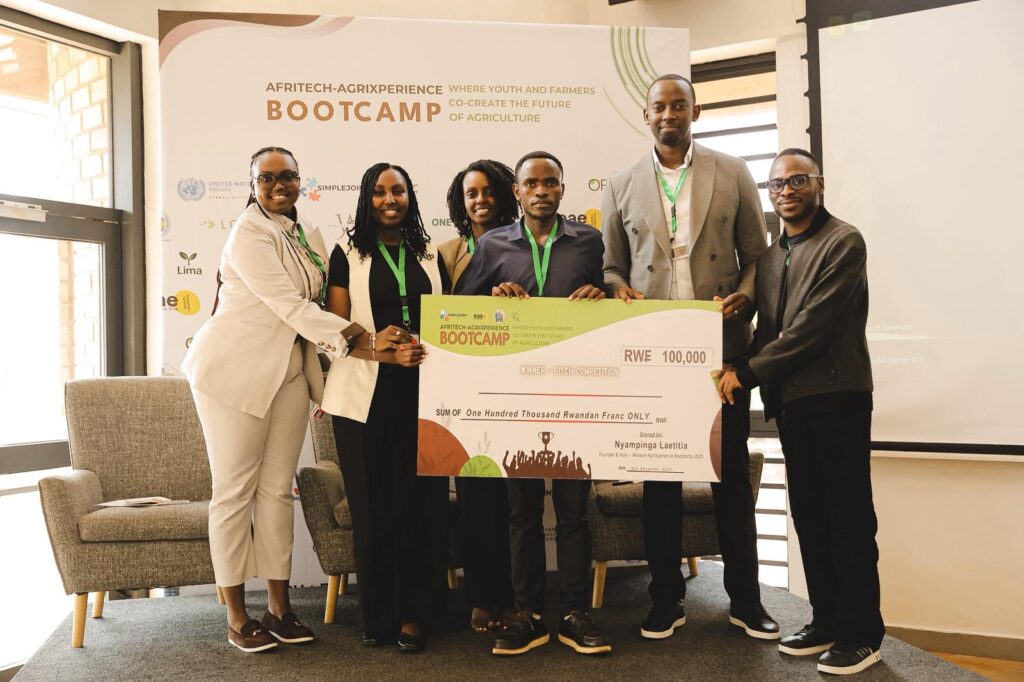
As part of the program, participants took part in a competition showcasing innovative agricultural projects developed by young entrepreneurs. The projects focused on addressing key challenges in the agricultural value chain. The winning team received Rwf 100,000 to support the further development of their idea.
The top prize went to Charles Niyomugisha, founder of Amazing Insect, a company that produces organic fertilizer using by-products from insects and larvae. He said the recognition was a strong motivation to continue his work.
“What matters most is not winning, but knowing that our work is supported,” Niyomugisha said. “I encourage young people to be bold and pursue their ideas. This award has given me more energy to move forward.”
Nyampinga said future plans include continued mentorship for participants by experienced agricultural professionals to help refine their business ideas. She also expressed plans to expand the bootcamp next year and include international participants to enhance exposure and collaboration.
Gloria Ishimwe, a trainer from One Acre Fund who attended the bootcamp, said limited financial resources and lack of practical knowledge remain major barriers preventing youth from fully engaging in agriculture.
“Agriculture requires investment and patience before returns are realized, yet many young people lack the capital to start,” she said. “They need guidance on what to produce for quick returns, access to information, and financial support.”
According to official figures, Rwanda’s agricultural output grew by 5 percent in 2024. Under the second National Strategy for Transformation (NST2) covering 2024–2029, the sector is projected to grow by over 6 percent annually and increase by 50 percent by the end of the strategy period. However, the national budget allocated to agriculture for the 2025/2026 fiscal year declined by Rwf 11 billion, from Rwf 233 billion in 2024/2025 to Rwf 222 billion.