Rwanda’s Minister of Foreign Affairs and International Cooperation, Ambassador Olivier Nduhungirehe, has said the failure to restore peace in eastern Democratic Republic of Congo (DRC) stems from a lack of political will, not the absence of peace agreements or mediation frameworks.
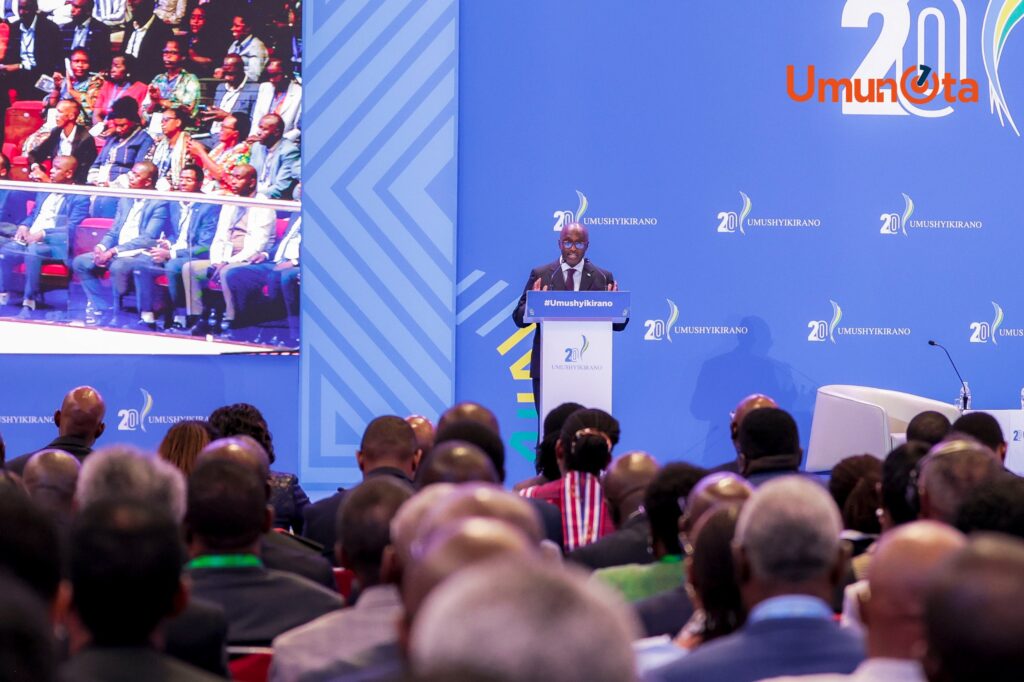
Speaking on Friday, February 6, 2026, during the second day of the 20th National Umushyikirano Council, the minister said repeated accusations by the DRC that Rwanda has failed to implement agreements overlook the core challenge undermining peace efforts.
“The real problem is not agreements,” Nduhungirehe said. “The real problem is political will.”
Addressing Rwanda’s foreign policy posture and its international engagement, the minister accused the Congolese authorities of disengaging from dialogue processes while presenting a misleading narrative to the international community.
He cited the Nairobi Process, initiated by the East African Community (EAC), which aimed to facilitate dialogue among Congolese stakeholders, including armed groups.
“The Nairobi talks were designed to promote inter-Congolese dialogue,” he said. “But they were terminated by the President of the DRC, who suspended the process after AFC/M23 participated, expelled the group from the talks and did so without consulting fellow EAC leaders who had established the initiative.”
Nduhungirehe noted that the DRC also later requested the withdrawal of the EAC regional force, despite its mandate to support stabilization efforts.
He further pointed to the Luanda talks held in 2024, which he said had made substantial progress, with consensus reached on nearly all issues.
“One issue remained,” he said. “The DRC government had previously accepted it but later reversed its position, stating it would no longer engage in dialogue with AFC/M23.”
The minister dismissed claims that the collapse of talks was linked to Rwanda’s absence from a meeting scheduled for December 15, 2024, saying negotiations had already stalled due to Kinshasa’s hardened stance.
Following the breakdown of African-led initiatives, Nduhungirehe said President Félix Tshisekedi sought alternative mediation channels involving Qatar, France and others.
He stressed that Rwanda has remained open to all credible mediation efforts because it seeks a durable solution to insecurity in eastern DRC.
Nduhungirehe recalled that Rwanda and the DRC signed a de-escalation agreement in Washington, intended to ease bilateral tensions and restore regional stability.
“What followed were air and drone strikes against AFC/M23, in violation of the agreement,” he said.
He also accused the DRC of employing foreign mercenaries and collaborating with the FDLR, a militia linked to the 1994 Genocide against the Tutsi.
According to the minister, Rwanda supports the full implementation of comprehensive agreements that address security concerns, the neutralization of the FDLR, the lifting of Rwanda’s defensive measures, and economic cooperation.
He expressed optimism that the Doha talks between AFC/M23 and the Congolese government would continue and result in concrete implementation of commitments.
Nduhungirehe reiterated Rwanda’s preference for African-led mediation, saying continental efforts should complement initiatives undertaken in Washington and Doha.
He concluded by assuring Rwandans that the country remains secure.
“Rwandans should remain calm and focused,” he said. “All necessary defensive measures are in place to protect the country and its people as we continue pursuing our development agenda.”
The DRC has on several occasions accused Rwanda of destabilizing its territory and supporting AFC/M23 — allegations Rwanda has consistently denied.