Burundian President Évariste Ndayishimiye has once again accused Rwanda of harboring intentions to attack Burundi, alleging that Kigali continues to protect individuals accused of committing crimes on Burundian territory and has refused to extradite them for prosecution.
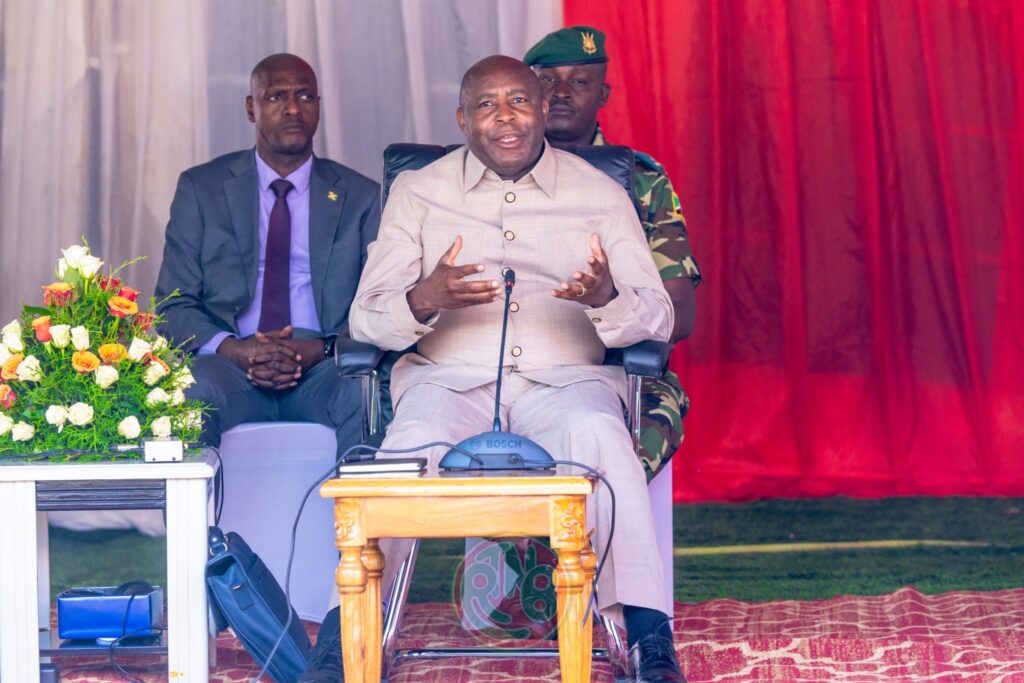
President Ndayishimiye made the remarks on Friday, December 26, 2025, while in Gitega, Muramvya Commune, the country’s political capital, during a public interaction with residents and journalists, who raised various political and security-related concerns.
He claimed that Rwanda has repeatedly ignored Burundi’s requests to hand over suspects alleged to have committed crimes in Burundi and who are said to be residing in Rwanda.
In March this year, President Ndayishimiye warned that if the armed group RED-Tabara, opposed to his government and accused of launching attacks on Bujumbura from eastern Democratic Republic of Congo (DRC), were to strike again, Burundian forces would retaliate, including by targeting Kigali.
Speaking in a separate interview with the BBC, Ndayishimiye said he had what he described as credible intelligence showing that Rwanda intends to destabilize Burundi through RED-Tabara, which operates mainly in South Kivu Province in the DRC.
“We know that Rwanda is trying to attack us through the territory of the Democratic Republic of Congo, using the RED-Tabara group,” he said. “But if they want to attack Bujumbura via Congo, Kigali is not far from Kirundo either.”
This is not the first time the Burundian leader has accused Rwanda of working with RED-Tabara.
In December 2023, following an attack attributed to the group in the Gatumba area of Bujumbura, Ndayishimiye made similar allegations, a development that later led to the closure of borders between the two countries in January 2024.
During the public exchange in Gitega, journalist Nzikobanyankana of Radio and Television Isanganiro asked whether dialogue between the two neighbors could prevent the conflict that President Ndayishimiye has repeatedly warned about.
“Your Excellency, you have consistently said that Rwanda intends to attack Burundi,” the journalist said. “Have all other options been exhausted to the point that war between Rwanda and Burundi has become inevitable?”
In response, President Ndayishimiye reiterated his accusations, insisting that Rwanda continues to harbor hostile intentions toward Burundi.
“If we were planning to attack, we would issue clear demands to Rwanda and threaten action if they were not met,” he said. “We have no plan to attack Rwanda. But we see bad intentions toward Burundi. Criminals who come to kill in Burundi are trained, armed, fed and sheltered by Rwanda.”
He added that Burundi has repeatedly sought dialogue and formally requested that the alleged perpetrators be handed over to face justice, but claimed Rwanda has refused.
“We have done everything possible to pursue dialogue, and we continue to say that there is no benefit in war,” he said. “What we are highlighting is the bad faith we see toward Burundi.”
President Ndayishimiye noted that leaders of both countries remain in contact, but maintained that Rwanda has not taken concrete steps to extradite suspects Burundi accuses of crimes committed on its soil.
Rwanda has firmly rejected the accusations, instead accusing Burundi of aligning itself with Congolese armed forces that cooperate with the FDLR, an armed group linked to the 1994 Genocide against the Tutsi.
Earlier this month, Rwanda’s Minister of Foreign Affairs and International Cooperation, Olivier Nduhungirehe, said that security officials from Rwanda and Burundi had held a meeting aimed at addressing tensions between the two countries.
In an interview with France 24 aired on December 18, 2025, Minister Nduhungirehe dismissed Burundi’s claims as false, arguing that it was Burundi that had launched shelling into Congolese territory.
“That is not true,” he said. “It was Burundian shells that landed in the town of Kamanyola, forcing Congolese civilians to flee into Rwanda’s Bugarama area.”
Asked whether dialogue between Rwanda and Burundi was ongoing, Nduhungirehe confirmed that further engagements between security agencies of the two countries were planned.
“We believe that if these meetings continue, they will help find solutions, improve the atmosphere in the region, and restore adherence to existing peace agreements,” he said.