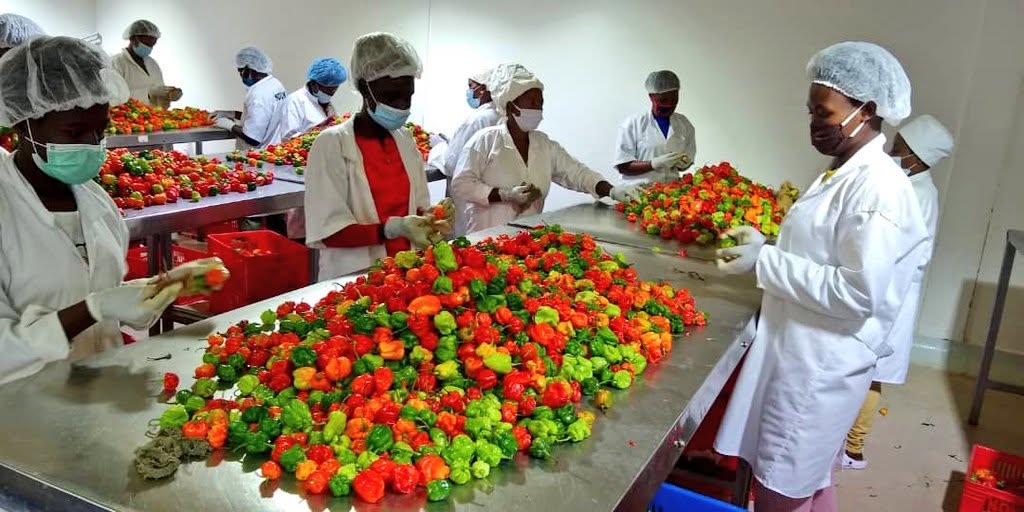
Rwanda is tightening controls over fruit and vegetable production and exports to reduce losses caused by rejected consignments and ensure produce meets the safety standards of international markets.
Farmers and exporters are being urged to use only pesticides, fertilizers and other agricultural inputs approved for the markets where their produce is destined.
The move follows cases in which fruits and vegetables have been lost either before reaching the market or after being rejected by international buyers for failing to meet required standards.
The National Agricultural Export Development Board (NAEB), in partnership with the Rwanda Inspectorate, Competition and Consumer Protection Authority (RICA), is strengthening measures to improve traceability and quality control across the export chain.
Under the system, farms are assigned identification numbers that allow authorities to trace produce from where it was grown through harvesting, handling and export.
NAEB Director General Claude Bizimana said the system is particularly important because export requirements vary between countries.
He explained that produce intended for the United Kingdom may be subject to different pesticide requirements from produce destined for India or China, depending on the substances permitted in each market.
RICA said the traceability system will make it possible to determine where produce was grown, which pesticides and other inputs were used and how it was handled before reaching consumers.
The system is currently being implemented for avocados, green beans, chili peppers and macadamia nuts.
Authorities are also investing in post-harvest infrastructure to reduce losses. Chili-drying facilities are being constructed and equipped in Bugesera, Nyagatare, Rubavu and Rulindo districts.
Each facility is expected to dry up to 19 tonnes of chili peppers per week, while planned onion-drying capacity is expected to reach 68 tonnes per week.
In the avocado sector, Rwanda has so far registered 121 farms and four packing facilities as it prepares to expand exports to markets including India and China.
Pesticide residues remain one of the major concerns for Rwanda’s agricultural exports. Quality-control officials are warning farmers and exporters that failure to comply with the maximum residue limits and other requirements of destination markets could result in consignments being rejected.
NAEB expects improved traceability from farm to market to reduce rejected and spoiled produce, improve quality and help exporters access more international markets.
The agency estimates that 15.4% of onion production is currently lost and aims to reduce the figure to 7.7%.
NAEB figures show that between the 2020/21 and 2025/26 financial years, Rwanda exported 40.9 tonnes of onions, generating $23 million in foreign exchange.
During the same period, the country exported 12,600 tonnes of chili peppers, earning $35.7 million.
The strengthened controls are expected to help Rwanda protect its agricultural exports from rejection while improving compliance with increasingly strict food-safety requirements in international markets.