Rwanda has announced a rise in its national budget for the 2026/2027 fiscal year to Rwf 7,796.3 billion, up from Rwf 6,952.1 billion in the revised 2025/2026 budget, representing an increase of Rwf 844.2 billion.
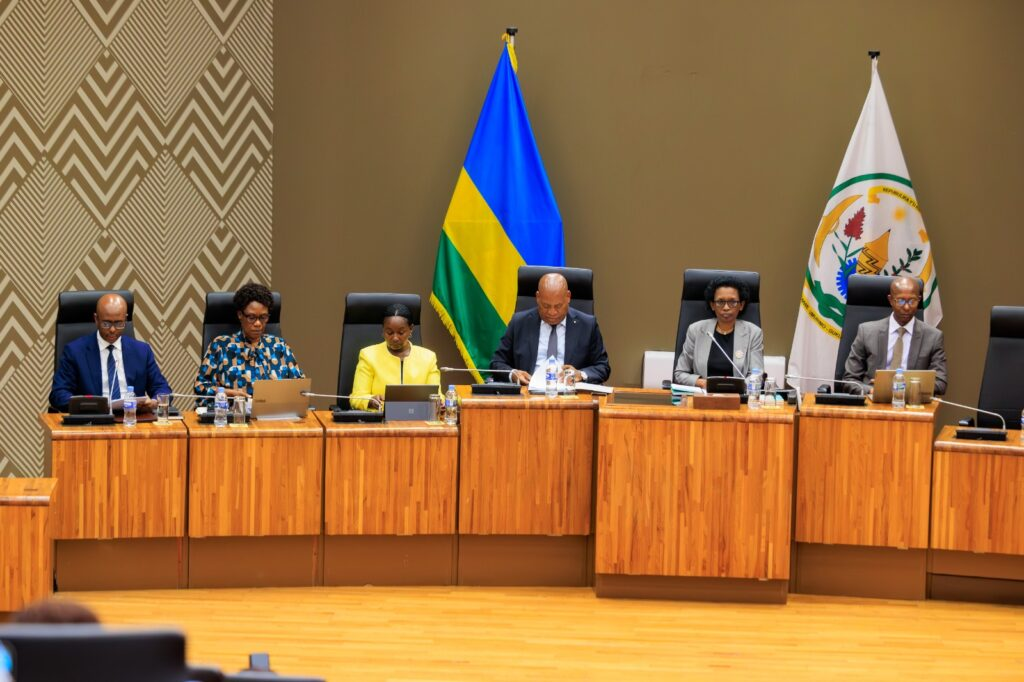
The budget was presented to Parliament on Monday, May 11, 2026, by the Minister of Finance and Economic Planning, Yusuf Murangwa.
The previous fiscal year’s budget had been revised downward by Rwf 80.4 billion, from Rwf 7,032.5 billion to Rwf 6,952.1 billion.
Infrastructure and aviation at the centre of spending
Officials say the increase is largely driven by accelerated infrastructure investments, particularly ongoing works to rehabilitate and expand Kigali International Airport, alongside increased support to national carrier RwandAir to strengthen its competitiveness amid global aviation pressures.
Growth outlook and external risks
Rwanda projects economic growth of 6.8% in 2026, though authorities caution that geopolitical tensions and insecurity in parts of the East African region could weigh on regional economic performance.
Revenue and financing mix
Domestic revenue is projected at Rwf 5,273.8 billion, supported by taxes, fees, and grants. Total tax revenue, fees, and grants are expected to reach Rwf 2,394.1 billion, reflecting a modest increase from earlier projections.
External grants are projected at Rwf 548.3 billion, while borrowing is expected to reach Rwf 1,974.1 billion to help finance development priorities.
Trade deficit outlook
Authorities also project the trade deficit to widen to 34.5% in 2026, largely driven by increased imports of construction materials linked to major infrastructure projects.
Officials say the budget is designed to sustain economic growth while supporting strategic investments in infrastructure, aviation, and key public services, with a focus on long-term economic resilience.