Washington, January 22, 2026 – The United States government has highlighted the Democratic Forces for the Liberation of Rwanda (FDLR) as a key impediment to lasting peace in eastern Democratic Republic of Congo (DRC).
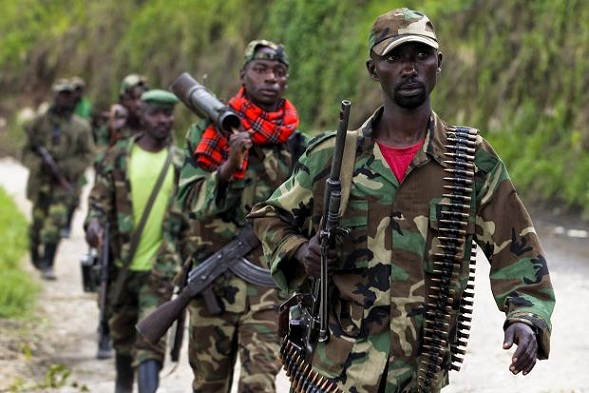
During a hearing of the U.S. House Committee on Foreign Affairs, members reviewed the implementation of the Washington peace agreements signed between DRC and Rwanda. Lawmakers warned that continued FDLR activity, alongside tensions involving M23 rebels, undermines stability in the Great Lakes region.
Representative Ronny Jackson of Texas noted that integrating M23 fighters into DRC security forces, while exploiting Congo’s mineral resources, has been proposed as a potential path to ending the prolonged conflict.
Committee Chair Chris Smith of New Jersey emphasized that the root cause of unrest is the FDLR and its genocidal ideology, describing it as “the primary security concern for Rwanda in eastern Congo.”
Sarah Troutman, Deputy Assistant Secretary for African Affairs at the U.S. State Department, described the FDLR as a “serious security threat” and confirmed that the group must not operate in eastern DRC.
“We continue to urge the DRC government to dismantle the FDLR, as committed under these agreements, and expect tangible progress,” she stated.
Representative Sara Jacobs of California criticized ongoing cooperation between DRC authorities and FDLR militias as a violation of the peace agreements. She also called on Rwanda to halt support for M23:
“Rwanda must stop backing M23 and withdraw from Congo to allow peace to take hold,” Jacobs emphasized.
Rwanda responds
Rwanda’s Ambassador to the U.S., Mathilde Mukantabana, praised the committee for addressing the FDLR threat and defended Kigali’s security measures.
“Rwanda’s position is clear: our national security is non-negotiable. After decades of FDLR crossing the border as an armed group, our defensive measures protect civilians, not politics. Lasting peace must be built on real security,” she stated.
Ambassador Mukantabana highlighted the role of Qatar-mediated coordination, which engages DRC and M23/AFC actors, and commended the Trump administration for advancing regional stability.
“The Washington agreements provide a roadmap for sustainable security and economic growth across the Great Lakes region,” she added.
She also underlined that repeated FDLR plots against Rwanda justify the country’s protective actions.
Meanwhile, the DRC government continues to encourage international action against Rwanda for allegedly supporting M23/AFC rebels, complicating the peace process.