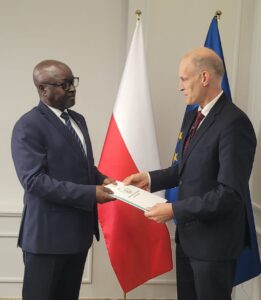
Rwanda’s Minister of Youth and Arts Development, Dr. Jean Nepo Abdallah Utumatwishima, has called for compassion toward young people who openly express struggles with poverty, warning against public shaming or ridicule on social media.
His remarks follow a viral video in which a Rwandan teenage girl shared the reality of youth poverty. In the clip, she explained that while many young people may appear well-dressed, their pockets are often empty.
“Don’t judge me by how I look, I may seem fine, but I only have 300 francs in my mobile account,” she said. She added that in the city, peers might treat her as if she is wealthy, unaware of her real financial situation, and urged government attention to the struggles of poor youth.
The video sparked controversy after Kabagambe Ignitus, a university administrator, shared the girl’s photo on X, suggesting that such content was being used to mislead others.
His post drew criticism from social media users, who argued that publicly questioning or mocking young people living in poverty only worsens the problem. Many called on him to remove the post and urged public officials and educators to address youth issues constructively.
Minister Utumatwishima responded by emphasizing that the voices of young people facing hardship deserve to be heard and supported. He noted that approximately 18% of Rwandan youth experience economic difficulties, making their concerns important for shaping policies and programs aimed at empowerment.
He highlighted initiatives such as the Aguka Ideation Program, which helps youth with ideas but limited resources, and the YouthConnekt program, which provides support for small projects.
Vulnerable youth, including those with disabilities or former Iwawa Correctional Center residents, also receive assistance through targeted programs, while the Aguka Youth Fund offers capital to help young entrepreneurs grow their ventures.
The Minister also addressed the girl’s reference to having only 300 francs, noting that the Aguka Youth Fund has introduced small, accessible loans known as E-Money, with low-interest rates, to help youth quickly respond to urgent financial needs.
Beyond financial support, rural youth benefit from agricultural programs and employment in public works, while artists receive help to access equipment and organize events.
Recent data from the National Institute of Statistics of Rwanda shows that youth remain the most affected by unemployment.
In May 2025, only 49.1% of youth aged 16–30 were employed, compared to 53.8% of the general population, with rural youth facing slightly lower unemployment rates than their urban counterparts.
For Minister Utumatwishima, these numbers underscore the urgency of listening to young people, providing them opportunities, and treating their challenges with dignity.
“Highlighting that you are poor, hungry, or struggling is not shameful,” he said. “It is a call for attention, understanding, and collective action.”