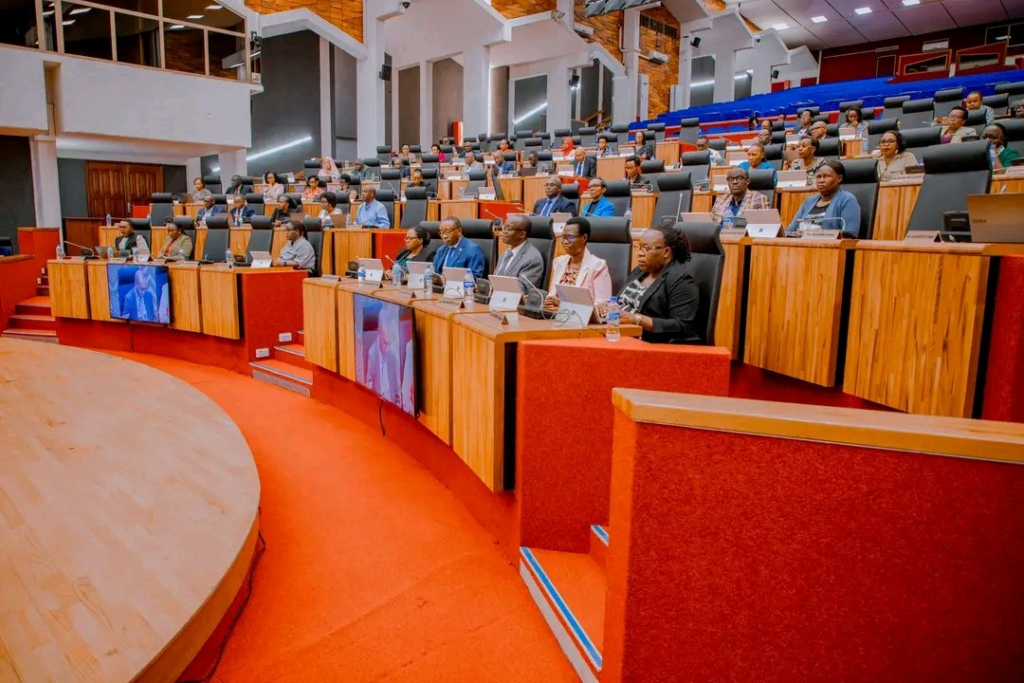
The Chamber of Deputies has adopted a revised law governing the National Bank of Rwanda (BNR), granting the central bank greater autonomy in key governance, financial and administrative decisions, including recruitment and dismissal of staff.
The bill was passed on Monday, June 30, 2026, following detailed consideration and clause-by-clause voting by Members of Parliament (MPs).
The new legal framework strengthens BNR’s independence in managing its human resources, finances and institutional structures, while reinforcing transparency, accountability and modern central banking standards.
It also aligns Rwanda’s central bank governance with international best practices applied by leading monetary authorities worldwide.
During debate, MPs raised concerns over inconsistencies in drafting and terminology, arguing that unclear wording in some provisions could lead to differing interpretations during implementation.
MP Mukabalisa Germaine pointed to inconsistencies in how similar responsibilities were described across sections of the bill, calling for clearer drafting to ensure uniform legal interpretation.
MP Mukabunani Christine raised concerns over the mandatory retirement age of 55 for BNR staff, noting that it differs from general labour law provisions and could create a gap between retirement and access to pension benefits.
The Chairperson of the Parliamentary Committee on Economy and Trade, Munyangeyo Théogène, said the concerns had been addressed through revisions aimed at improving clarity and coherence of the law.
He said the revised law introduces six new provisions covering BNR governance structures, board powers, procedures for inviting external participants to board meetings, conflict of interest rules, board members’ tenure, and publication of key monetary policy decisions.
The law contains 76 articles, up from 74 in the previous version, all of which were reviewed and voted on individually by MPs.
According to the committee, 48 articles were revised for clarity, 14 were amended substantively, five remained unchanged, four were reorganised and refined, while three provisions from the previous law were removed.