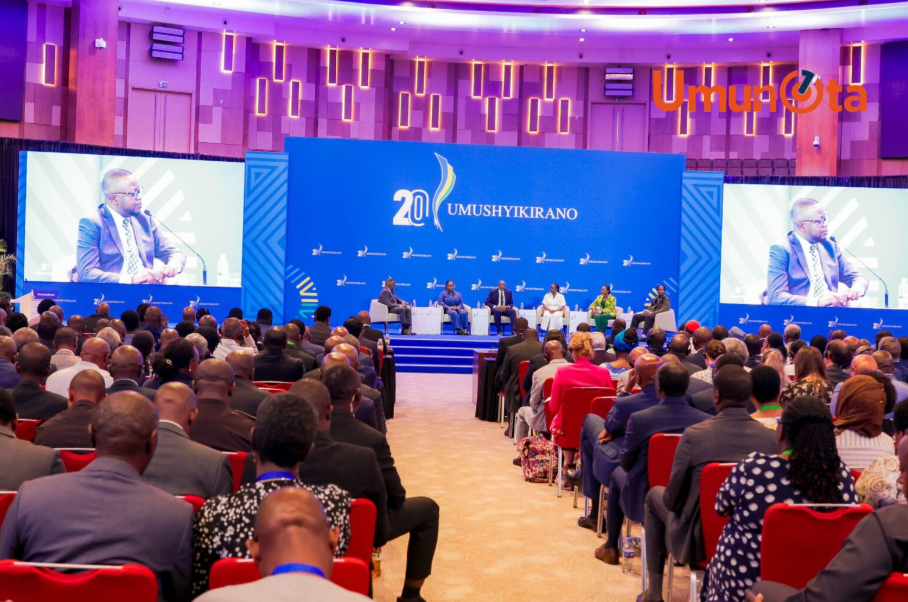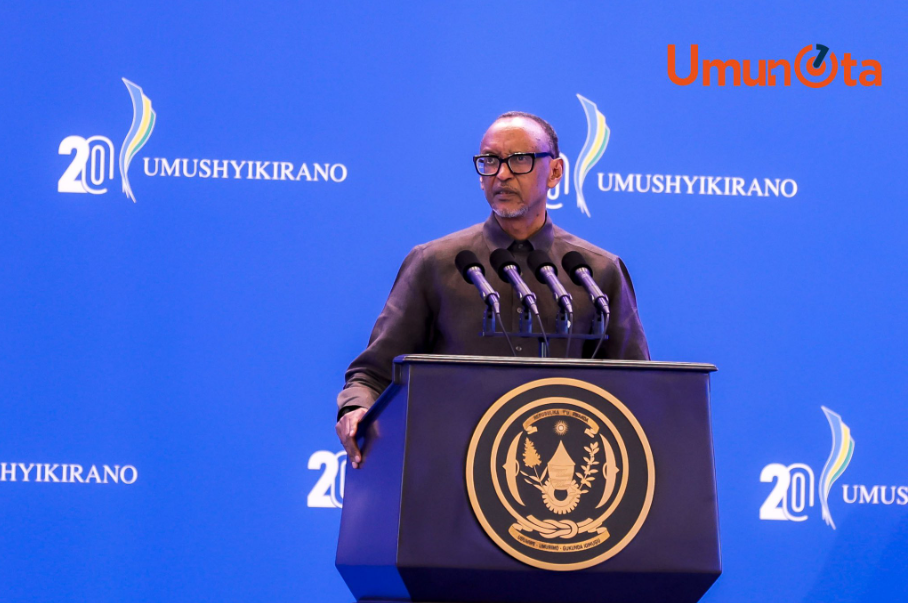
The 20th national Umushyikirano dialogue concluded in Kigali on February 6 with leaders pledging stronger follow-through on resolutions, as citizens raised concerns ranging from agricultural services to delays in business registration.
Speaking at the close of the two-day forum at Kigali Convention Centre, President Paul Kagame said Umushyikirano and other national dialogues must move beyond discussions and ensure that agreed decisions are implemented.
“National dialogues should not end at questions and answers without action,” Kagame said, stressing accountability in service delivery.
The forum, held from February 5 to 6, brought together citizens from across the country, decision-makers, diplomats and members of the Rwandan diaspora, who participated both physically and through virtual platforms.
Discussions focused on Rwanda’s economic performance, foreign relations and citizen participation in development.
Agriculture and livestock concerns
Agriculture and livestock services emerged as key issues during the dialogue. A resident from Ngoma District questioned the Ministry of Agriculture and Animal Resources over delays in the availability of semen preservation equipment used in artificial insemination for cattle.
Jean Damascene Niyotwagira, representing dairy farmers, said the artificial insemination programme was facing operational challenges due to the absence of promised facilities.
Minister of Agriculture and Animal Resources Telesphore Ndabamenye acknowledged the delay but said the equipment had been planned under an ongoing project and assured farmers that the issue would be resolved to improve livestock productivity.
Business registration delays
On the second day, concerns were raised over the effectiveness of the one-stop centre for business and investment services.
Muvunyi Cheyenne, a young entrepreneur and founder of Glow Force, a hair-oil processing company, told the forum she had faced prolonged delays in obtaining operating licences despite running her business for several years.
Rwanda Development Board (RDB) chief executive officer Jean-Guy Afrika said the one-stop centre was established to address such bottlenecks and invited the entrepreneur to seek direct support from RDB.
President Kagame questioned whether the one-stop centre was functioning as intended, prompting Prime Minister Justin Nsengiyumva to explain that government was working to harmonise requirements across regulatory institutions, including REMA, RSB and the FDA.
“The challenge is not the absence of the one-stop centre but overlapping requirements from different institutions,” Nsengiyumva said.
Economic performance
Prime Minister Nsengiyumva reported that under the second national strategy for transformation (NST2), Rwanda’s economy grew by 8.9 percent, up from 8.2 percent in 2023.
He said economic growth remained strong in 2025, averaging 8.7 percent across the first three quarters, driven by agriculture, industry and services.
Foreign relations and diaspora contribution
Minister of foreign affairs and international cooperation Olivier Jean Patrick Nduhungirehe said the Umushyikirano platform has contributed to strengthening Rwanda’s international engagement since its launch in 2003.
He said Rwanda’s diplomatic missions expanded from 20 to 50 embassies over the past 23 years, while annual diaspora remittances increased from USD 9.2 million to about USD 502 million.
The 20th national Umushyikirano reaffirmed citizen-centred governance, with participants calling for improved service delivery and stronger accountability from public institutions.