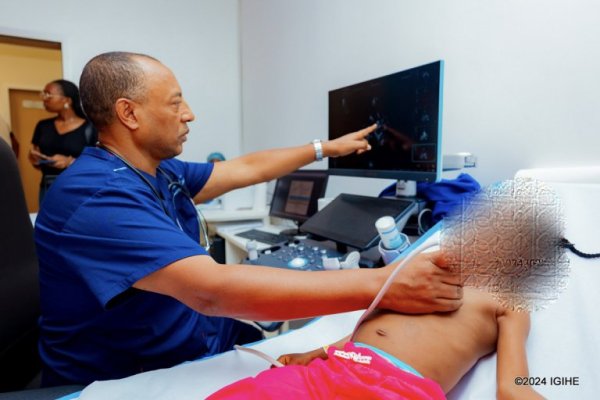
A team of pediatric heart specialists from Israel has arrived in Kigali to provide life-saving treatment to dozens of Rwandan children suffering from heart diseases, marking another step in Rwanda’s efforts to expand access to specialized cardiac care.
The week-long medical mission, organized by Save a Child’s Heart, will see the specialists work alongside Rwandan doctors to treat between 25 and 35 children with various heart conditions, including congenital heart defects.
The initiative comes at a time when hundreds of children in Rwanda remain on waiting lists for heart surgery, underscoring the growing need for specialized cardiac services in the country.
Simon Fisher, Chief Executive Officer of Save a Child’s Heart, said the partnership between the organization and Rwanda’s Ministry of Health has transformed the way children with heart diseases receive treatment.
For nearly two decades, many Rwandan children requiring advanced cardiac care were transferred to Israel for surgery and treatment. However, investments in training and medical infrastructure have enabled more services to be provided locally.
“In the past, we transferred many children with heart diseases to Israel for treatment. Through our partnership with the Ministry of Health, these services are increasingly being offered here in Rwanda,” Fisher said.
He explained that over the past three years, Rwandan doctors have undergone specialized training in Israel, equipping them with the skills needed to diagnose and treat complex heart conditions in children.
The visiting specialists will not only provide treatment but will also conduct hands-on training sessions for local healthcare professionals, helping to strengthen Rwanda’s long-term capacity to deliver pediatric cardiac care.
Since 2023, Save a Child’s Heart has invested more than $1 million in Rwanda through donations of medical equipment, specialized training programmes and support for children requiring complex heart surgeries.
Dr. Jean Dieu Nsanzimana, a Rwandan physician currently specializing in pediatric cardiology in Israel, said the expansion of cardiac services within Rwanda is already making a significant difference.
“Previously, some children lost their lives because treatment was only available abroad. Having these services closer to patients and their families is a major achievement,” he said.
According to Dr. Nsanzimana, global estimates indicate that one in every 100 children is born with a heart defect, while roughly a quarter of those cases require surgical intervention.
He noted that between 300 and 400 children in Rwanda are currently waiting for heart surgery, highlighting the need to further expand specialist services.
The cost of sending a child abroad for treatment can reach $15,000—more than Rwf22 million—placing a heavy burden on families and health systems alike.
Dr. Nsanzimana said providing treatment within Rwanda significantly lowers costs and improves access because patients can benefit from health insurance coverage while receiving care closer to home.
Health experts say continued investment in specialist training, medical equipment and international partnerships will be critical to reducing waiting lists and ensuring that more children with heart conditions receive timely treatment.
For many families, the arrival of the Israeli specialists offers renewed hope that children who once faced long waits or costly treatment abroad can now access life-saving care without leaving the country.