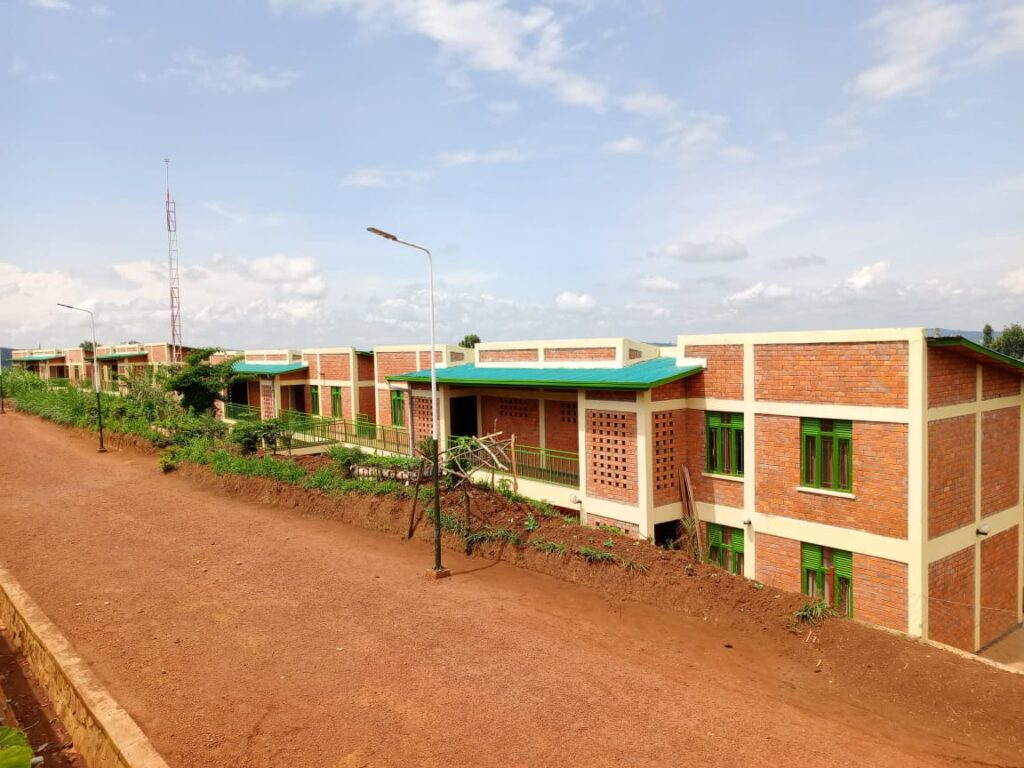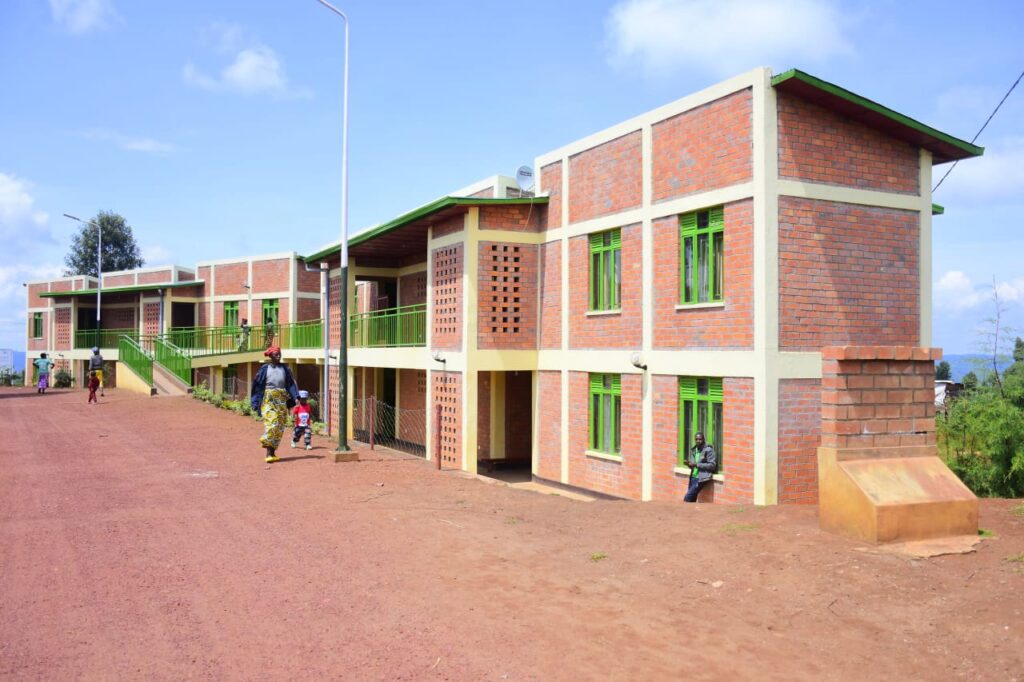
Families once trapped in high-risk zones across Gicumbi District say they have been given a new lease on life after being resettled under the Green Gicumbi Project, a climate-resilient housing initiative designed to protect vulnerable communities from recurring natural disasters.
Among them is 21-year-old Kwizera Gilbert, one of 100 residents now living in the Kaniga and Rubaya villages, purpose-built settlements constructed by the project. For Kwizera, relocation followed unimaginable loss.
In 2023, heavy rains triggered a landslide that crushed the room where his mother and younger sister were sleeping, killing them instantly.
“There was a steep slope above our house,” he recalls. “After the rain, the soil collapsed and buried the room. My older sibling and I escaped, but our mother and sister did not.”
Now orphaned, Kwizera says the pain remains, but safety has restored hope. “Life must go on. We are rebuilding and working toward a better future.”
From constant fear to safety
Residents say life in high-risk zones was marked by fear and uncertainty as extreme weather events became more frequent.
Mukandayisenga Valentine remembers fleeing her home with her children as floodwaters rushed in. “Before we reached safety, we heard the house had collapsed,” she says.
Kabongoya Olive describes nights spent awake as rain pounded down. “My children would gather around me, terrified of the floodwaters. When a wall collapsed, I had no choice but to leave.”
Today, both women say the new settlements have transformed their lives. “Now I sleep peacefully when it rains,” Kabongoya says. “This village gave me a new lease on life.”
Climate-resilient by design
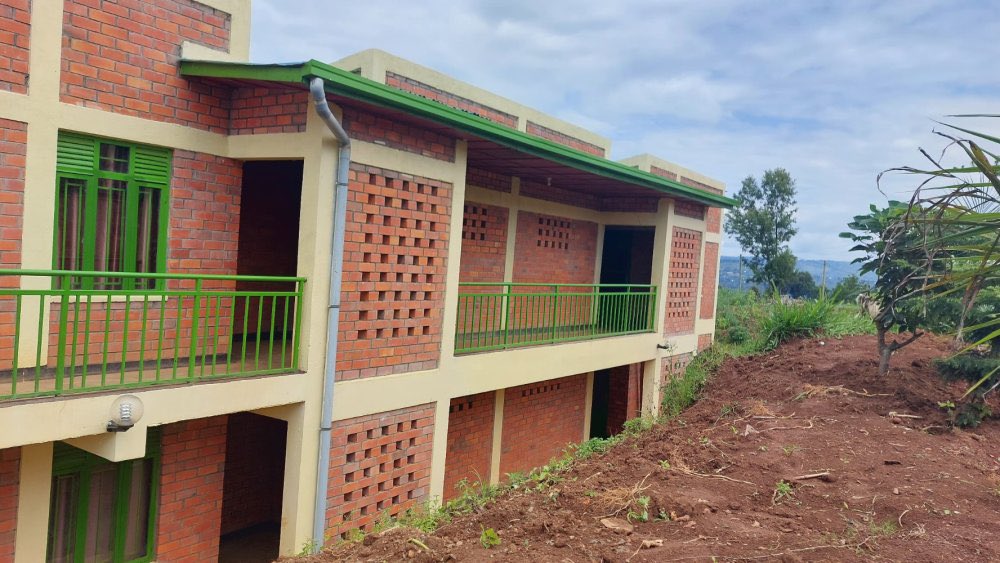
According to Green Gicumbi Project Director Kagenza Jean Marie Vianney, the villages were built with climate adaptation and environmental protection at their core.
“All rainwater from rooftops is harvested, runoff is managed, and waste systems are in place,” he said, adding that construction materials such as bricks were produced using agricultural residues.
Solar-powered street lighting, tree planting, and agroforestry practices further enhance sustainability.
Beyond safe housing, resettled families have received livelihood support, including dairy cows, small livestock, and essential household items—measures aimed at long-term resilience rather than short-term relief.
Wider climate impact
The Green Gicumbi Project has also rehabilitated degraded riverbanks across nine sectors using nature-based solutions. More than 3,300 rainwater harvesting tanks have been installed in households and institutions, alongside over 190 additional systems, including underground tanks that preserve land usability.
Implemented by the Rwanda Green Fund with financing from the Green Climate Fund, the Green Gicumbi Project began in late 2019 and is scheduled to conclude in May this year.
As climate-related disasters intensify across Rwanda, residents say the project has done more than provide shelter—it has restored dignity, safety, and a future once thought impossible.