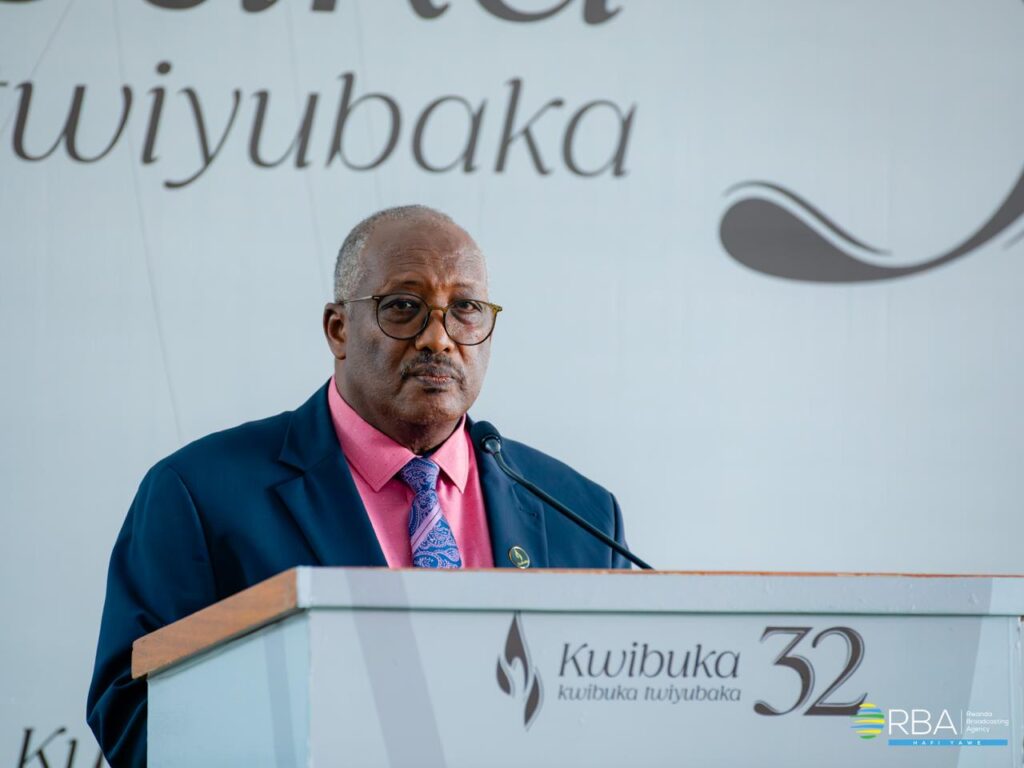
The Association of Parliamentarians Against Genocide (AGPF) has highlighted progress made in the training of teachers of the history of the Genocide against the Tutsi, while also pointing to key gaps that still need to be addressed to improve the programme’s effectiveness.
The assessment was presented by Senator Prof. Dusingizemungu Jean Pierre, who also chairs AGPF, during a parliamentary commemoration event marking the 32nd anniversary of the Genocide against the Tutsi in honour of former parliamentary staff who were killed in 1994.
Prof. Dusingizemungu said AGPF members who recently visited teacher training institutions observed notable progress in the establishment and rollout of genocide history education programmes across the country.
He noted that 16 Teacher Training Colleges (TTCs) have been equipped with curricula, teaching materials, staff, and specialised support to strengthen the teaching of genocide history.
He also said 14 higher learning institutions are involved in training secondary school teachers of genocide history, with support from the Ministry of Education, MINUBUMWE, Aegis Trust, and universities, which have helped address earlier gaps in teaching approaches.
Despite these gains, he highlighted several persistent challenges, including limited instructional time allocated to genocide history in teacher training institutions and universities, as well as a shortage of qualified lecturers in the field.
He said that among 11 higher learning institutions visited, only three lecturers hold PhDs, adding that research on genocide history remains limited, with the University of Rwanda currently being the only institution actively engaged in such work.
Other challenges include limited involvement of genocide survivors as resource persons, infrequent educational visits to genocide memorial sites, and the absence of a dedicated master’s programme in genocide history. He noted that although a PhD programme exists at the University of Rwanda, it currently has only one enrolled student.
Prof. Dusingizemungu also raised concern over insufficient time allocated to help students critically analyse misinformation on social media that may distort genocide history, as well as a shortage of adequately trained teachers in the subject.
He called for stronger coordination among institutions to address these gaps and further strengthen genocide history education in the country.
He also commended Senators and Members of Parliament who took part in commemoration activities and visits to Intwaza care homes across the country.