Elias Hakizimana

Niyigena Radjabu

Niyigena Radjabu is a professional Rwandan journalist with three years of experience in the media industry, specializing in investigative reporting on public affairs and Rwanda-related topics. He currently works as a journalist for Umunota.com, one of Rwanda’s leading digital news platforms.

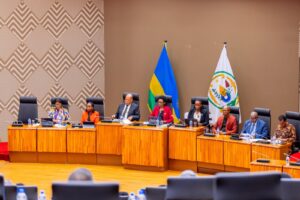
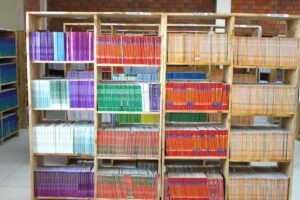
Rwanda MPs question textbook distribution and broken school computers

Rwanda’s France Mpundu signs deal with Warner Music Africa

Rwanda loses more than Rwf83 million due to public officials’ mistakes

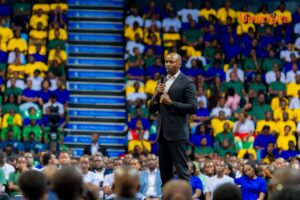
Let us build the country with clear minds and healthy bodies, Nsanzimana urges youth

President Paul Kagame has carried out a major reshuffle across government, public institutions, and diplomatic missions, appointing new ministers, senior civil servants, heads of state agencies, and ambassadors in changes announced on the night of June 10, 2026.
President Paul Kagame has appointed new leaders across government, public institutions and diplomatic missions, in a reshuffle announced in line with Articles 111, 112 and 116 of the Constitution of Rwanda.
The Ministry of Trade and Industry (MINICOM) has unveiled plans to attract investors into establishing local assembly plants for electric vehicles, with a particular focus on electric buses, as part of efforts to strengthen domestic manufacturing and accelerate the country’s transition to green mobility.
Rwanda’s Minister of Foreign Affairs and International Cooperation, Ambassador Olivier Nduhungirehe, has said that the current strained relations between Rwanda and Burundi are not the result of Rwanda’s actions, but stem from decisions and statements made by Burundi’s leadership.
June 10, 1994 marked the 66th day of the Genocide against the Tutsi, as Rwanda’s interim government intensified efforts to arm civilians and accelerate the killings across the country while the Rwanda Patriotic Front (RPF-Inkotanyi) continued advancing on several fronts to rescue survivors and liberate occupied areas.
Minister of Foreign Affairs and International Cooperation, Amb. Olivier Nduhungirehe, has said that the continued tensions between Rwanda and the Democratic Republic of Congo (DRC) stem from a combination of historical legacies, internal Congolese dynamics, and governance challenges in Kinshasa.
Rwanda is pursuing an ambitious plan to expand its sugar industry under the Second National Strategy for Transformation (NST2), with a target of increasing domestic sugar production from the current 10 percent to 50 percent of national demand within the next four years.
Minister of Trade and Industry Prudence Sebahizi has defended the recent increase in diesel prices, saying the adjustment was necessary due to mounting pressure from fuel subsidies that had become increasingly difficult for the government to sustain.
June 9, 1994 marked the 65th day of the 100-day Genocide against the Tutsi, and the 160th day of the year. By this time, the genocidal regime was intensifying efforts to exterminate Tutsi civilians, while the Rwandan Patriotic Army (RPA) continued its military advance, liberating different parts of the country and rescuing survivors in several areas.
Tensions are reported to be deepening within the leadership of the Rwanda National Congress (RNC), with growing allegations of mistrust, factionalism, and internal power struggles among senior members.

Subscribe to our mailing list to receives daily updates to your inbox!

Amakuru Aheruka