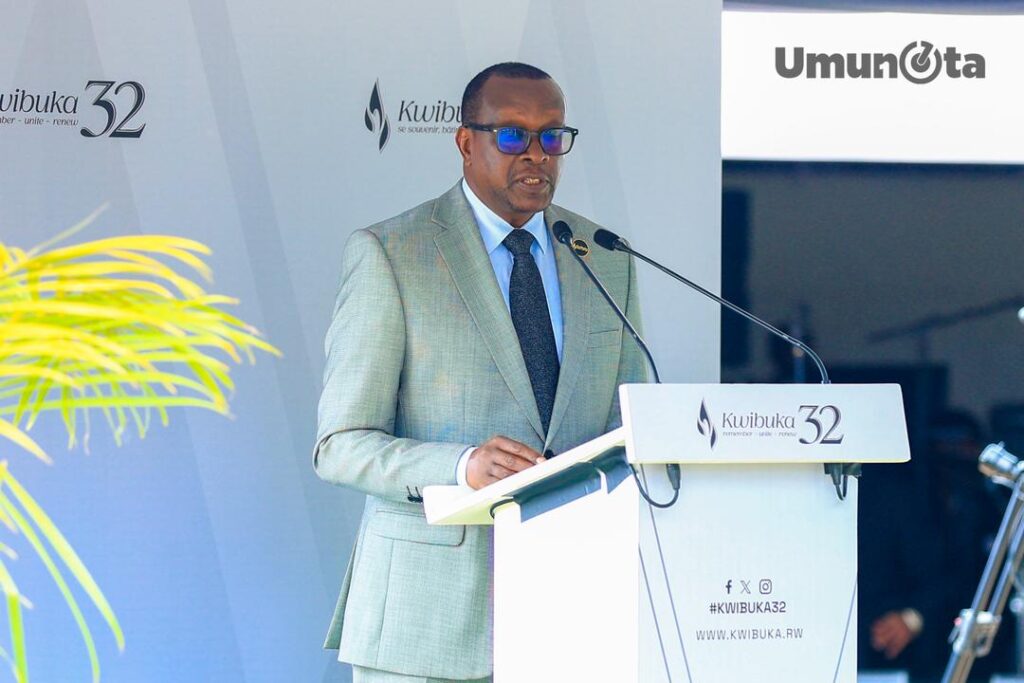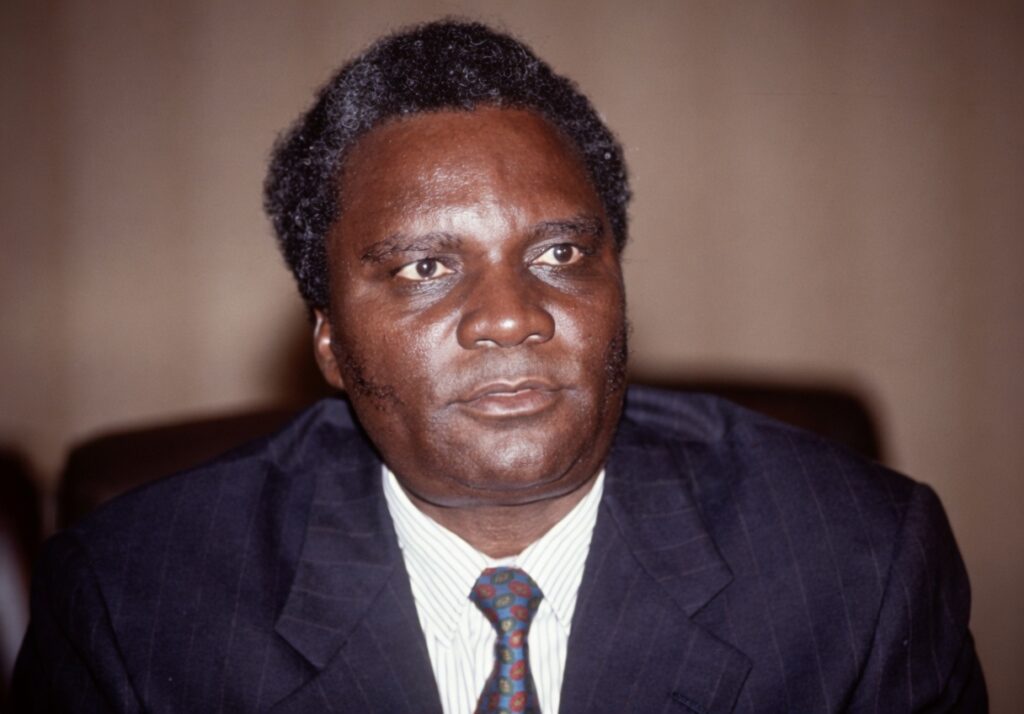
The Minister of National Unity and Civic Engagement, Jean Damascène Bizimana, has highlighted that several Rwandan politicians had already warned against ethnic-based governance under former President Juvénal Habyarimana, cautioning that Rwanda would not accept leadership founded on division.
He made the remarks on April 13, 2026, during the closing of National Mourning Week at the Rebero Genocide Memorial, where national leaders, diplomats, and representatives of political parties gathered to honor politicians killed during the 1994 Genocide against the Tutsi for resisting discrimination and extremist ideology.
Dr. Bizimana said that by 1992, some senior members of the ruling MRND party had already recognized what he described as the deepening use of ethnic division within the party’s political direction, prompting a number of them to resign in protest.
He cited former MP Venancie Kabageni, Christophe Mpfizi, and Prof. Jean Albert Rumiya, noting that they all left the party after concluding that its trajectory was incompatible with national unity. Kabageni and Rumiya were later killed during the Genocide against the Tutsi in 1994, while Mpfizi survived.
He also referred to an open letter authored by Mpfizi, commonly known as “Réseau Zéro,” in which the former party member warned Habyarimana that politics rooted in exclusion and ethnic division would not endure, and that Rwanda would not be governed through such an approach.
Dr. Bizimana said these resignations reflected political courage at a time when ideological divisions were intensifying, stressing that those who opposed the direction of the regime did so despite significant personal risk.
He further stated that although Habyarimana justified his rise to power by citing national challenges at the time, his administration later institutionalized ethnic discrimination, including within education systems, and restricted the return of Tutsi refugees.
The minister also criticized what he described as ongoing attempts to revise or sanitize that period of history, insisting that available historical records demonstrate systematic persecution of Tutsi under that regime.
He urged current and future political leaders to draw lessons from Rwanda’s history, emphasizing the importance of truth, unity, and inclusive governance, and warning that sustainable national development cannot be achieved without confronting the root causes of past divisions.