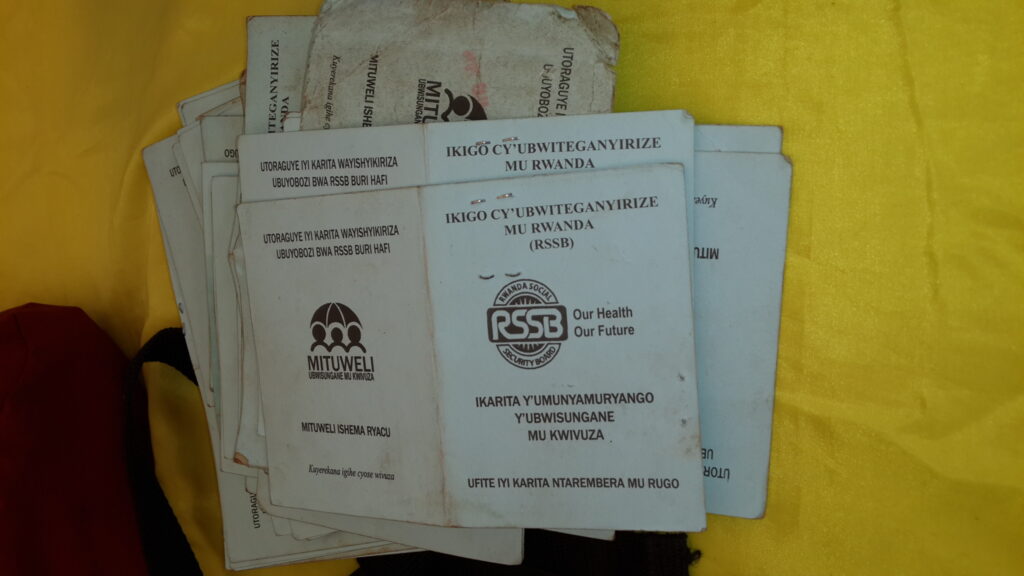
The capitation payment system, which involves paying health facilities in advance, has helped address several challenges that previously affected services provided to members of Rwanda’s Community-Based Health Insurance scheme (Mutuelle de Santé), including access to prescribed medicines.
The system, introduced by the Ministry of Health as part of efforts to strengthen the healthcare system, has been positively received by health facilities where it has been implemented, according to hospital administrators.
Fidèle Shyaka, the head of Kabarondo Health Centre, said that before the introduction of capitation, health facilities often experienced long delays in the payment of invoices for services rendered.
“Before we started receiving capitation payments, invoices related to services we had provided could remain unpaid for more than two months,” he said.
He explained that the delays were mainly caused by lengthy verification processes of the submitted invoices.
“There used to be significant delays, and sometimes invoices were returned after verification, which further prolonged the time it took for health facilities to receive payment,” he noted.
According to Shyaka, these delays often left health centres without sufficient funds to purchase medicines and increased debts with pharmaceutical suppliers.
“As a result, hospitals sometimes lacked the money needed to buy medicines, and the debts we owed suppliers kept increasing,” he said.
However, with the introduction of the capitation system, many of these challenges have begun to ease. Health facilities can now purchase medicines in advance, ensuring that patients receive the drugs prescribed by doctors.
“Now we receive the funds before the month begins. We provide treatment and then submit invoices, while the verification process takes place afterward,” Shyaka explained.
He added that health centres can now easily procure medicines from district pharmacies without financial uncertainty.
“Today, we can request medicines worth two or even three million francs from the district pharmacy and receive them without hesitation because they know the funds are already available,” he said.
Shyaka noted that the change has significantly improved patient care, as patients are now able to receive all the medicines prescribed to them, unlike in the past when some medicines were unavailable or only partially provided.
The Ministry of Health says efforts are ongoing to further strengthen the Community-Based Health Insurance scheme as part of broader initiatives to build a stronger and more efficient healthcare system for Rwandans.