Politics

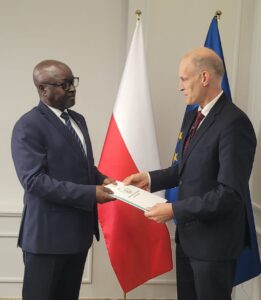
Rwanda’s Minister of National Unity and Civic Engagement, Dr. Jean Damascène Bizimana, met with Abubacarr Tambadou, Registrar of the International Residual Mechanism for Criminal Tribunals (IRMCT), and his delegation to discuss ongoing cooperation.
Rwanda is hosting the 4th East African Community (EAC) Science, Technology, and Innovation Conference, exploring how artificial intelligence (AI) can drive economic growth and development across the region.
The Ministry of Education reports a 2.8% increase in students with disabilities enrolled in schools during the 2024/25 academic year, though their exam pass rates remain below the national average.
Rwandan exporters of vegetables and fruits have pledged to reduce the volume of produce returned from international markets by 80% by 2028.
The Minister of Education, Joseph Nsengimana, announced a 6% decline in student absenteeism for the 2024/25 school year, crediting the success to the government’s ‘Gahunda Nzamurabushobozi’ program.
Camp Kigali hosted the closing ceremony of the national competitions for traditional dance and poetry, bringing together 10 dance troupes and 11 poets from higher education institutions across Rwanda.
FPR-Inkotanyi Commissioner Habonimana Charles has criticized local leaders in Nyarugenge District for destroying citizens’ bean crops, describing such actions as the result of unilateral decision-making rather than coordinated governance.
Rwanda has claimed the top spot globally in the 2026 Baseline Profitability Index (BPI), a measure of countries where investments yield quick and reliable returns. Every $1 invested in Rwanda is projected to generate $2.27 over five years, making it the world’s most attractive destination for investors seeking high returns with low risk.
Rwanda’s National Council of Culture has unveiled an ICT Terminology Dictionary in Kinyarwanda, a project designed to enrich the Kinyarwanda language and provide Rwandans with appropriate terminology for technology and digital applications.
The AFC/M23 coalition (Alliance Fleuve Congo) has moved to clarify ongoing troop movements across multiple frontlines, describing them as routine military rotations rather than signs of escalation in the conflict in eastern Democratic Republic of Congo.