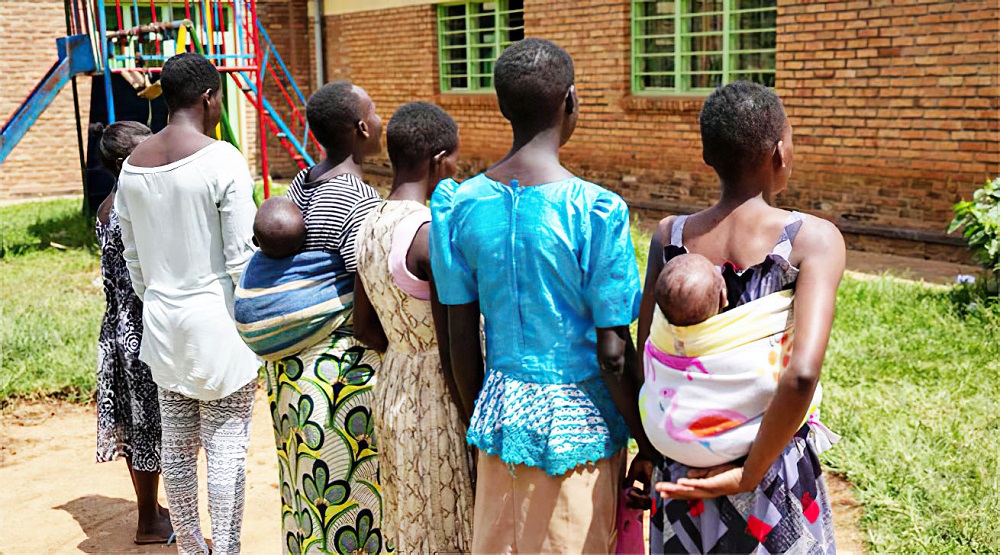
The Ministry of Gender and Family Promotion Rwanda says family conflicts, drug abuse and the misuse of social media are among the leading factors behind the rising number of teenage pregnancies in Rwanda.
Findings from the seventh Rwanda Demographic and Health Survey (DHS) conducted in 2025 show that teenage pregnancy increased to 8 percent, up from 5 percent recorded in 2020—an increase of three percentage points.
Research by the National Commission for Human Rights Rwanda indicates that 57.1 percent of teenage girls who become pregnant are impregnated by individuals they already know as friends. Another 7 percent are impregnated by neighbors, while 2 percent involve relatives.
Aline Umutoni, Director General in charge of Family Promotion and Child Protection at the Ministry, outlined some of the drivers of the increase during an interview on the Waramutse Rwanda programme aired on Rwanda Broadcasting Agency.
Umutoni explained that the causes vary, with some linked to individual behavior, others rooted in family dynamics, and additional factors emerging from wider social influences such as the misuse of digital platforms.
She noted that teenage pregnancy ranks among the top challenges affecting Rwandan families, currently standing as the fourth most pressing issue after family conflicts.
“When teenage pregnancy appears in that position, it may come as a challenge on its own, but it can also be a consequence of other problems within the family,” she said.
According to Umutoni, gender-based violence also contributes significantly to the problem, as it often leads to the sexual abuse of minors, which in turn results in unintended pregnancies among adolescent girls.
She stressed that persistent conflicts within families reduce communication between parents and children, leaving many adolescents without adequate guidance.
“When there are conflicts within families, violence often emerges and communication among family members breaks down. Children may then miss the opportunity to receive proper guidance and support needed to protect themselves from abuse and exploitation,” she explained.
Drug and alcohol abuse was also cited as another factor increasing vulnerability among teenagers.
“When someone uses drugs or alcohol, their judgment becomes impaired and they are less able to make responsible decisions about their lives. This can expose them to manipulation or situations that may lead to unintended pregnancy,” Umutoni said.
She also warned that growing use of technology and social media can widen the communication gap between parents and children. Many adolescents turn to online platforms for information about relationships and reproductive health, where they may encounter misinformation or feel pressured to imitate what they see online.
Moses Ngabo, an activist with Love to Help Organization, which runs campaigns to combat teenage pregnancy, said the misuse of social media is fueling peer pressure among adolescents to copy certain lifestyles and behaviors.
He emphasized the importance of stronger family engagement in addressing the issue.
“If a child lacks affection from their father, they may seek it from a boyfriend. If they do not feel their mother’s love, they may search for happiness elsewhere,” he said.
During the 2026 session of the National Umushyikirano Council, the Minister of Gender and Family Promotion, Consolée Uwimana, said the government has introduced measures to address the rise in teenage pregnancies. These include keeping girls in school and reintegrating those who had dropped out.
Uwimana also warned that individuals who conceal cases of child sexual abuse will face legal consequences, stressing that communities must stop protecting perpetrators.
“It is unacceptable for a child to be abused in a village while people remain silent,” she said.