Foreign visitors spent $161.5 million (over Rwf236 billion) in Rwanda within a three-month period, underscoring tourism’s growing role as a major source of foreign exchange, according to the latest Travel Expenditure Survey released by the National Institute of Statistics of Rwanda (NISR).
The survey, covering November 2025 to January 2026, tracks spending by non-residents travelling to Rwanda as well as expenditure by Rwandans visiting foreign countries.
Air arrivals drive bulk of spending
Of the total $161.5 million recorded, $136.7 million came from visitors who entered Rwanda by air, highlighting the dominance of high-value international markets.
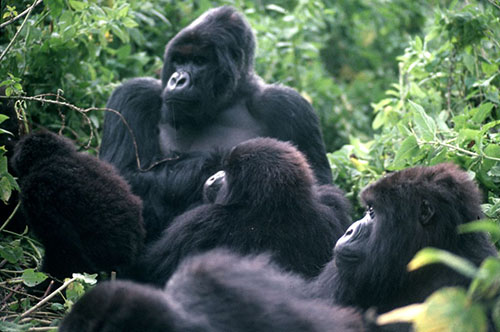
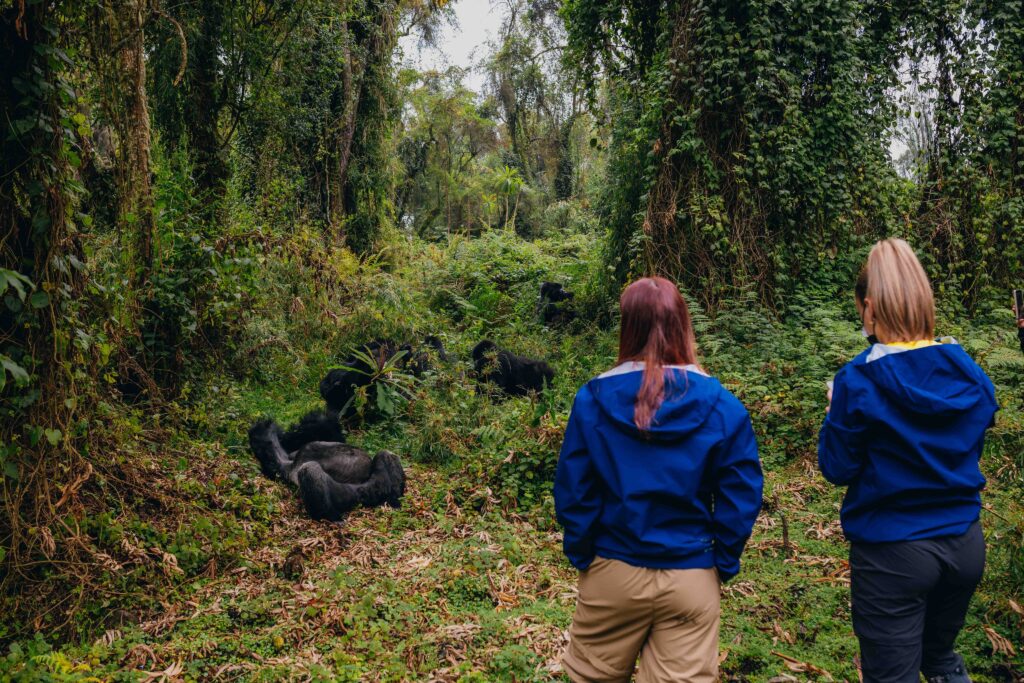
Leisure travellers arriving by air spent $65 million, with gorilla trekking accounting for 71.4 percent of that amount—further cementing its position as Rwanda’s flagship tourism product.
Visitors from North America emerged as the highest spenders, injecting $40.8 million into the economy during the period, reflecting Rwanda’s continued penetration into premium long-haul markets.
Meanwhile, travellers entering Rwanda through land borders spent $24.9 million. Of this, $11.3 million was spent by those visiting friends and relatives. Visitors from the East African Community (EAC) accounted for $19.7 million of land-border expenditure.
Rwandans spend $95.5m abroad
In contrast, Rwandans travelling abroad spent $95.5 million over the same period. Of this, $64.4 million was spent by those travelling by air.
Business travel accounted for $22.2 million of outbound spending, while travel within the EAC region represented the largest share at $53.9 million.
Rwandans crossing land borders spent $31.5 million, including $12.4 million by those visiting friends and relatives. Overall, 31.5 percent of land-border outbound expenditure was linked to trips within the EAC bloc.
Education visitors stay longest
The survey also highlights variations in the average length of stay by region and purpose of visit—business, education, medical care and leisure.
Visitors travelling for education purposes stayed the longest across nearly all regions.
From Asia, business travellers stayed an average of 11 days, education visitors 193 days and leisure tourists eight days. From the EAC region, business visitors stayed six days, education visitors 94 days, medical visitors 18 days and leisure travellers six days.
European visitors spent 13 days on business, 45 days for education and 11 days for leisure. North American visitors stayed 12 days for business, 16 days for education, four days for medical reasons and 11 days for leisure.
Visitors from other African countries spent eight days for business, 187 days for education, eight days for medical care and nine days for leisure.
Tourism earnings nearly double over eight years
Conducted twice annually, the Travel Expenditure Survey measures tourism’s contribution as a strategic foreign exchange earner, particularly through high-end products such as gorilla tourism and leisure travel.
According to NISR, spending by foreign visitors has nearly doubled over the past eight years—from $338.1 million in 2015 to $563.9 million in 2023—signalling sustained growth in Rwanda’s tourism and hospitality sector.