Over the past six years, the Green Gicumbi project has transformed the lives of thousands of farmers in Gicumbi District, northern Rwanda, by promoting climate-resilient agriculture and sustainable livelihoods.
The project, one of Rwanda’s largest initiatives to combat climate change, has received more than Frw 32 billion in funding since its launch in late 2019, including a $32 million grant from the Green Climate Fund (GCF).
Residents say the project has dramatically reduced their vulnerability to climate shocks, such as soil erosion and flooding, which previously limited crop yields and trapped families in poverty. The initiative has focused on key cash crops, including coffee on Kaniga Hill and tea on Gihuke Hill in Bwisige Sector.
Habyarimana Diogène, a member of the Dutubure Kawa Gihuke Cooperative, said: “I used to think coffee could only grow in Maraba. Now I grow it here, and it has lifted my family out of poverty. With my first harvest, I paid my children’s school fees, including university tuition. The second harvest allowed me to build a house worth over Frw 2 million.”
Uwingabire Marie Thérèse added: “Coffee became a key source of income and jobs. The project has allowed us to overcome erosion challenges and support our families.”
Tea farmers have also benefited. Havugimana Elie said: “Before Green Gicumbi, rain would wash away our crops, turning the slopes into floods. Now, the tea we grow generates a reliable monthly income and support from our cooperative.”
Munyaneza Leonidas, a COOPTHE cooperative leader, said: “We used to lose 49 hectares of tea in 2019. Thanks to terracing and soil management, my yields increased from 50 kilos to over 200 kilos. Fertilizer now stays in the soil, boosting productivity across all crops. Hunger is no longer a daily concern.”
The project’s interventions include contour terraces, rainwater management systems, agroforestry, erosion control, and the rehabilitation of over 2,200 hectares of forests. Green Gicumbi has planted nearly 10,000 hectares with trees and perennial crops, provided stoves to 31,000 households to reduce deforestation, and constructed over 3,300 rainwater harvesting tanks and 193 large underground storage tanks.
Kagenza Jean Marie Vianney, Green Gicumbi project director, said: “We combined climate adaptation strategies with economic opportunities to achieve sustainable development. Farmers in Gicumbi are now resilient to climate shocks and can improve their livelihoods.”
District Mayor Nzabonimpa Emmanuel added: “Green Gicumbi was carefully planned and addresses critical challenges, boosting both food security and income. It has become a model for integrating climate resilience with economic growth.”
Over six years, the project has created 600 hectares of contour terraces, 600 hectares of check dams, and reached more than 464,000 beneficiaries, with over 157,500 directly benefiting from project activities. Carbon emissions were reduced by 214,000 tons, demonstrating how climate adaptation can go hand in hand with sustainable economic development.
Green Gicumbi operates in nine sectors across Gicumbi, along the Muvumba River watershed: Rubaya, Cyumba, Kaniga, Mukarange, Rushaki, Shangasha, Manyagiro, Byumba, and Bwisige.


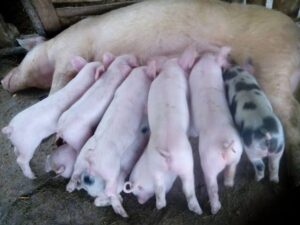
Modern livestock farming is now practiced by residents, thanks to the Green Gicumbi project.