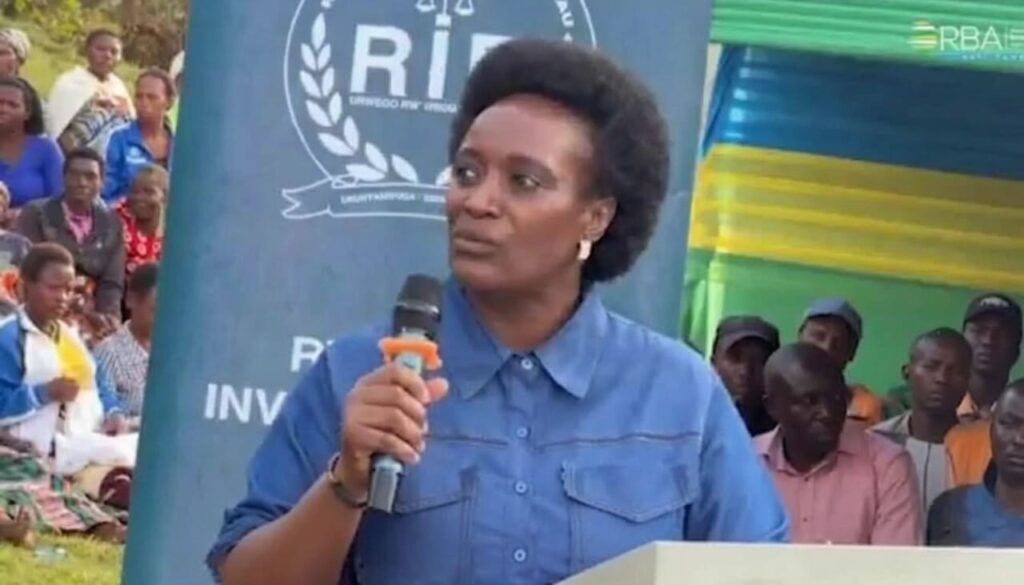
The Minister of Gender and Family Promotion, Consolée Uwimana, has expressed concern over the growing number of teenage pregnancies resulting from child defilement, revealing that more than 25,000 girls who were sexually abused gave birth in 2025—a figure that exceeds the entire population of Tumba Sector in Rulindo District.
Speaking during a community engagement in Rulindo District, Uwimana called for stronger collaboration among families, communities, and authorities to combat child defilement and other forms of violence affecting households across the country.
She emphasized that child defilement has far-reaching consequences for victims, affecting their health, education, rights, and future opportunities. She urged the public to condemn the crime, report perpetrators, and avoid shielding offenders.
According to the minister, national statistics show that more than 25,000 children were defiled in 2025 and later gave birth, highlighting the scale of the challenge facing the country.
“We should not think these are isolated cases. More than 25,000 children were defiled in 2025, and they gave birth to more than 25,000 babies,” she said.
Uwimana noted that Tumba Sector has about 21,000 residents, meaning the number of babies born to child victims of defilement last year surpassed the population of the entire sector.
“This means that, in just one year, children gave birth to a population larger than that of your sector. As a country, we added a population exceeding the size of this sector through child pregnancies,” she said.
The minister warned against downplaying the issue, noting that many cases remain unreported because families fear conflict or choose to protect those responsible.
Many girls who become pregnant after being defiled say poverty and economic hardship leave them vulnerable to exploitation. Perpetrators often lure victims with money, gifts, or basic necessities that they cannot easily access, leading to pregnancies that force them into motherhood at a very young age.
The children born from such circumstances frequently face difficult living conditions, including poverty, malnutrition, school dropout, and neglect, further deepening the cycle of vulnerability.
Uwimana stressed that perpetrators of child defilement should never be tolerated or protected. She called on communities to report offenders wherever they may be, even if they have relocated to other areas, so they can be arrested and brought to justice.
She urged all stakeholders to work together to protect children and ensure that those who violate their rights are held accountable.