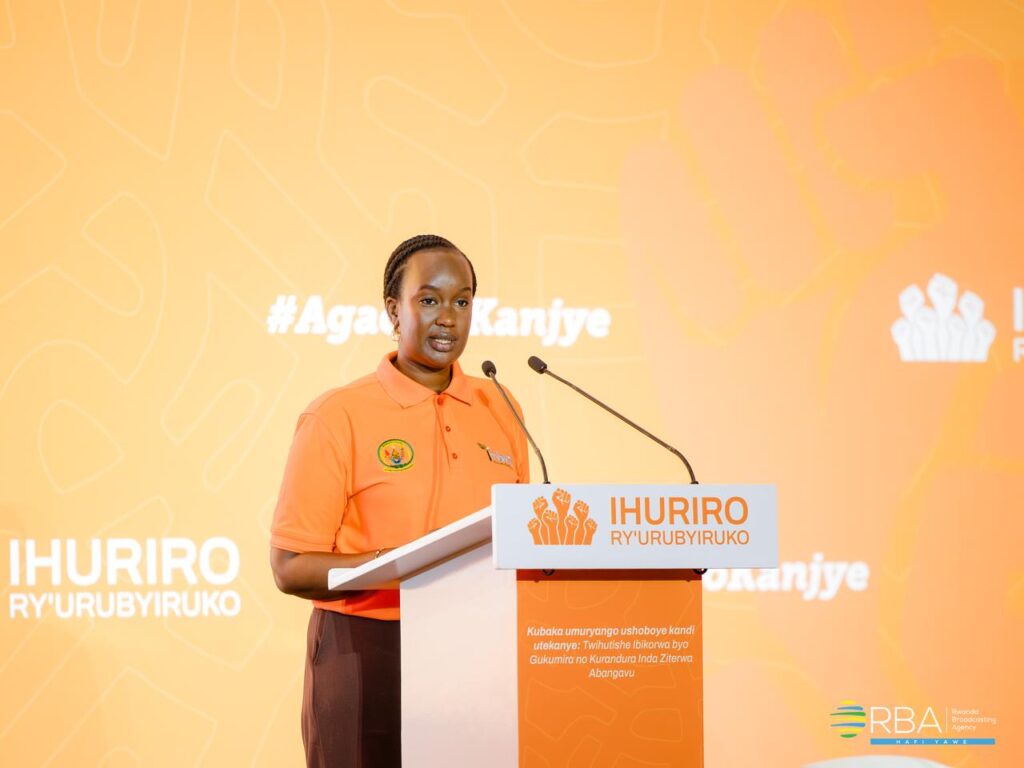
The Chief Executive Officer of Imbuto Foundation, Shami Elodie, has called for intensified collective efforts to address teenage pregnancy, describing it as a serious societal challenge that undermines national development.
She made the remarks on Friday, June 26, 2026, while launching a youth forum focused on accelerating prevention and response efforts against teenage pregnancies in Rwanda.
The forum, organized by Imbuto Foundation, brought together about 2,000 participants, most of them young people, and also marked the launch of a facilitation guide aimed at strengthening dialogue within families on adolescent reproductive health and decision-making.
Shami said teenage pregnancy should not be viewed solely as an individual issue affecting a girl and her child, but as a broader national concern requiring coordinated action from families, communities, and institutions.
“When a girl becomes pregnant, it is not just a personal tragedy; it is a challenge that affects the nation as a whole,” she said, urging stakeholders to treat the issue with urgency.
She encouraged young people to critically evaluate information they access, particularly on social media, warning that misleading content can influence harmful decisions.
Shami also emphasized that open communication within families remains a key protective factor against teenage pregnancy, noting that when children feel heard and supported, they are more likely to make informed choices.
Since 2010, Imbuto Foundation has promoted parent-child dialogue initiatives, reaching thousands of households in efforts to strengthen family communication and guidance for adolescents.
Despite these interventions, teenage pregnancy remains a growing concern. According to the National Institute of Statistics of Rwanda (NISR), the proportion of girls aged 15–19 who experienced pregnancy rose from 5% in 2020 to 8% in 2025, based on the latest Demographic and Health Survey (DHS7).
The survey further indicates varying rates across age groups, with higher prevalence among older adolescents, and also highlights the impact on education, with a significant share of affected girls dropping out of school.
The trend underscores ongoing challenges in adolescent reproductive health and the need for sustained multi-sectoral interventions.