Rwanda has taken a significant step toward strengthening its early childhood education system with the launch of a new partnership project with the European Union, aimed at improving access, quality, and long-term learning outcomes for young children.
The initiative, known as the EU–Rwanda Twinning Project, was officially launched on Monday, March 16, 2026, bringing together the Government of Rwanda, the European Union (EU), and partner countries Finland and Lithuania in a two-year effort to reinforce pre-primary education.
At the heart of the project is a shared ambition to build a strong foundation for Rwanda’s youngest learners by improving teaching standards, increasing community involvement, and enhancing the overall learning environment in early childhood education.
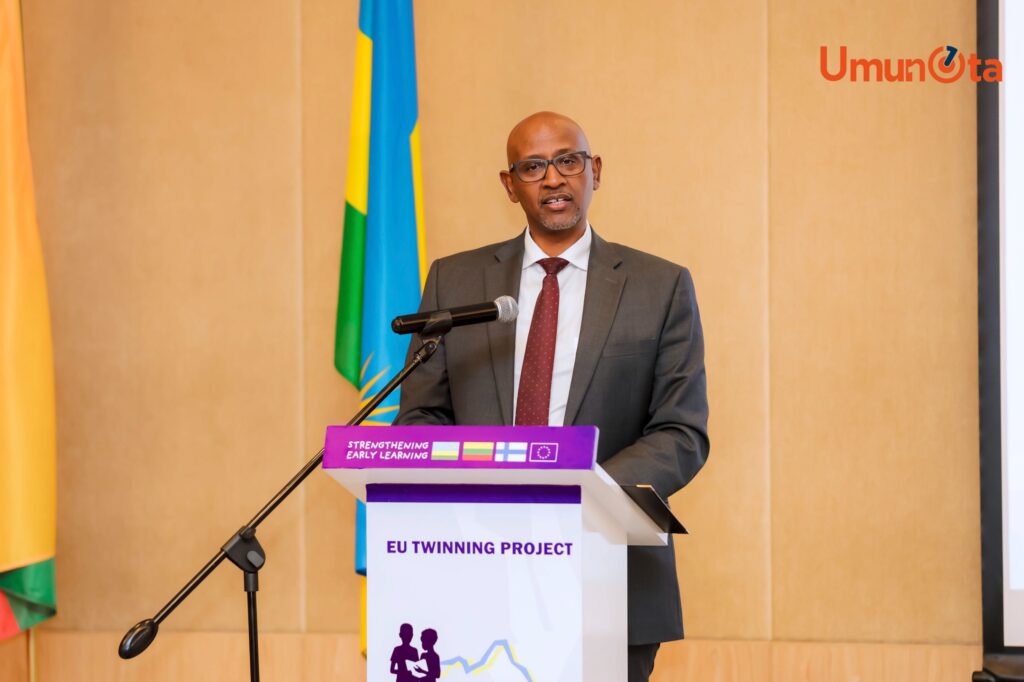
Minister of Education Dr. Nsengimana Joseph said the project reflects a growing recognition that investing in early learning is key to unlocking long-term national development.
“Children who receive quality education at an early age are better prepared to transition into primary school. They are more likely to remain engaged in learning and develop the skills needed to contribute meaningfully to society,” he said.
He emphasized that for Rwanda, where a large proportion of the population is youth, early childhood education is not just a social priority but a strategic investment in the country’s economic future.
Closing access gaps
Rwanda has made notable progress in recent years, including expanding pre-primary enrolment, constructing classrooms, and increasing the number of trained teachers. However, demand continues to outpace supply.
The government has set an ambitious target of ensuring that at least 65% of children are enrolled in pre-primary education by 2029, a goal that will require sustained investment and innovation.
Dr. Nsengimana acknowledged that challenges remain, particularly in infrastructure, as the growing number of children in need of early education continues to strain existing facilities.
“There is a need to expand classrooms, increase the number of qualified teachers and caregivers, and ensure the availability of appropriate teaching materials,” he said.
The new project is expected to directly support these priorities by strengthening institutional capacity and promoting best practices drawn from European education systems.
Strengthening partnerships for impact
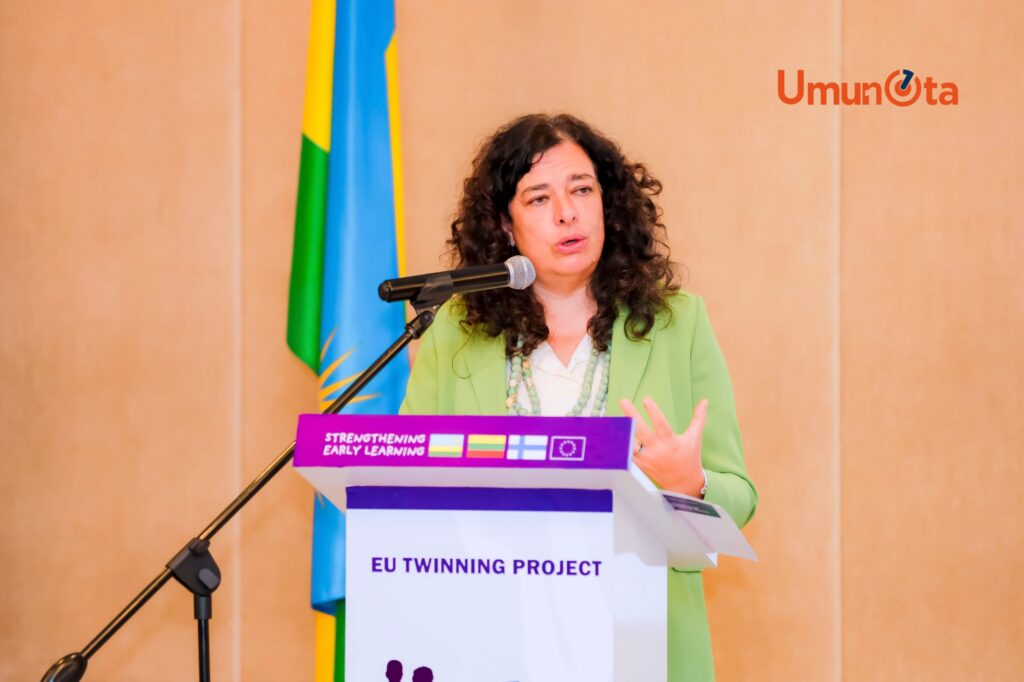
EU Ambassador to Rwanda, Belén Calvo Uyarra, said the partnership reflects confidence in Rwanda’s education reform agenda and its commitment to expanding access to quality learning.
“We believe that investing in early education has a lasting impact on the entire education system and contributes to building a knowledge-based economy,” she said.
She added that the EU will continue supporting Rwanda beyond this initiative, including in teacher training, school feeding programs, and the development of early childhood education infrastructure.
The project also seeks to deepen collaboration between institutions, enabling knowledge exchange and policy development that can accelerate progress in the sector.
Lithuania’s Vice Minister for Education, Science and Sport, Jonas Petkevičius, expressed optimism about the outcomes of the partnership, noting that shared expertise and experience will be critical in achieving meaningful change.
Building the foundation for the future
Beyond improving access, officials say the project will focus on ensuring that children not only attend school but receive quality, engaging, and inclusive education from the earliest stages.
Experts agree that early childhood education plays a decisive role in cognitive development, social skills, and lifelong learning outcomes.
For Rwanda, the success of this initiative could mark a turning point in how foundational education is delivered—ensuring that more children enter primary school ready to learn, stay in school longer, and ultimately contribute to the country’s socio-economic transformation.
As implementation begins, stakeholders say the focus will remain on translating policy commitments into tangible results in classrooms and communities across the country.