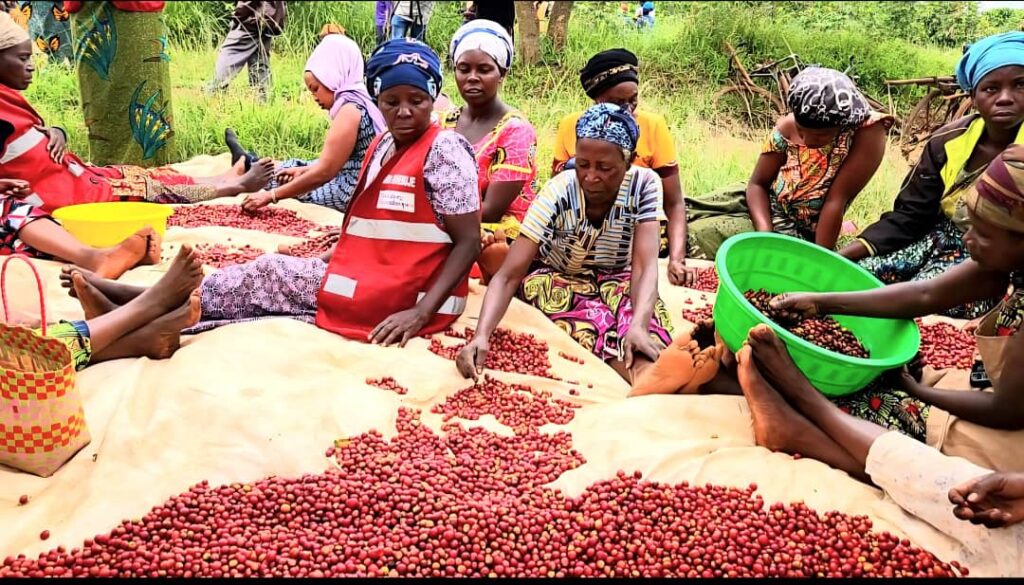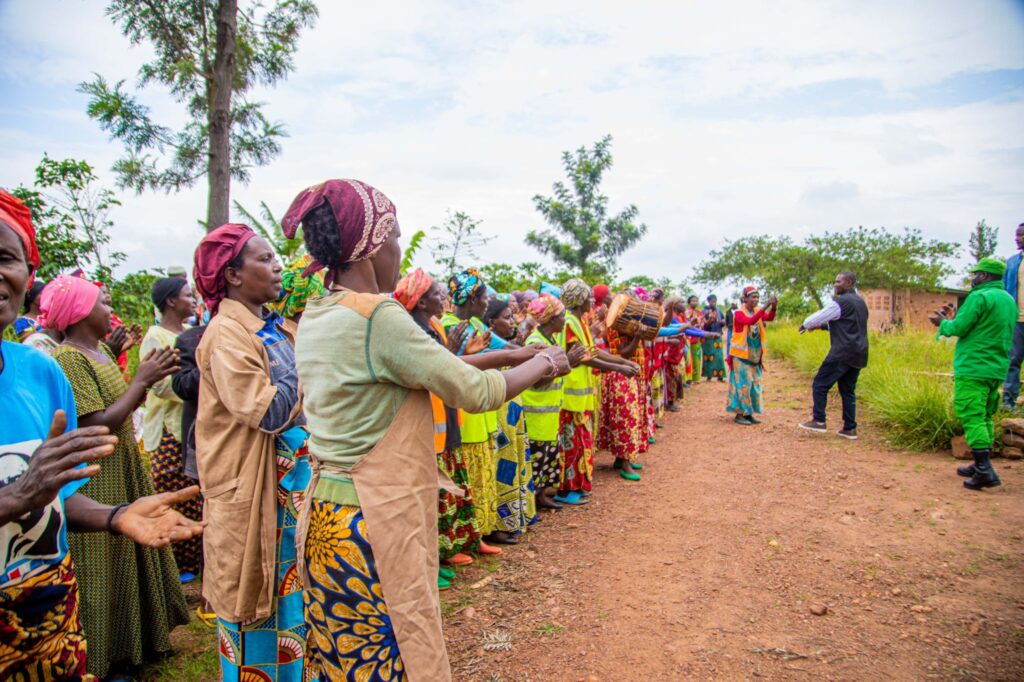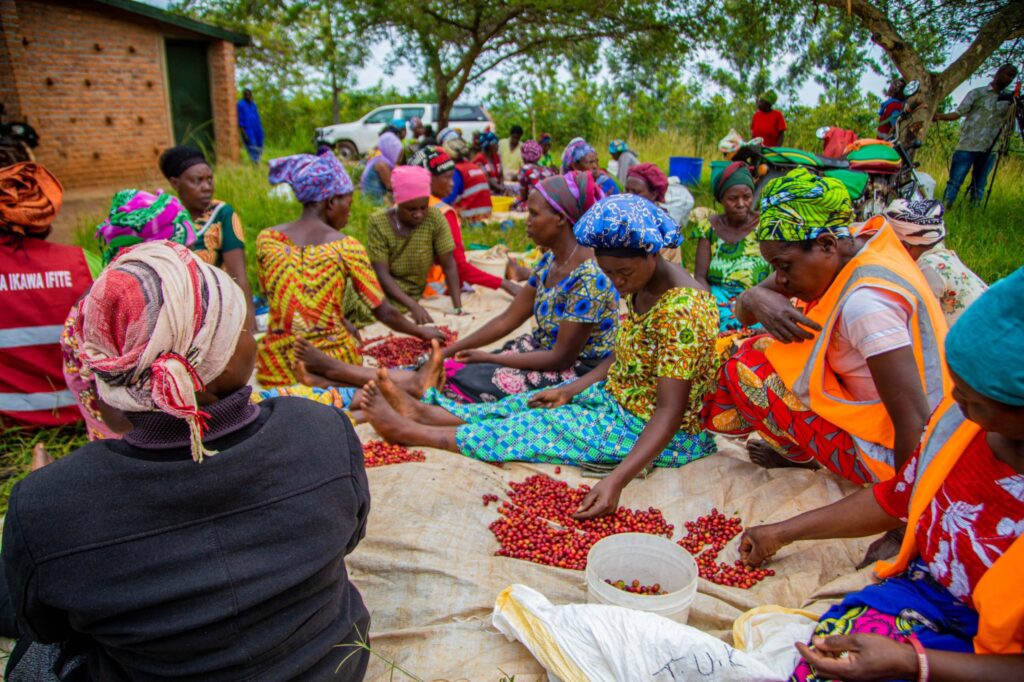
Coffee farmers grouped under Twongere Umusaruro wa Kawa Cooperative in Kayonza District have transformed coffee growing, processing and export into a thriving business, positioning themselves as both producers and exporters in Rwanda’s expanding coffee value chain.
The cooperative, based in Rukara Sector’s Rwimishinya Cell, brings together 193 members—181 women and 12 men—who cultivate climate-resilient coffee on 10 hectares. Beyond farming, the members have invested in value addition, enabling them to directly access international markets.
“We process more than 380 tonnes of coffee cherries per year, equivalent to three containers of fully processed coffee exported to the international market,” said cooperative president Batamuriza Madeleine.
Founded in 2011 as three small groups before merging into a cooperative in 2013, the farmers intensified production after receiving professional training. In 2015, they built their own coffee washing station, marking a major shift from subsistence farming to commercial operations.
“Today we are not only coffee farmers but also traders. We process our coffee and sell it both locally and abroad,” Batamuriza said, noting that the venture has significantly improved members’ livelihoods.
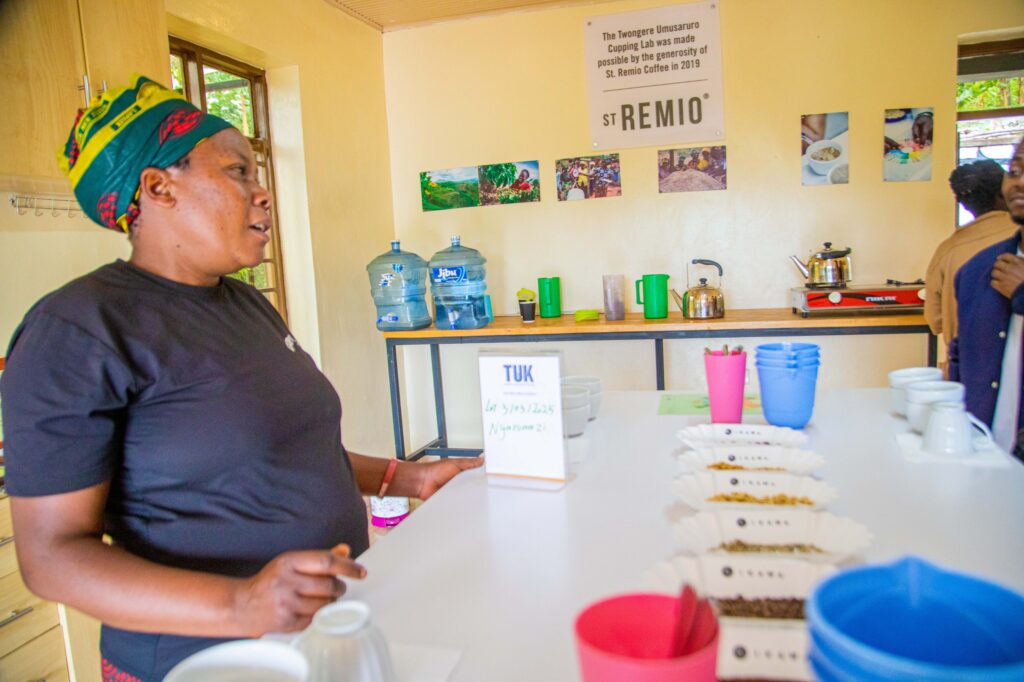
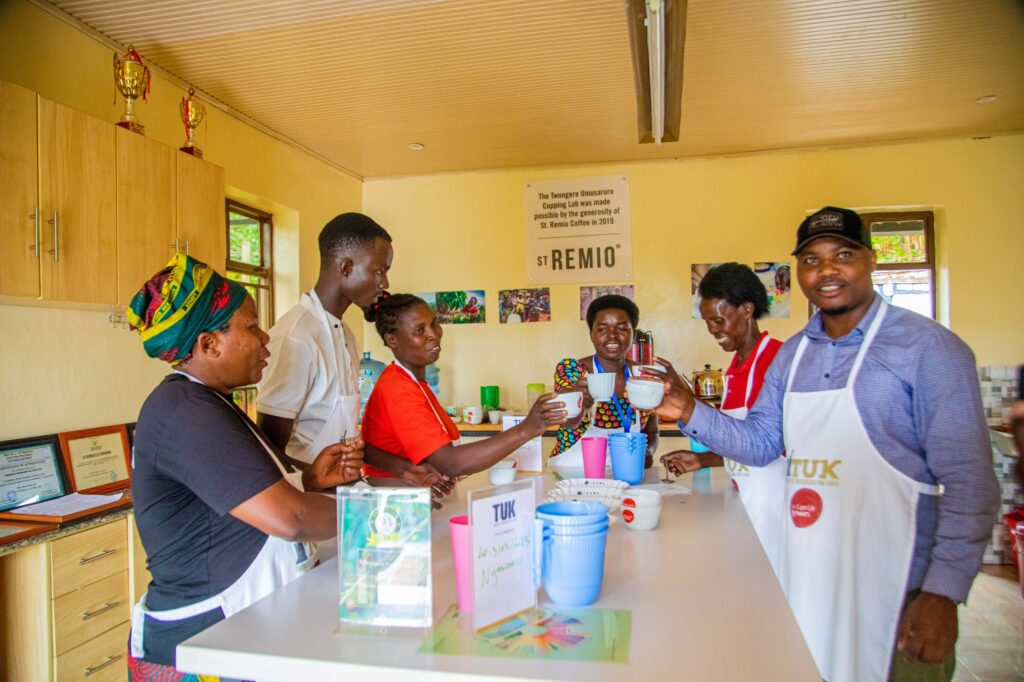
Members now afford community-based health insurance, school fees for their children and investments in small livestock. The cooperative has also introduced coffee tourism and operates a cupping lab to test quality before export—steps that strengthen traceability and competitiveness.
However, infrastructure gaps remain a challenge. The cooperative relies on diesel-powered machines due to limited electricity access, while water supply and road connectivity also affect operations.
Sylvie Mugorewera, a member for eight years, said coffee has been life-changing. “I used to depend entirely on my husband for financial support. After joining the cooperative and receiving professional training, I now own livestock, educate my children and no longer face extreme poverty,” she said.
District authorities say solutions are underway to address electricity, water and road challenges.
Data from the National Agricultural Export Development Board (NAEB) show that Rwanda’s coffee exports rose by 39 percent in volume in 2025 compared to 2024, while revenues surged by 65 percent.
In 2025 alone, Rwanda exported 23,860 tonnes of coffee valued at over Frw 216 billion, up from 17,142 tonnes worth more than Frw 129 billion in 2024. The growth was partly driven by a 19 percent increase in global coffee prices, with Rwandan coffee averaging $6.2 per kilogram.