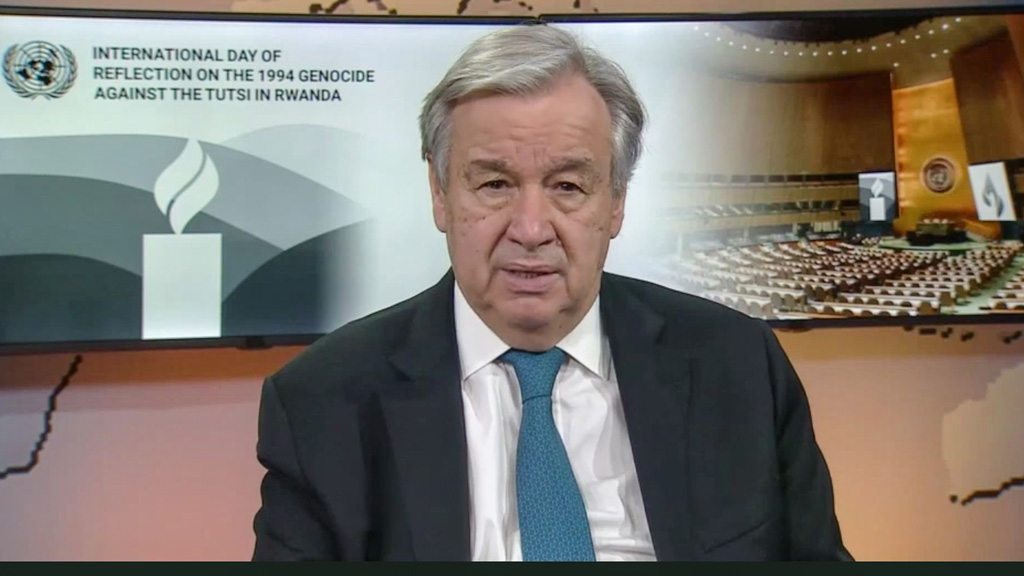
António Guterres has urged the global community to draw firm lessons from the failures that allowed the 1994 Genocide against the Tutsi to unfold, warning that vigilance is needed to prevent similar atrocities.
In a message issued on April 7, 2026, as Rwanda and the world marked the 32nd commemoration, Guterres acknowledged the international community’s shortcomings during the genocide and called for renewed commitment to prevention.
Speaking on behalf of the United Nations, he said the day is not only for remembrance, but also for action against the forces that enable violence.
“On the International Day of Reflection on the 1994 Genocide against the Tutsi in Rwanda, we honor the victims and stand with survivors. We must learn from past failures and protect those at risk by confronting hatred, divisive rhetoric, and incitement to violence,” he said.
Rwanda has repeatedly pointed to the failure of the international community to act despite clear warnings about the planned extermination of Tutsi under the regime of former president Juvénal Habyarimana.
On January 10, 1994, Roméo Dallaire, then commander of the UN peacekeeping mission in Rwanda, alerted UN headquarters through a now well-documented fax about preparations for genocide and requested authorization to intervene.
Instead, he was instructed not to take action—an episode widely cited as a defining failure of the international response.
Rwanda maintains that had those warnings been heeded, countless lives could have been saved and the country might have avoided one of the darkest tragedies in its history.
In just 100 days, more than one million Tutsi were killed while the world largely stood by.
On the International Day of Reflection on the 1994 Genocide Against the Tutsi in Rwanda, we mourn the victims & pay tribute to the survivors.
— António Guterres (@antonioguterres) April 7, 2026
We must learn from past failures & protect the living — by rejecting hatred, inflammatory rhetoric & incitement to violence.
“We must learn from past failures & protect the living — by rejecting hatred, inflammatory rhetoric & incitement to violence.”
— United Nations (@UN) April 7, 2026
—@antonioguterres as we honour the 1 million people who perished in the genocide against the Tutsi in Rwanda 32 years ago.https://t.co/4laKpTvCNN pic.twitter.com/pS1xyCWxiF